



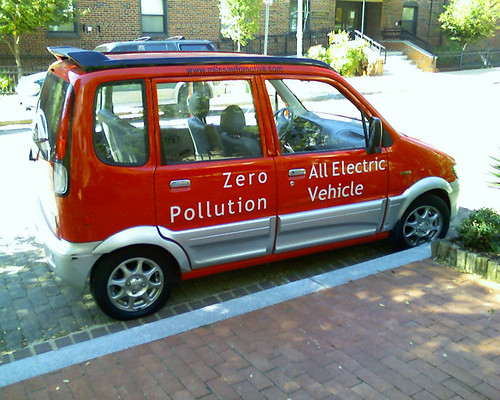
 “So you want to drive the speed demon, huh?” The local eco-dealership was empty save for a salesman spinning laps around electric cars and trucks in a Zap Zappy, a sort of poor man’s Segway. “You know the ZX40 won’t do more than 25 miles per hour, right?” asks the sales manager. She looks as if this revelation typically scares off twenty-somethings like myself. “Sure,” I say. How bad could it be?
Find Reviews by Make:
Latest auto news, reviews, editorials, and podcasts

The night before the LA Auto Show, Mazda had a select group of journalists drive the new Mazda3. We from TTAC were not among them. But digital buff book (buff site?) Edmunds’ InsideLine was, and so were the very graphic-saavy guys at Motive Magazine. Overall they both seem to like the car, though in all honesty the assessment is predictable. Bigger, better MPGs, not as sharp as the original. I’m more troubled that an “economy” car has a 2.5 liter engine. Yes, the 2.0 is still standard, but seriously 2.5? Mazda3? I mistakenly presumed that Japan’s engineers believed there is a replacement for displacement. In any case, check out the reviews if you dare at Edmunds and Motive.
 Let’s just agree now that if Ford, GM and Chrysler get their $25b in December, the $21m they invested in lobbying efforts this year was a brilliant investment. Of course, as the Detroit News reports, that’s actually $21.6m and that only covers the first three quarters of this year; fourth-quarter lobbying disclosures don’t come out until January, and with their companies on the line you can bet the D3 will be throwing what’s left in their wallets at DC until the last bailout option is depleted. The problem for Detroit though is that their political contributions are actually shrinking in relative terms. The auto industry is only 34th on the list of contributers to congressional election campaigns, down from the 16th spot eight years ago, and even generous campaign contributions don’t guarantee your safety. For example, Chrysler owners Cerberus Capital Management donated $37,500 to Senator Richard Shelby’s (R-AL) 2008 campaign, only to have Shelby badmouth the industry from his position as a ranking member of the Senate Banking Committee. And though it spends more on lobbying than the other Detroit firms, General Motors says its reducing its efforts. “In fact, it’s decreased considerably,” spokesman Greg Martin said. “We’re looking at every operational expense and cutting where we can. That includes our efforts here in D.C. Lobbying is a legal, very transparent means to have your voice heard in Washington, especially as it relates to political issues that have a substantial effect on your business.” And if it pays off, it will make Porsche’s play on the hedge funds look like a mediocre investement. Where else can you invest $25m and have it turn into $25b in less than a year? Only in American government.

Spyshot photographers of the world: Look for another target. Today, Porsche released the definitive official pictures of their 4-door sportssedan Panamera. (Thank you, Automobilwoche.) The first Porsche with a decent rear bench (ignoring the Cayenne for a while) will be physically present in spring, and shall go on sale throughout the world by the end of Summer 2009. It will be hard to overlook: 16 feet 4 inches long, and six foot four wide, the Panamera will be nearly 2 feet longer than 911, even the S-Class is 2 inches slimmer around the waist. For motors, there will be six and eight bangers, ranging from 300 to 500 horses. No true Porsche driver would touch an automatic. The engine of the Panamara is mated to six gears, operated by a stick. Dual clutch with 7 gears optional. The power goes to the rear wheels, all wheels drive optional. A green-sheened hybrid is “in the works.” Something Porsche may want to hide: The body of the Panamera is welded in VeeDub’s truck plant in Hannover, final assembly takes place in Porsche’s plant in Leipzig. More official details as they become available.
 He’s had it coming. Our Dear Leader finally received what he deserved: A vacation. With wife and kids, Farago goes to Disney World. Or Disney Land. Anyway, one of those Mickey Mouse metros. While our Dear Leader is away, our beloved Edward Niedermeyer is running the show at TTAC. 16 timezones away in Beijing, Ed is being assisted by yours truly. Which works out just fine: BS has the morning shift, then, Mr. Ed takes over and runs two shifts. Keep in mind, Ed is an Oregonian (sounds kinky.) Please indulge him, and grant him the extra three hours of sleep the Westcoasties deserve. If there’s a little less of the usual morning barrage of posts, do not despair. Ed will make up for it during the day and night.
Also of note: Our web servers are still acting up, sick from the China Syndrome. View counters won’t be back until “after Thanksgiving,” our resident Otaku promised. The site sometimes can be slow to react to your comments. Don’t worry, don’t double post: The comments will show up – after a (sometime excruciatingly long) wait. Same goes for Farago: He’ll be back. Then, there will be hell to pay.
Gadzillions of Citibank customers worldwide (the writer of these lines included) were sweating through the weekend, popping Valium, worried that their sleepless bank may go to eternal rest. Then, relief: Citi was bailed out. No hearing, no fuss, $326b total, Wagoner, eat your heart out. But wait: moiré dark clouds on the horizon: “The foundering Detroit automakers owe more than $100 billion to their bankers and bondholders, and Wall Street is starting to wonder how much of that will be paid back,” writes the New York Times. And wait, there is even more exposure, namely to “to automotive suppliers and dealers.”
A lot of the debt is in the way of bonds that have been foisted on hapless 401K holders that had ticked the “conservative” investment goal on their profile. These bonds are now depreciating faster than the junk produced in Detroit. If you have the stomach for it, you can buy GM’s 8.375 percent bonds due in July 2033 for 17 cents on the dollar. Even a Mike Milken wouldn’t have the guts. Flashback: At Milken’s sentencing, Judge Kimba Wood told Milken: “When a man of your power in the financial world repeatedly conspires to violate, and violates, securities and tax business in order to achieve more power and wealth for himself, a significant prison term is required.” This country’s legal system is based on case law, and quite possibly, Kimba’s sentence before the sentence may come up again. This time, for milken tax payers, retirees, and banks alike. Speaking of banks …
 Hey, it’s Monday! Time to get back to work (if only to check that there still is a job.) Get a hustle on, most of the world got up much earlier. While America Slept (WAS) is a daily round-up of the news that happened in other continents and time-zones. TTAC provides round-the-clock coverage of everything that has wheels. Or that has its wheels coming off.
What are they smoking? To convince Congress that they mean action, GM wants to negotiate a cut in debt levels, wants to ask the UAW whether it’s ok to delay a $7 billion payment to a union retiree health fund, GM wants to drop brands, and get more funding from GMAC, Bloomberg reports. All that done before a “10-12 page report” will be submitted by 12/2? Don’t bogart that joint …
How to make a lot of money: Buy GM’s GM’s 8.375 percent bonds due in July 2033. Last Friday, that bond went for 17 cents on the dollar, Bloomberg writes, citing a report of Trace, the bond-price reporting system of the Financial Industry Regulatory Authority. The bond with a rating lower than most GM cars will yield you 49 percent interest, and you can retire worry-free. Or not.
Chery pickins: China’s home-grown (non JV) Chery will expand up and down, Gasgoo says. On the up, they will continue their partnership with US-based Quantum LLC. Intent: A high-end brand for the export market. On the down, they will launch a low-end brand called “Karry.” Already, your basic Chery QQ3 can be bought for $4K in China. How low can you go?
(Read More…)
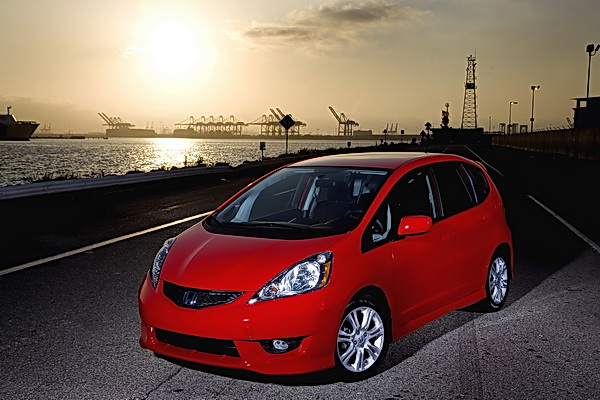
At this week’s LA Auto Show Honda’s vice president of corporate planning and logistics told Marketwatch that Honda is considering expanding production of its popular Fit to the United States. “We have about 19 days worth of supply, which is much too low,” said Honda VP Dan Bonawitz. “We can’t fill all our dealer orders.” Honda is “exploring all options” to ramp-up Fit supply, Bonawitz said.
 Barack Obama’s turd blossom David Axelrod appeared on ABC’s “This Week” today (via Reuters), quietly backing the president-elect away from is electorally-necessary support for an automaker giveaway. “We all have a stake in the survival and the prosperity of the auto industry,” said the future senior White House adviser. “But in order to do that, they’re going to have to retool and rationalize their industry for the future,” he said. “If they don’t do that, then there’s very little that taxpayers can do to help them.” This puts Obama back on the same page as the congressional Democrats, who have been markedly less supportive of a bailout since the Detroit CEO’s miserable performance before the House Financial Services Committee this week. “There must be a business model that they work off of,” Speaker of the House Nancy Pelosi tells CBS’ “Face the Nation. “No one would invest in a company without seeing that, nor should taxpayer dollars be invested without seeing that business model and that business plan.” The real question then seems to be, what do Obama, Pelosi, et al expect to see in the way of a new plan come December 2? Because other than being sure that they want to see a plan, we haven’t got much from them in the way of specifics.
 We don’t write about motorsports here at TTAC. Well, except for that one time. Actually, we don’t write many E85 BOTD’s these days either. Ethanol and its lobby are in something of a retreat right now, as bailout fever crowds agriculture out of its VIP seat at the pork pump. Not to mention the fact that the MSM now seems to recognize E85 as the wasteful, pork-fueled debacle it is. Anyway, despite the fact that the US has a glut of ethanol thanks to already set (and non-demand-based) subsidy goals, the Indianapolis Racing League has just concluded a contract to import sugar cane ethanol from Brazil to power its racers from 2009 and beyond. But don’t worry, under the terms of the multi-year deal, APEX-Brasil in cooperation with UNICA (the Brazilian Sugarcane Industry Association) will seek a partnership with a US-based ethanol company to supply the IndyCar Series with corn-based ethanol as well. Why? “The move to other sources of ethanol is a natural progression as the ethanol industry continues to grow and evolve. We continue to strive to be on the leading edge of the greening of racing. The IndyCar Series was the first motorsports series to mandate use of a renewable fuel, and now we will work with the ethanol industry in both the United States and Brazil to promote the use of all types of ethanol by consumers,” says IRL President Terry Angstadt. The only greening here is greenbacks being sent from Brazil, which is spending millions aggressively marketing its ethanol around the world.
Conan O’Brien presents Detroit’s call for bailout bucks.
 When Autoblog caught wind of the Latin American Herald Tribune story quoting GM Brazil’s CEO as saying GM would invest $1b worth of US bailout money in Brazilian operations, they knew there was something weird about the story. Ya think? The original LAHT story paraphrases (rather than directly quoting) GM Brazil’s Jaime Ardila as saying GM’s $1b investment would come from bailout bucks, lending some credence to the official GM position that “something got lost in translation.” But even if the LAHT’s translation was completely accurate, GM would have denied this story up and down. Investing American tax dollars in the developing world? Perish the thought. For one thing, there is no bailout. Yet. If Ardila did say that bailout bucks were going to Brazil, he was way off the reservation, and endangering the still-slim odds of a bailout happening. In any case, we will know what the bailout bucks will be spent on when GM submits their plans for the money to congress on December 2. And don’t bet on seeing a billion dollar line-item for Brazilian investment, for the obvious political reasons. But as an international company that has been supported for years by its overseas units, GM will have to finesse its bailout plan to appeal to congress’s national interests. With nothing but cuts in sight for GM’s North American operations, the General will have to rely ever more heavily on profits from its growth markets abroad to achieve the “viability” congress wants to see. Unfortunately, that viability trades off directly with the bailout’s other goal, which is saving American jobs. Such are the dangers of national bailouts of multinational corporations.
 Last week, Oregon Governor Ted Kulongoski clinched a deal to bring Nissan’s pure-electric cars to his state. Then, he went on to Shenzen, China. “At BYD Auto Co., China’s fast-growing automotive star, a plug-in electric hybrid sedan is just weeks from meeting millions of Chinese consumers” writes the Oregonian. “The F3DM, which runs up to 80 miles on a single charge and packs a 7-gallon tank, will probably launch in the United States by 2010.” The Governor wants it to be built in Oregon. On Friday, he met with BYD President Wang Chuanfu. On a 10-day business trip through Asia, Kulongoski had laid out his vision to automakers in Japan and China: Electric charging stations every 60 miles along interstates. Tax incentives for Oregonians to buy electric cars. Tax bonuses for drivers to build car chargers in their garages. And, unspoken, but you can bet on it: generous incentives for those who bring their factories to Oregon. Then, Kulongoski has guanxi, connections, indispensable for a successful Chinese deal…
 My first American girlfriend’s mother, a Manhattan slumlord, read the Kiplinger Letter. She drove a Ford. My American (former) mother-in-law (different person) read the Kiplinger Letter. She drove a Ford. Kiplinger’s paid circulation is a million; their website receives more unique visits than even TTAC, about 2m a month. When Kiplinger writes, America listens. And what’s on Kiplinger’s mind these days? “Should you buy a Detroit car?” Not a general question. They mean now, considering the dire circumstances. Kiplinger asks the question that is on the mind of the remaining 48.2 percent of Americans that still buy true blue American: “What are the risks of buying a vehicle from a carmaker that’s on the brink?”
 The most ardent fans of Detroit accuse those who don’t buy domestic cars of being disloyal, if not downright un-American. But loyalty only makes sense when it runs in both directions. And Detroit has not been loyal to Americans, whether they be its workers, its suppliers, or its customers. But, assuming General Motors and Ford survive the current crisis, it’s not too late. Let’s focus on car buyers. What might Detroit do differently to deserve our loyalty?
Well, a few things. But the most significant would be providing customer care that deserves the name. Most of those who refuse to “Buy American” do so because they were burned by an “American” car, sometimes multiple times. In these cases, not only did the car require too many repairs—which was bad enough in itself—but the manufacturer did little or nothing to accept responsibility for the design or manufacturing defect and take care of the affected car buyer. If Detroit does nothing to assist car buyers when design or manufacturing defects lead to expensive repairs, then why should car buyers support Detroit when it needs assistance? Read on …



Recent Comments