



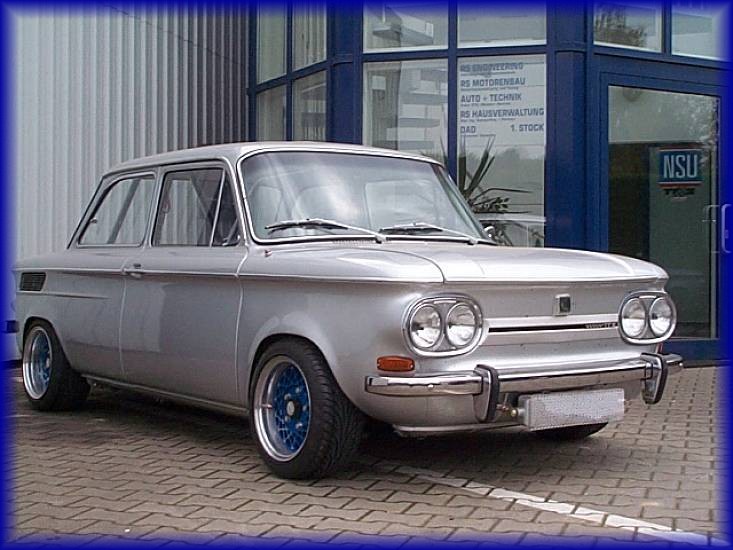
Even frugal cars need to be desirable. Most electric vehicles are anything but. Right now, EVs are slow, ugly, cheap, and not good to drive. In contrast, the Tazzari Zero from Imola, Italy, wants to be a “wanna have”: great to drive, good to sit in and easy on the eyes. Here’s the data: cast-aluminum, glued frame, central motor, RWD, low center of gravity, Li-Ion Fe batteries. A two-seater that is a bit longer, but lower than a Smart. Weighing just 545 kg (1202 lb), 150 N·m of torque and 15 kW engine power would seem to go a long way. The top speed is 56 mph and it has a range of 88 miles. Gorgeous looks (if you ask me), with a dose of NSU TT attain the right balance of aggressive and cute.
Find Reviews by Make:
Latest auto news, reviews, editorials, and podcasts

Toyota has been remarkably upfront about its struggles with “Big Company Syndrome.” The fate of Toyota’s predecessor as the world’s largest automaker is an unavoidable example of what awaits giant manufacturers that lose their focus. And yet, as Toyota has replaced GM as the big daddy of car building, it keeps making eerily familiar mistakes. And its no surprise that Toyota’s challenges tend to center around marketing and brand management (hello, Scion). Toyota’s brand is a by-product of its obsession with manufacturing, rather than an independently developed, carefully-maintained image. The trademark Toyota brand qualities of quality and reliability are built on dedication and reputation, not the modern-day alchemy of marketing, sales strategies and brand-pushing. So why is Toyota telling Automotive News [sub] that it’s creating a wholly-owned subsidiary to coordinate global marketing and advertising? And why is Akio Toyoda going to be running the new marketing realm?

The list of CAFE violators (in PDF form) reads like a valet’s to-do list: Mercedes, Porsche, Ferrari, Maserati. These firms pay CAFE fines because, well, they can. CAFE fines are calculated by multiplying each tenth of a mile per gallon of average non-compliance by $5.50, then multiplying that dollar amount by the number of vehicles sold. As a result, luxury firms pay the highest fines when they try to go mass market: Merecedes paid about $30 million for 2007. But if CAFE is already weighted to let small companies off the hook, why are we hearing about new rules which seem to relax standards for firms selling fewer than 400k vehicles per term? Aren’t the regular loopholes enough?

[thanks to segfault for the link]

Yoga teacher and ForbesAutos refugee Matthew De Paula has brought his zen insights and love of top ten lists to MSN Autos. Given the popularity of the genre (which we now usurp in the name of truth, justice and the American way), Bill Gates’ Boyz must be happy enough with the result—although Matt makes a few choices that will surely give pistonheads pause. We report, you deride. Well, we do too, but I’m sure you catch my drift.
1. Ford Fusion — I’m not saying De Paula is a Detroit apologist, but if ever a qualifier seemed po-faced, well, here it is: “The Ford Fusion doesn’t just hold its own against competitors, it beats them in some ways: The least expensive 4-cylinder Fusion is as fuel efficient on the highway (34 mpg) as the pricier Toyota Camry hybrid.” And that’s it: the only way mentioned. Oh wait. “The updated 2010 Fusion uses higher-quality materials, has better fit and finish, and a quieter ride than the model it replaces.” Don’t you just love it when relative excellence means relative to itself? Me neither.

The good old days of 2007. A time when I could visit a parts store and walk away with hundreds of dollars in free stuff. I remember O’Reillys giving me 24 quarts of synthetic oil for about $8.00 in taxes. Advance Auto Parts seemed to have access to every cheap Chinese tool set ever made with mail-in coupon in tow. As for Autozone? They gave me 12 free batteries when I established a commercial account there. I used them all that winter and made money on the cores. Ahh, those were good times! They’re no more. But you can still pick up a good deal here and there.

Despite TTAC’s GM Death Watch and Chrysler Suicide Watch, the MSM was asleep at the wheel during the domestics’ dissolution. Now that New Chrysler and New GM have appeared, like sin from Satan’s head, the MSM is . . . asleep at the wheel (obscure reference of the day: “miles and miles of taxes”). That said, U.S. News and World Report has this Troubled Asset Relief Program (TARP) thing wired. The magazine commissioned the Ethisphere Institute to consult its weekly TARP index to calculate the odds that We The People will see our $700 billion (that’s billion folks) “investment” again. The bottom line: the Institute says anyone who thinks we’ll get out bailout bucks back from Chrysler, GM and GMAC should be committed. Make the jump for the run down on the troika of former auto industry stars disappearing your tax money down a TARP-shaped black hole.

Curbside Classics is taking you back to 1971 for a virtual comparison test of six small cars, based (and partly borrowed) from a C/D test.
I don’t have any shots of the Simca 1204. I haven’t seen one in over twenty-five years; have you? So I’m taking my lifeline (to Google images). But the Simca 1100/1204 was such a remarkable and historically significant car, perhaps the most influential small car since WWII. Its DNA is in every transverse-engine FWD hatchback in the world. The VW Golf was a perfect crib of the Simca wearing a handsome Italian suit. Plus, j’aime les voitures françaises. And the Simca almost won the C/D test. It should have won. So forgive me, but we’re going to have show and tell without the show.

Rear view cameras are becoming commonplace on SUVs, CUVs and luxury cars. But only as part of very expensive option packages. If you prefer spending your money on things like groceries and house payments, or have an older vehicle, you’re pretty much out of luck. But not entirely. Peak (yes, the antifreeze people) offer the Peak Wireless Back-up Camera System. To see if it passes muster, I installed one on my 1999 Chevrolet Tahoe.

Now that Steve Rattner has surrendered his position as head of The Presidential Task Force on Automobiles (to attend to a federal bribery investigation into his old crew), Ron Bloom is the man running two of America’s three domestic carmakers. I’m sorry? Did I say “running?” I mean to say, “passively protecting.” ‘Cause Ron says his twenty-four member mob—responsible for guarding taxpayers’ $50 billion “investment” in Chrysler and GM—is backing off from hands-on management (e.g., capping GM CEO Rick Wagoner’s ass). They’re only going to step in on “core governance issues” and “major corporate events or transactions.” Did all those quote marks tip you off? It’s true: this makes no sense at all. Didn’t when the checks were cut. Still doesn’t. Anyway, the Detroit News reveals that Big Ron II’s continuing to stretch the bounds of linguistics and credulity to the event horizon. Yesterday, Bloom told the congressional panel in charge of overseeing the overseers that “the best way to get out as quickly as possible is not to commit to a defined schedule.”


As well it might, given that the German automakers are about to game the Environmental Protection Agency’s new “greenhouse gas” emissions standards. The Wall Street Journal reports that “Under a provision of a plan to curb greenhouse gas emissions, the Obama administration has proposed to set less stringent standards for car makers that sell fewer than 400,000 vehicles a year in the US. That target defines the major German brands as well as a few smaller Asian manufacturers such as Suzuki Motor Corp. and Mitsubishi Motors Corp.” This has not pleased the America-first crowd or the friends of the earth . . .

TTAC Commentator KalapanaBlack writes:
My mother has a 2001 Oldsmobile Aurora 4.0 with 60,000 miles. There have been four or five problems with it since new, but it hasn’t been as disastrously unreliable as I feared a $40,000 knock-off Caddy would be, especially given the “reliability” of the other K and G-Body sedans.
The problem: about two weeks ago, she attempted to roll the passenger side front window down and noticed that it wouldn’t budge. I thought it might loosen up with repeated closing of the door, but that didn’t work. The window lock button is not engaged, and the window refuses to work for the master (driver side) switch or the switch mounted on its own door.

An independent statistics watchdog agency that reports directly to the UK parliament issued a report yesterday criticizing a key element of the government’s road casualty figures. The UK Statistics Authority praised the general credibility of numbers generated by the Department for Transport (DfT), but the agency threatened to withhold the designation of “national statistics” from DfT reports if the department failed by November to reform the system of serious injury data collection known as STATS19. “The major unmet user need is for statistical information about road casualties that reflect the well-documented fact that the STATS19 system under-records the numbers of those injured in road accidents and the severity of injuries,” the Statistics Authority report explained.



Recent Comments