


In today’s wode tian (OMG) moment, China’s People’s Daily reports that “a total 16.7 million vehicles were sold in China last year, bringing the country’s total vehicles to more than 186 million.” Shen me? (Excuse me?)
(Read More…)


In today’s wode tian (OMG) moment, China’s People’s Daily reports that “a total 16.7 million vehicles were sold in China last year, bringing the country’s total vehicles to more than 186 million.” Shen me? (Excuse me?)
(Read More…)

In my (probably failing) memory, yesterday was the first CC Clue that went un-identified. It was hard, being so dark and all, because you’re anything but clueless. So I’ll throw in a Friday bonus CCC, which we normally don’t do. But it’s a make-up session, so it’s still dark and finny. But not nearly so hard. Here’s your chance to pull up your grade!
The Toyota Prius.
According to Japan’s JADA dealer association data, quoted by the Nikkei [sub], Toyota’s Prius became the first hybrid to take the prime spot on Japan’s annual sales ranking of all cars, including minivehicles. 2009 Sales of the Prius jumped nearly 300 percent to 208,876 units.
(Read More…)

In India, they take their smallest and cheapest car and somehow stuff 20″ wheels on it. In the US, we take (what was once) the proudest luxury car in the land and put 13″ wheels under it. It takes all kinds of wheels to make the world go ’round. Close up: (Read More…)

This is reportedly the new Aveo RS concept coming to the Detroit Auto Show, and apparently a near-production look at the next-generation Aveo. Well, you weren’t expecting it to look worse than the current model, were you?

We’ve got a two-for-one deal on today’s wild-ass rumors, as neither seems likely to amount to much. First off, GM’s Jon Lauckner caught a headline at the WSJ by conjecturing that the Volt’s price “could be notably lower” than the anticipated $40,000. “We have until this summer to figure that out,” Lauckner said. Meanwhile, The Atlantic‘s Daniel Inviglio ran a few numbers, and came up with some rough estimates about possible amortization compared to a Toyota Prius at different price points ($40k, $30k, $25k). Even at $30k, according to Inviglio’s analysis, you’d have to drive 3,350 miles per month to see an economic benefit over the Prius. Yikes!

This graph of Hyundai’s market since 1993 is a refreshing antidote to yesterday’s depressing Detroit market share picture. And it doesn’t take a whiz kid to deduce the single most important factor in Hyundai’s success. Notice a bit of an uptick starting in 1998? That was the year Hyundai introduced its 10 year, 100,000 mile warranty. It’s been suggested before on these pages that GM should address its “perception gap” with meaningful improvements in warranty coverage rather than more talk. After all, if it could fix Hyundais weak 1990s-era rep, it couldn’t hurt The General’s. This seems to be conclusive proof that warranties matter as much as the products they cover. After all, what good are a few extra horsepower or more interior room to a consumer compared to insulation from risk?

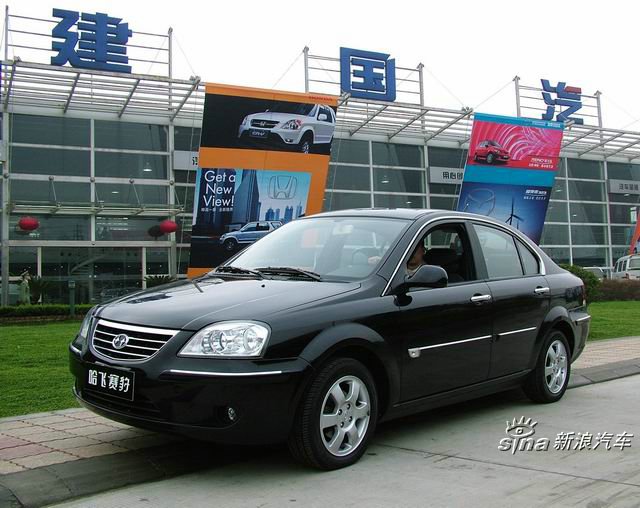
According to Detroit lore, Henry Kaiser once loudly threatened to throw one hundred million dollars in 1940s money towards the greater glory of Kaiser Motors, drawing a bemused chuckle from GM Chairman Alfred Sloan who quipped “give the man one chip.” Fast forward to 2009, and Coda Automotive, a firm hoping to sell Californians a $45k EV-ified Hafei Saibao Sedan, just scored $25m in funding reports Earth2Tech. That gives the firm a total of $74m raised so far, although the current round of funding won’t closed for another few months, say spokespeople. The latest money, from Aeris Capital, will be spent on “final safety certification testing,” as well as scaling up battery production. In short, Coda is almost-not-quite all the way to one chip in the car game… but that’s still only good for one roll of the dice. Even the weakest automakers have many multiples of that sum in their Treasury escrow accounts. And even the allegedly “bailout free” automakers get to raise debt with a little help from their government friend, TALF.

A good window into someone’s soul is their screen saver/wallpaper. You’re looking at mine. (Read More…)

Having lead a life of high adventure in my youth, scaling pinnacles of rocks and ice, I never imagined that I’d meet my end, flat on my back crushed beneath a falling car. I was setting a new land-speed record for butt-shoulder-shuffling on my way out from under the creaking, swaying mass of 1999 Volkswagen New Beetle-shaped steel groaning menacingly above my body. Moments before the VW started moving it was resting firmly on my tried, and until-that-moment trusted ramps and jack-stands. But now I was going to die, life flashing before my eyes, staring swaying death in the face as my wife’s “cute bug” transformed into Damocles’ Sword, or Poe’s Pendulum, my garage floor playing the Pit. The tremor ceased as my head cleared the oil pan, and the Beetle slowed, then stopped making the horrific creaking noises as the jack-stands stopped wobbling. I cleared the bumper and leapt to my feet in a single motion, and relief swept over me like the expected post-quake tidal wave should. “Damn, I’m still alive!… in fact… I’m completely unharmed!” Running into the house I yelled at the family: ‘Did you guys feel that?!” … only to be met with a non-chalant: “feel what?”
In retrospect the tremor which scared me out from under the car was only a barely-rattle-the-china 3.2 on the Richter Scale, but it drove home an indelible lesson to this DIY mechanic living in a region where three tectonic plates meet: I NEED to get a lift!
Consumer Reports may have discovered why owners of clean diesel cars might feel a bit suicidal from time to time. They recently took a long-term tester Mercedes GL320 BlueTec clean diesel into the shop to have its urea-based AdBlue exhaust-scrubbing fluid refilled, and the results were… eye opening.
The total bill just for adding AdBlue? A stunning $316.99. We were down to 18% full on the additive at 16,566 miles. It took 7.5 gallons to fill the tank, costing an eye-opening $241.50 for the fluid alone. The labor to add the fluid plus tax accounted for the rest. None of this was covered by the warranty… At the current rate and cost of consumption, just the AdBlue itself (without the labor, which would probably be included as part of the routine service) would cost $1,457.80 for 100,000 miles of driving. That’s a lot of money, knocking about a third off of your fuel savings vs. buying a GL450 V8.
And you thought gas was expensive! From what we’ve been able to dig up, the $32/gallon price is a fairly typical price at Mercedes dealers. Are there any Mercedes or Audi clean diesel drivers in the house who can confirm?

Mirror, mirror on the wall, who is the fairest Pontiac of them all? Pontiac’s golden decade, starting in 1963, has plenty of contenders. The ’63 full-size Pontiacs, headed up by the mile-stone Grand Prix shocked and revolutionized the whole industry. Some love the swashbuckling and hippy ’65 GP, or the even the more voluptuous ’67. The midsized Le Mans and GTO has its fans, as does the ’71 Firebird . But the ’69 Grand Prix may well be the one, for sheer dramatic effect, proportions, and its more restrained size. Well, even if you don’t think the ’69 is the one (and I may be in your camp), I’m going to blow my horn and say that this photo is pretty fair. Does it remind you of something you’ve seen before? “It” was in the back of my mind when I was shooting this GP, but I was pleasantly surprised at how well I had remembered “it” when I got back home: (Read More…)

With the world starting to gain stability economically and economists talking about “bull markets” you’d be forgiven for thinking we can start to be optimistic and why not? Ford are flying high, GM (prodded by the government) are adding third shifts and Chrysler’s sales “only” dropped 3.7% in December. Well, don’t be too sure. CNN Money reports that a survey conducted by KPMG of 200 auto and supplier executive showed that 88% of them believe there is still too much capacity in North American plants. In fact, the survey showed that the executives believe that overcapacity is a bigger problem today than a year ago and when you look at the figures, it’s a bit of a no brainer.

[Ed: part one of this piece can be found here]
Six hours of completely sober sleep! As I arrived at Laguna Seca for a double race day in the Skip Barber MAZDASPEED Challenge, I felt like a new man. It’s customary for most club race days to start with practice sessions, but Skip Barber chooses instead to put the drivers in their trusty Econolines for a morning ride-and-coach session. My rather humbling lack of pace on Saturday — two full seconds a lap behind the leaders — led me to take this one seriously.





Recent Comments