


GM withdrew its sponsorship of the US Olympic team after the 2008 games, because, as a spokesperson explained at the time, “we have other avenues to be able to reach this same audience without bearing the expense of being an official sponsor of the U.S. Olympic team.” However, GM is a main sponsor and official vehicle supplier of the 2010 games in addition to being the main sponsor of the Canadian national team. According to TNS Media, GM was the leading advertiser in the 2006 Winter Games, spending $111.6m and leading the auto sector to a resounding lead in ad spending (total $156.7m). General Motors has reportedly cut back its ad spend on Vancouver, but details aren’t being disclosed. And at least one GM investment in Vancouver-related publicity won’t be paying off: the General Motors Place is being temporarily renamed the Canada Hockey Place in order to comply with IOC standards. We’d normally make some crack here about your tax dollars at work, but Olympic sponsorships are lined up years in advance. Too bad that back in 2007, when GM was losing $2b annually, it denied that its financial status had anything to do with its removal of US Olympic team sponsorship. Had the firm been more realistic about its financial health… well, who knows where we’d be right now.
Posts By: Edward Niedermeyer

Optimism is a rare commodity in the auto industry these days, and nearly all of it comes from the so-called BRIC nations of Brazil, India, China and (to a lesser extent) Russia. India in particular is being targeted as one of the few growth opportunities for the industry’s global players. Nissan/Renault, Volkswagen, Honda, Ford and GM have all recently announced major initiatives to target growth in India’s entry-level market, and GM even gave up control of its Chinese operations in order to beef up its Indian presence. But, as the Hindu Business Line reports, India could be staring down the kind of overcapacity that is causing so many headaches for automakers in mature markets.

The Globe and Mail reports that Toronto-based Trillium Motor World has filed a $750m class action suit on behalf of 215 culled Canadian GM dealers. The suit names General Motors and, in an interesting twist, its law firm Cassels Brock & Blackwell LLP. According to a suit’s statement of claim, Cassels Brock was representing Canada’s federal government in bailout talks with GM at the same time as it was representing the Canadian Automobile Dealers Association, a relationship it never disclosed to the dealers. Conflict of interest much?
(Read More…)
Toyota got hammered by another big recall today, with 2.3m vehicles called back for sticking accelerator pedals. According to Toyota’s release, this recall is
separate from the on-going recall of approximately 4.2 million Toyota and Lexus vehicles to reduce the risk of pedal entrapment by incorrect or out of place accessory floor mats. Approximately 1.7 million Toyota Division vehicles are subject to both separate recall actions.
How much more of this can Toyota take? One thing is for certain: ToMo has got to pull its current ad campaign which emphasizes the alleged quality of Toyota products. Cognitive dissonance might work in the short term but once consumers wise up they’ll never trust you again. Just ask GM.

Chrysler/Fiat CEO Sergio Marchionne has a handful of brand management on his plate, as he aligns his two firms for the future. Merging Lancia and Chrysler was an obvious move; creating one full-line brand (albeit with different names from market to market) is a lot better than trying to keep two distinct brands, although even with their powers combined, Chrysler/Lancia is going to have an uphill struggle. With Lancia “taken care of,” the biggest problem on Fiat’s plate is Alfa Romeo, which has reportedly lost €200m-€400m per year for the last decade.

Ford’s fleet business has traditionally been in trucks and full-sized vans, a fact that explains why you’ve never seen an E-Series van in anything other than fleet white. But with residuals on the Ford Fusion staying higher than, well, the Sebring and Malibu, Ford’s recently-refreshed midsized sedan is becoming an attractive fleet option as analysts project a pickup in corporate fleet buying this year. Ford’s Jim Farley tells Automotive News [sub]:
We’re seeing a whole new group of clients come to us saying we want to buy Fusions. We’ve never had that before, at least in the recent past, and that has really grown our commercial fleet business.
Never had this before? Really? What about Crown Vic/Towncar? What about the third- and fourth-gen Taurus? What about the V6 Mustang Convertible that every rental storefront has at least one of? Besides, what happened to reducing profit-sucking fleet dependence? Oh well, something had to replace the Pontiac G6. And if anything kills a model’s resale, it’s heavy fleet sales… if that’s what is drawing the corporate interest, it won’t last long.

A recent test by Autobild sought to find the German-market vehicle that could tow the most kilos per euro. Third place (at€13.36 euros per kilo) went to the AWD 1.6 TDI Golf Variant, which is tow-rated at 1.8 tons on the German market (first and second went to the Tiguan and CR-V). Though the American-market Golf TDI has far more power than Autobild’s value-hauler podium finisher, Volkswagen continues to send tow-rating curious Americans messages like this one:
Thank you for visiting the Volkswagen website. We appreciate your
inquiry regarding the capability of using your Volkswagen for towing
purposes.Volkswagen does not recommend a passenger vehicle be used to tow.
Bastards! Incidentally, this image is from a post on the British Caravan Club’s voting the Golf 2.0 TDI as “Overall Towcar of 2009.”

This week saw the Volt’s price point issues return to the public eye, as GM’s Chairman and CEO made it clear that he takes the government’s $7,500 tax credit for granted. But Whitacre’s dissembling revealed once again GM’s fundamental problem with the Volt: getting people past the sticker shock. Though GM’s short-term viability doesn’t hinge on the Volt selling like gangbusters, it’s clear that the Volt’s initial success or lack thereof will be a crucial factor in GM’s ability to hold a successful IPO and extricate itself from government ownership. Which, according to The Big Money‘s Matt DeBord, is one of the reasons the government should expand the Volt’s credit of $10k. Another reason: the Volt’s competition is too good!
with the base Prius selling for just over $20,000 and the base Honda Insight hybrid for under $20,000, the feds may have to start thinking about how to enable innovative electric and gas-electric plug-ins to survive. The EPA mandate to raise fleet fuel-economy standards to average of 35.5 mpg by 2016 looms, and a component of that target should be EVs and plug-ins. Otherwise, carmakers may abandon the tech, leaving it stillborn to cynically massage their fleet numbers by importing small cars from foreign operations to North America—cars they know Americans will only grudgingly purchase and that may force the government to chuck the 35.5 requirement.

The extent to which Honda has lost its mojo has been a hot topic in these pages of late. Though the big H has stumbled with Acura, hybrids, design and other crucial areas, one major positive seems to persist: the strength of the Honda name. Which is why it’s so strange to read Bloomberg report that Honda will launch a new brand in China next year. The new brand, named Li Nian meaning “ideal” or “spirit”, will be used for Honda’s new sub-Fit small car, designed to take advantage of China’s reduced tax on engines smaller than 1.6 liters.
(Read More…)

In 2005, California opened its High Occupancy Vehicle (HOV) or carpool lanes to hybrid drivers, as an incentive for Californians to purchase more fuel-efficient vehicles. Without a stickered hybrid, HOV lanes are only allowed to be used by vehicles with two or more occupants. But this hybrid perk expires at the end of this year, meaning California’s hybrid owners will no longer be able to drive in the HOV lane as a single-occupancy vehicle. In their anger, a few of the estimated 85k HOV pass holders are letting their ugly hybrid superiority complexes hang out for all to see in the San Jose Mercury News’s Roadshow column. One hybrid owner writes:
Some critics had a choice in buying their vehicle. Did you choose to buy a gas hog-pig SUV or truck, BMW 300 series [sic], a Mercedes-Benz E-class or a safety-first Volvo? You knew these cars didn’t qualify for the carpool lane because they are environmentally unfriendly. You made a conscious choice to be self-centered and materialistic and now you all are projecting your selfishness upon hybrid owners
I love the smell of entitlement in the morning…
(Read More…)

I don’t watch “24” but apparently GM’s dead brand Pontiac Pontiac “received $256,200 in exposure by 8 total sequences, including one verbal mention” on the season premiere of the Fox terror drama according to Front Row Marketing and TVbythenumbers.com. Your tax dollars hard at work building equity for dead brand? Out of morbid curiosity, are there any 24 fans out there who can tell us what these references were? [Hat Tip: Graham Smith]

Almost exactly a year ago, we heard that Ford wouldn’t be developing a global RWD platform in Australia. That came as sad, but obvious news back then… but check it out: Motor Trend just got a hot “scoop”!
Under the global rear-drive platform plan, the 2014 Mustang was to have shared its basic architecture with the next generation Australian Ford Falcon, and possibly a new flagship sedan for Lincoln. The Mustang would have been on the short wheelbase version of the platform, the Falcon on the mid-wheelbase, and the Lincoln on the long wheelbase. But that strategy has changed…
…By the time a new rear-drive Lincoln could appear, the Town Car will have been out of production for three to four years, and with high gas prices in Australia, no-one expects major growth in Falcon sales. These factors taken together seem to have conspired to torpedo the global rear-drive platform. “The [next generation rear-drive] Falcon is dead,” said one Ford insider bluntly, in apparent confirmation.
Shocker! The problem is that Ford’s just released a new Mustang, meaning the current model will be a bit long of tooth when the nameplate’s 50th anniversary rolls around in 2014. The good news? Motor Trend’s “scoop” isn’t that Ford will be slapping together a “very special edition” consisting of paint, wheels, badges and certificate of authenticity.
The bad news?

Ford’s facing one of the toughest challenges in automotive product planning: how to offer the competitive compact pickup consumers say they want without cannibalizing far more profitable full-sized trucks. The solution? Don’t offer a competitive compact pickup. “It’s no secret we have a new Ranger coming globally. We’re working on one for all the other markets in the world,” Ford’s Derrick Kuzak tells Pickuptrucks.com. “The difference is that all of those other markets only have a Ranger. They don’t have an F-150 above it.” See how that works? But don’t worry, Ranger fans. Ford has your effete, pathetic backs…

The Detroit Free Press reports that a recent filing by the California Air Resources Board [Full filing in PDF format here] threatens that a rapid ramp-up to the proposed 35.5 mpg 2016 standard and a reduction in zero-emission vehicle credits are necessary “to ensure California’s continued support.” CARB spokesman Stanley Young explains that “what we wanted to do is convey the level of importance for these two issues,” and that it’s “too early” to say whether California will withdraw from its compromise with the Obama administration. Still, the threat of a California withdrawal should be enough to get some attention in Washington, as Obama adviser David Axelrod has called the emissions compromise one of the administration’s top accomplishments of 2009.

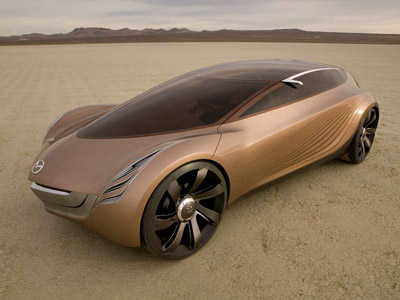
We should have seen this coming when Mazda first called its Furai and Nagare concepts “design studies” instead of “the unfortunate results of a savage brown-acid-and-Lovecraft bender at Mazda’s design studios.” New direct-injection, stop-start engines are approved for the European version of the new Mazda5, but as usual there are no guarantees they’ll make it to the US market version. More details when Mazda5 comes alive at the Geneva auto show.





Recent Comments