


Can you believe it? And to think they were trying to become the first firm to offer a production diesel-hybrid. In 2010. Sound familiar?
Find Reviews by Make:
Posts By: Edward Niedermeyer

Credit is at the heart of the current auto crisis, a fact agreed to by all sides of the debate. But while the pro-bailout crowd wails about needing a 700 FICO score to get a car loan, the fact of the matter is that cheap credit allowed Detroit to create this problem in the first place. Mother Jones correctly points out that Detroit has been redlining the American auto market for years, by finding the easiest profits possible. And no, they’re not talking about SUVs. The thesis is that with car pricing easily available online, dealerships relied on financing offers to lure consumers into the store. Loans were loaded with extras, interest rates would be bumped for kickbacks, and upside-down trade-ins were rolled into the new loan which often stretched to six or seven year terms. These tactics, which MJ calls “endemic,” have left a US market where 85 percent of Americans with a car loan have negative equity. On average upside-down Americans owe $4,400 more than their car is worth. And all the while congress has played right along, from including a provision in the 2005 bankruptcy “reform” which forces filers to repay the entirety of a car loan, even if they owed substantially more than their car was worth, to engaging in fraud themselves. Now, as Rosemary Shahan of Consumers for Auto Reliability and Safety puts it “no matter how much money Congress throws at the automakers, it’s car buyers who will rescue them or not.” With 85 percent of American car owners looking at an average of $4,400 negative equity on their vehicles, Mother Jones is absolutely correct in assuming that the $17.4b bailout band-aid won’t bring back the business Detroit needs. Which proves that even when their main product was financing, the Detroit Three still just couldn’t get it right.
 Autoblog Green has picked up a press release from Alcoa, which reveals that the aluminum giant has secured the wheel contract for the Chevy Volt project. And though we could justifiably complain that this is literally putting the wheels before the horse (we still have no official confirmation of the battery contract status) there’s even more to dislike about this move. Obviously the Volt has to justify its sky-high MSRP on its green credentials (given that GM’s green credentials are riding on this single program), but choosing Alcoa as a wheel supplier further degrades the program’s green cred. Alcoa was recently named number 15 on Political Economy Research Institute’s (PERI) Toxic 100 of 2008 for releasing 13.11 million pounds of toxic air this year. The firm has run afoul of the Environmental Protection Agency several times for violations of the Clean Air Act and creating at least one groundwater superfund site. But hey, Alcoa’s wheels are about 20 percent lighter and twice as strong as other cast aluminum wheels. So whatevs, right? Then again, we are talking about a firm that trumpets paint burning as an environmentally friendly move.
 Don’t worry. The economy won’t hurt you. It just wants you to have some fun. To prove it, the price of gas continues to fall, now averaging $1.66/gallon according to USA Today. Officially, the last time prices were this low was in 2004, and prices are still dropping after hitting an all-time high this June at $4.11/gallon. The government’s weekly gas and fuel price update shows prices are at their lowest in the Gulf Coast and Rocky Mountain regions. Diesel prices are falling as well, hitting a national average of $2.42/gallon. Help keep downward pressure on fuel prices by finding the lowest local prices (with help from your federal government) here. And if you’ve got a dime you can listen to your V8 tonight. Freaky!
 The Australian federal government has hopped on the auto bailout bandwagon, “investing” $149m in production of a Holden-badged GM compact car. The South Australia state government will kick in $30m as well, as the Delta-platformed Cruze-alike will be produced near Adelaide. Styling and engineering will be carried out in Melbourne. And what do the Australian people get for their representatives’ fiscal abandon? According to Adelaide Now, the project will “support” 600 GM jobs and 600 supplier jobs, but it seems that these will likely not be new hires. Money for the project comes from Australia’s “Green Car Innovation Fund,” and its use is being justified by the possibility of ethanol, LPG and CNG powertrains at some indeterminate point in the future. “We recognise the needs and desires of motorists are evolving with growing concern around environmental factors and shifting consumer sentiment,” says Holden Chairman Mark Reuss. “Such evolution calls for an innovative approach… (and) the new vehicle will cater for growing demand for smaller cars focussed on economy.” when all is said and done though, the environmental issues are simply a greenwash for Australia to prop up weakening production and subsidize a “domestic” Corolla competitor. Sound familiar? The irony is that the GM doesn’t especially need a bespoke version of its global Cruze for Australia, although it will be required to match the government’s $149m outlay.


‘There are two engine options, both new and both featuring direct fuel injection to save fuel. The base models get a 182-hp four-cylinder that’s good for 21/30 mpg city/highway with front-wheel drive and 20/27 mpg with all-wheel drive. The V-6 packs 255 hp and returns 18/25 mpg with front-wheel drive and 17/24 with all-wheel drive.”
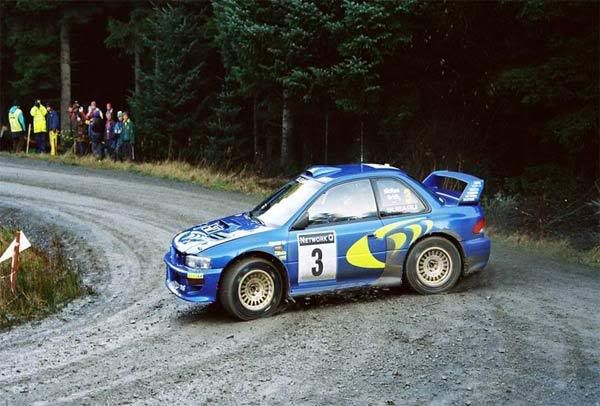 Or the best, if you’re into the whole “half full” thing. And there’s no shortages of possible answers. Honda has dumped F1, but Toyota hasn’t. Subaru and Suzuki are dumping the WRC, but Chrysler‘s just “throttling back” (the technical term) its NASCAR involvement. Incidentally, NASCAR just settled a lawsuit for $225m involving “23 specific incidents of sexual harassment and 34 specific incidents of racial and gender discrimination.” And then there’s Ferrari, who is staying in F1 but at the staggering price of a Tata Motors sponsorship. Meanwhile, I’m still waiting for Tata to field the first-ever factory LeMons team. There may well be more storylines that I’m missing, but the trend is clear. Thanks to the economic downturn, motorsports aren’t the priority they used to be in terms of brand building. Or are they? Or did they even matter much in the first place?
Though the suspense is gone from the bridge loan debate, GM ain’t out of the woods yet. There is much work to be done in the land of GM product development, a fact that is emphatically underlined by the news of the day. The pre-Detroit Auto Show previews of the Orlando show car and a possible Cadillac-bodied Volt perfectly highlight The General’s future product flailing. The Orlando’s vision (high-efficiency transport for seven) won’t be realized for downgrading American SUV owners since it won’t be built here. While the Cadivolt rumor is yet another poignant reminder of that vehicle’s ill-fated development program and inevitable death by price point. Speaking of which…
 It is being reported that Bush and Obama worked together on the $17.4b bailout package announced today, to avoid saddling the incoming chief executive with “the demise of a major American industry in his first days in office.” And based on Obama’s statement on the bailout today, it seems that he’s preparing yet more assistance for Detroit. Provided of course that automakers don’t “squander this chance to reform bad management practices and begin the long-term restructuring that is absolutely required to save this critical industry and the millions of American jobs that depend on it.” Ironically though, the bailout’s structure does dump the problem on Obama before even the March 31 date. Dow Jones (via CNN Money) reports that the final $4b of Bush’s bailout (designed to carry the restructuring firms through February) can not be doled out without congressional activation of the second half of the TARP fund. And Bush ain’t gonna even try. “It’s not necessarily true that this administration, in the remaining 31 days, I believe, will go back to Congress,” White House Deputy Chief of Staff Joel Kaplan said. “What is clear is that the Treasury, with these loans (the initial $13.4b), have effectively committed the first $350 billion from the TARP.” Which means Obama will have to request that congress open the final $350b before the March 31 deadline, and only days into his presidency. And if he does free up the $350b (which he is far more likely to accomplish than Bush), well why the hell not give Detroit even more? We sure wouldn’t be surprised.
 With $17.4b pledged to GM and Chrysler, and the Canadian “plus one” on the way (er, “plus several billion,” actually), the dark days of Carpocamageddon are all but over, right? Of course not. As several of the B&B point out in comments on the bailout announcement, GMAC is a giant question mark hanging over the entire situation. The former GM captive lender is headed for a massive GDIF (God Damn, It’s Friday) moment today unless about $5b of healthy capital lands on its lap… within hours. The AP reports that GMAC admits that it has no way of extending or sweetening the deal, implying that bankruptcy is an inevitability. And here’s the kicker: according to Brian Johnson of Barclays Capital, if GMAC were to fail, GM could need an additional $9 billion to $13 billion in funding to supply financing to its dealers. And GM only gets $9.4b from the bailout until February. One step forward and two steps back? Actually, the real bad news which the bailout does nothing to stop comes from GM bondholders. And their newly hired legal help. (Read More…)
With Chrysler going on what may be a permanent Christmas vacation, things aren’t going good at all round Auburn Hills way. Especially with the Cerburian masters busy sweating the GMAC situation. Automotive News [sub] communicates the urgency of the situation the only way it knows: by extolling how much more necessary this makes a bailout. But you won’t learn much by reading the rhetorical flailings of bailout-backing legislators. No, to get the real skinny on how bad things are you need a good old-fashioned racing metaphor from Dodge Motorsports director Mike Accavitti. “We are going to throttle back,” he tells Automotive News [sub]. “We have to reduce our spend. We have to get our expenses in line with our revenues.” Madness. And what of the literally hundreds of people who buy Avengers because of their epic oval exploits? “NASCAR is not exempt from anything else that we do to market and promote vehicles,” reveals Accavitti, who says Chrysler has plans to cut its NASCAR spending by more than 30 percent next year. Not too shabby for a company that’s literally at death’s door. Honda, Subaru and Suzuki ditched high-profile racing programs this year due to declining sales. And they all plan on staying open past December without receiving government aid. What’s wrong with this picture?
 The fate of GM’s dead brands walking generates rumor and hearsay like few other topics. GM is unraveling into a buyers market, and secret talks are typically denied within hours of their leaking. Ironically, one detail that rumors seem to have in common is the proliferation of Opels in the United States. Thus far Saturn has been the defacto donor brand for American Opels, but Motor Trend now claims it “makes sense” for Buick to cover Opel with brand familiarity. (Read More…)
 The bad news is that GM is so desperate for cash, it’s literally selling off its glorious past. Jalopnik reports that GM is auctioning off “many recent and slightly less-important vehicles from its Heritage museum Collection.” The good news? This is your chance to save GM, and get your hands on some of the products that once made GM the largest corporation in the world. As well as tons of the products that brought The General from there to Barrett-Jackson in search of cash flow. Plus some other random stuff (Pug 205 Turbo?). The auction will take place January 13-19, 2009 in Scottsdale, AZ. Mystifyingly, GM is even listed as a sponsor. So go on down and do your patriotic duty, and take a teal 1998 Riviera for the team. Or just gaze once more at the Art and Colour of General Motors wile crying softly. Full list of former GM Heritage Museum Collection vehicles on the auction block after the jump.



Recent Comments