



 We regret to inform you it is now a felony to shove a metermaid or interrupt the issuance of a parking ticket in the once-great state of New York. TheNewspaper.com reports that the New York state legislature has extended a special protection to metermaids that was once reserved for police, firefighters and paramedics. Under the new law, physical contact for which a meter maid can claim an injury is now a Class D felony, for which you could be sent to the big house for up to seven years. "No one likes to get a ticket," says Assemblyman J. Gary Pretlow, "but the contempt some persons have for the job of the TEA (Traffic Enforcement Agent. Aw) or New York City marshal does not warrant the violent confrontational approach they have taken." Pretlow was likely referring to a well-publicized incident this May in which a
metermaid TEA was beaten by an off-duty police officer to the applause of onlookers. Which would lead you to believe that metermaids have it pretty rough out there, and indeed the NYPD says some sixty TEA assaults were reported last year. Of course, that is in a city which had a total 27,295 reported aggravated assaults in the same year. You'd actually expect that aggrieved dude-on-metermaid violence would make up a much higher percent of those statistics.
Posts By: Edward Niedermeyer
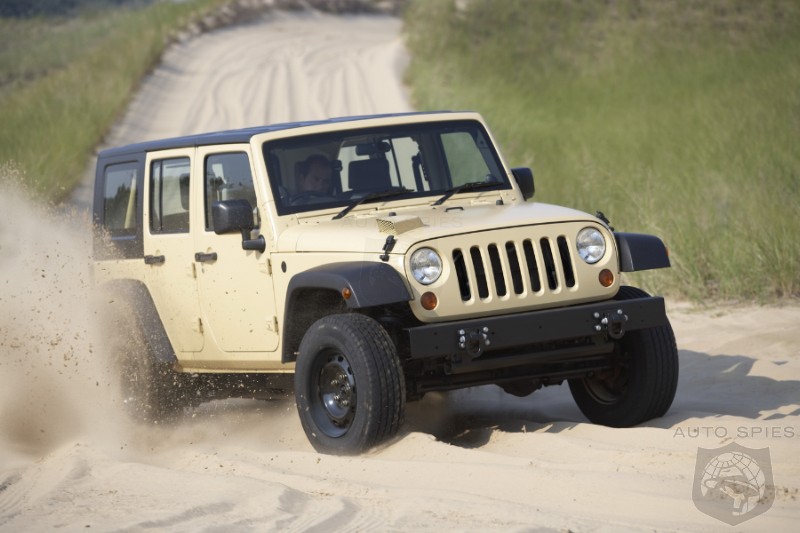
 Forbes is reporting that Chrysler and notorious industry-alliance slut Fiat are discussing terms of an agreement that could bring Fiat products back to America. Chrysler could lease North American production capacity and share retail space with the Italian automaker say enigmatic "people briefed on the talks." But Chrysler isn't in this just to have another competitor hocking its wares next door, luring the crowds away from Sebrings and Journeys. No, the Auburn Hills crowd has a cunning plan, and it involves Fiat's other, other squeeze: Tata Motors. Chrysler thinks the Wrangler would do well in India and other Asian markets, and talks with Tata are already underway. Since Fiat and Tata are becoming increasingly joined at the hip, Chrysler seems to be imagining a global triumvirate of second-tier automakers. Oh yes, and as one (again with the anonymity) investment banker puts it " "You could definitely see this evolve into something. It would make sense for Tata to buy Jeep if this partnership went through … and Chrysler could really do with selling a brand and getting some cash." So Fiat gets US market access, Chrysler gets a buyer for Jeep (and sweet, sweet cash), and Tata gets an armor-ready platform (Wrangler J8) to sell to the Indian military. Meanwhile Fiat has, quite by coincidence, agreed to finance all of Tata's Jaguar and Land Rover sales in Europe. This is starting to get kinky.
 When the new energy bill mandating higher CAFE ratings came out last December, it didn't offer automakers any kind of financial assistance to meet those goals. Since then, we've been treated to a parade of industry types wailing that with times so bleak, CAFE will kill Detroit unless the government bribes
assists the domestics with following the law developing more efficient cars. Perhaps sensing John McCain's weakness with the industry, Senate Democrats are rushing to position their party to take advantage of the now free-floating "bailout vote." The Detroit News reports that Democrat leadership has agreed to support $6b in loan guarantees to domestic automakers, and is considering a further industry stimulus for plant retooling. All told, the package will total some $25b in loan guarantees that would cost taxpayers $3.75b. Tellingly, $300m of the initial $6b is earmarked for advanced battery development. If that sounds familiar, that's because it's a pretty handy preemption of John McCain's "Project Lexington." And since McCain seems happy to stick to his Nancy Reagan (just say no!) on bailouts, Obama and the Dems are going to go after the weird industry-worker alliance that wants bailout. It's populist, it's patriotic, and (post-Bear, Fannie and Freddie) it's principled. Best of all, it only costs the taxpayers a few billion. Game on!
 Despite the fact that SUV are PC pariahs in The Land of Hope and Glory, despite the fact that unleaded costs $8.74 per gallon, SUV sales are up 11 percent on the year. Londoners are buying up SUVs faster than any other municipality. As London's roads haven't reverted to potholes and cobblestones, there must be some other way to logically explain this trend-defying headline. Are the expat Russian billionaires beefing-up their security entourages? Are conservatives celebrating the demise of Ken Livingstone and his $50/day C-charge plan? Is Clarkson on a Landie kick? Why is Old Blighty leading the Charge of the Light Truck Brigade while we here In The Land of the Free run for our Priora at first sign of $4 gas? Whatever the reason keep in mind that Britons consider things like the Daihatsu Terios an "SUV"– even though it sports a 1.5-liter engine and gets a combined 35mpg. Um, not that there's anything wrong with that…
 Spy shots of what could credibly be a new Toyota Prius have finally surfaced. The next-generation of "America's Car" looks bigger than the previous iteration, but that's about it in terms of differences. The new Prius sports styling that is nearly identical to the outgoing model, with only a tightened greenhouse to
spoil the rear vision freshen up the looks. Of course it will be more powerful and more efficient (according to Toyota). The spy photographers who sent these shots in to Nextautos speculate that the larger dimensions mean wagon and convertible versions could be forthcoming. Though these possibilities would be good news for ToMoCo's ambitions to build the Prius brand, they'll be sure to have their hands full just supplying demand for the standard version. Although, with Honda's unnamed Prius-fighting sedan in the offing, Toyota might want to differentiate the Prius from its blatant knockoffs.
 With the McLaren-Mercedes SLR set to end production, McLaren wants to build a new supercar of its own (front mid-engine THIS). Auto Motor und Sport reports that Mercedes, which owns some 40 percent of McLaren, reckon the new hot rod would compete with its forthcoming Gullwing super-SL. And? Racing boss Ron Dennis and partner Mansour Ojjeh each own 15 percent of McLaren; the royal family of Bahrain own the other 30 percent. They're all hot for a new McLaren road car. Accordingly, two mid-engined prototypes are currently undergoing track testing, one of which sports a German-built V10 race engine. Mercedes is livid, threatening to cut all payments to McLaren if it doesn't halt development plans. Ultimately, Mercedes is going to have to bite the bullet and buy out the last 11 percent of McLaren if they want to call the shots (outbidding the royal family of Bahrain ain't gonna be easy). Meanwhile everyone has to make nice and work together on the F1 circuit, where McLaren-Mercedes pilot Lewis Hamilton is kicking ass and taking names. So who's writing the novel?
 Nothing in Chrysler's dated portfolio needs attention more than its Camcord-fighting D-segment offerings, the Avenger/Sebring. The March departure of the lead on the Avengbring replacement didn't bode well. Motor Trend now reports that Project D is heading for disaster, gobbling-up huge engineering and design resources. Chrysler's in crisis mode. Option one: an all-new platform. No money. No way. Option two: deploy an existing chassis (e.g. Nissan's Altima) and wrap it in new sheetmetal. Option C: rip off another automaker's work wholesale, a la VW Routan. Needless to say, these cop-out options will do nothing to improve Chrysler's rep for mediocre products. Then again a badge-engineered Altima might be better than what Chrysler can cobble together on a shoestring. Either way, with Project D seemingly doomed to mediocrity, what else can keep Chrysler alive? Hybrid minivans? Cherys? Government bailouts? Not good.
BMW's Kinetic Energy Recovery System (KERS) is an F1 innovation: a regenerative braking system which generates electricity to boost power. And while it helps F1 look green and well-behaved, the technology's run into a few… issues. Like when the Red Bull team had to vacate its headquarters due to a fire scare. Or when a BMW-Sauber team technician got zapped by the system in the video above. But crazy innovators that they are, BMW hasn't been scared off from KERS by mere video footage of its mechanic being lifted off the ground by a few thousand volts. Auto Motor und Sport reports that BMW is looking into developing hybrid options for its M-line. Since standard parallel hybrid systems don't offer much performance boost, Bee-Em are looking at using KERS on road-going models. After all, KERS gives F1 cars a .2 to .3 second per lap advantage. Wow! Of course the fact that KERS is five times lighter and smaller than any comparable road car's hybrid elements means expense will be high (as it always is for those precious extra tenths of a second). Accordingly, BMW isn't announcing when KERS will arrive for M-line vehicles. Shocking! (Video Hat Tip to Jalopnik)
 Autocar UK reports that Fiat's performance brand Abarth is developing a mid-engined sports car. The restyled next gen Lotus Elise will feature a next gen Fiat turbo-charged, direct-injection, air-valve four-cylinder engine with 240hp. So, where are we? Lotus makes several Elise variants, from the Exige (racer) to the Europa (chiropractor's best friend). The Elise also underpins Rinnspeed's sQuba, Tesla's Roadster and Vauxhall/Opel's VX220/Speedster. Meanwhile, Lotus is delaying the release of a new Esprit. Does this mean Hethel's shortchanging its own models to work on its 340 development projects for 147 clients? Hey, you can't argue with $4m profit– especially after years of losses. And with a zingy Italian engine, the Elise-based sportster could ascend from the perfect to the sublime. You know; if you can get in.
 The Flex was supposed to be a big deal for Ford's downsizing SUV clientèle. But with production already stopped at Oaksville due to slow sales, the Flex is in deep doodoo. And now, Ford is announcing that the designer of the Flex is stepping down. Automotive News (sub req'd) couldn't get a straight answer from Ford as to why Richard Gresens has left the company, but there's basically two possibilities. One is that he's just another white collar statistic in Ford's war on salary costs, the other is that the Flex was as aerodynamic as a brick shithouse and its weak fuel economy is responsible for poor sales. Since nobody at Ford likely imagined that folks would be willing to downsize to the point where a 17/24 EPA-rated crossover is just not efficient enough, let's hope that Gresens isn't taking the fall for a whole company's worth of poor planning. Although given how auto biz politics work, we wouldn't be surprised. Meanwhile, Ford's vow to slice 15 percent of its salaried workforce is the perfect cover for corporate scapegoating.
 Oh me, oh my, GM is opening a new powertrain development center in Pontiac, MI. Why? According to GM Media Online, "Time equals money, and in keeping with this formula, General Motors today opened a brand-new, state-of-the-art global Powertrain Engineering Development Center that will bring advanced, fuel-saving powertrains to market faster and at less cost by reducing 10 weeks from its powertrain development process." Funny, doesn't building huge facilities equal money too? But seriously, GM says that powertrain development savings will hit $200m this year, thanks in part to this new facility. The 450k square foot building is "where GM will develop and test the Chevrolet Volt's electric drive unit, motors, power electronics and engine," according to the press release (note the use of future tense). The General will also use the facility to develop electric motors for fuel cell and hybrid powertrains, as well as other advanced gasoline, biofuel and clean diesel engines and transmissions. Compressed-air pallet lifters cut test changeover times from 24 hours to 20 minutes. New dynamometers can test every powertrain in all conditions. A global operating system unifies the development process and by shifting early calibration testing from raods to labs, GM says it can cut ten weeks from development time. Which should come in handy if they want to get the Volt developed within the already "well-pushed time envelope".
 Back in the day, T. Boone Pickens questioned why his then-boss, presidential nominee Bob Dole supported ethanol. Dole's answer was telling. "Let me explain something to you about politics," the Kansas Republican replied. "There are 21 farm states, and that's 42 senators. Don't waste any more of our time or your time telling us it's a bad idea, because they're going to do it." And when politics trumps policy, you get stories like this one from The Oil Drum (TOD). With gas consumption likely to decline thanks to high prices, TOD wanted to know if federal ethanol mandates would sink with the market. The Department of Energy told them ethanol mandates are still set to increase, from 9b gallons this year to 12b gallons in 2011. Which raises a problem: what to do with it all. By DOE estimates, there won't be enough gasoline to "absorb" that much ethanol in standard E10 blends in 2011. There's also not enough E85 pumping stations (or "infrastructure") for the corn juice. In other words, the feds are mandating more ethanol than we can use so that Midwest senators will be pliant for other senators' pork projects. We've sure got this energy thing licked, huh?
 In a maximum interview with Auto Motor und Sport, GM Car Czar Bob Lutz tells us to expect 1m annual production of E-Flex EVs in 2020. Meanwhile, we can expect "no more than" 10k Volts by 2012. (For reference, it took Toyota ten years to sell one million Priora, and that they won't hit 1m annually until (you guessed it) 2010. As in the year the Volt comes out.) Lutz also confirms that though Opel-branded E-Flex-mobiles may be forthcoming, the Volt will be a world model to be sold in left and right-hand drive markets. Interestingly, Lutz says he
can't remember has never seen anything like the current downturn in the U.S. auto market. Never mind. "Not only will we survive," Lutz barks. "We'll be stronger and more competitive than before." After all, they'll be launching a world-beating plug-in electric – gas hybrid, double annual capacity of it every year and (presumably) turning a profit on it.
 By some accounts, the new Australian Ford FG Falcon is a good car. It's said to have earned Ford Australia the right to develop Ford's new global rear wheel-drive (RWD) architecture. Former Lexus driver FoMoCo CEO Alan Mulally claims he covets the G6E Turbo model. So it's selling well, right? In a word: no. The Australian reports that the FG Falcon has "flown into a perfect storm, with high petrol prices and tumbling trade-in values conspiring to slam the brakes on sales of the new large sedan." Though sales are technically up eight percent over last June, Ford has moved only 4k of the new RWD sedan since its launch two months ago. There's been no appreciable bump typically associated with all-new products. Even Ford Australia boss Bill Osborne is worried: "The underlying market for large cars is even weaker than what was on display in June, and that's cause for concern for us." Ford is confident that they can "build momentum" because turbo models weren't available at the launch, but they also won't rule out layoffs or production cutbacks because they "don't know where fuel prices are headed." Anyone want to help them out on that?



Recent Comments