Find Reviews by Make:
Posts By: The Newspaper
By
The Newspaper on July 24, 2009

The highly leveraged Australian toll road giant Macquarie Group continues to struggle as the global economy remains soft. On Wednesday, the firm’s toll road subsidiary, Macquarie Infrastructure Group (MIG), lashed out at Indiana state House Speaker Pat Bauer (D-South Bend) for suggesting that the company has been “performing poorly internationally” and that the Indiana Toll Road might be sold off to another company as a result. MIG blasted Bauer in an unusual statement to Australian investors. “In line with previous disclosures, MIG’s sound financial position is well documented,” the company’s press release stated. “Of note, MIG currently has approximately A$900 million of cash on its balance sheet and no corporate level debt.”
(Read More…)
By
The Newspaper on July 23, 2009

Speed camera vendor American Traffic Solutions (ATS) next month will use its automated ticketing expertise to run a litter camera program for Baton Rouge, Louisiana. Under first-of-its-kind initiative, city workers will drive around photographing neighborhoods with special cameras hooked into a Global Positioning System (GPS) satellite tracking device. The workers will be looking to capture homes that might have litter, weeds or trash on their lawn so that a hefty fine can be imposed.
(Read More…)
By
The Newspaper on July 22, 2009

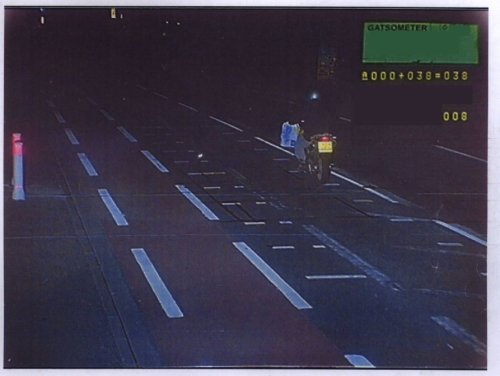
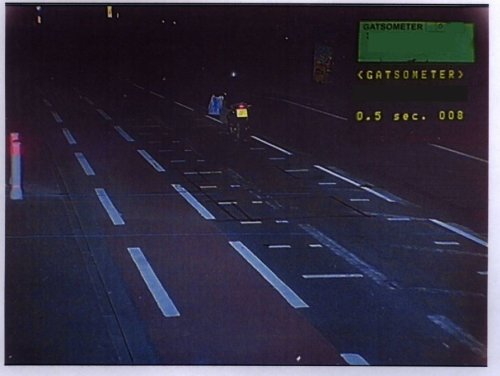
The East Sussex, UK, police are attempting to have speed camera photographs removed from websites, claiming they represent copyrighted material. In particular, the police are targeting a set of images taken in June 2008 that motorcyclist Peter Barker used to prove that a radar device that clocked him at 38 MPH must have been wrong. Based on measurements of the photographic evidence, a Brighton Magistrates Court judge agreed and threw out the case against Barker. These are the photographs of Barker’s alleged infraction that East Sussex Police are trying to ban: photo one and photo two.
(Read More…)
By
The Newspaper on July 21, 2009

Red light cameras have come under fire recently for focusing on vehicles that make right turns on red, a maneuver that is rarely responsible for causing an accident. But even cities that do not issue many right turn tickets focus on another type of violation that is not dangerous. According to data obtained from the city of Fullerton, California, tickets mailed to the owners of vehicles entering a through intersection less than a second after the light turned red added up to nearly $1 million last year. These technical violations rarely cause accidents. A 2004 Texas Transportation Institute (TTI) study showed that right angle accidents—the type caused by straight-through violations of red signals at intersections—do not happen until an average of nine seconds after the signal had changed from yellow to red (view study).
(Read More…)
By
The Newspaper on July 19, 2009

In a speech last week before the Institute of Transportation Engineers (ITE), a road safety expert argued that speed limits should be based on engineering, not political considerations. Chad Dornsife, executive director of the Best Highway Safety Practices Institute made his case to an ITE annual meeting in Denver, Colorado. “The solution is to properly engineer our roadways to facilitate the optimum flow of traffic, a prescription that would reduce our total vehicular carbon footprint and improve roadway safety,” Dornsife said. “The future is in educating motorists to drive safely via safety campaigns that promote keep right except to pass, yielding, courtesy, and safety practices that are based in fact. Programs that create jobs, reduce our carbon footprint, pollution, and improve the safety and efficiency of our infrastructure.”
(Read More…)
By
The Newspaper on July 19, 2009

Canadian activists are turning to the courts to stop the controversial photo radar program in Winnipeg. On Thursday, the Road Safety Awareness Group filed a claim in the Manitoba Court of Queen’s Bench seeking the refund of $177 million CAD in tickets issued, plus additional damages. The suit names city and provincial officials as well as Affiliated Computer Services (ACS), the Dallas-based contractor that runs the program; its predecessor, Lockheed Martin IMS; and Gatsometer BV, the Dutch company that makes the speed camera equipment. Rather than focus on legal issues, the suit attempts to expose the unseemly manner in which the photo radar program was approved by the province of Manitoba in 2002 and implemented in Winnipeg the following year. The suit argues that ACS and Lockheed used bogus safety and financial statistics to convince officials to use the company as its sole vendor. The program happened to be quite useful to the companies’ other business lines.
(Read More…)
By
The Newspaper on July 17, 2009

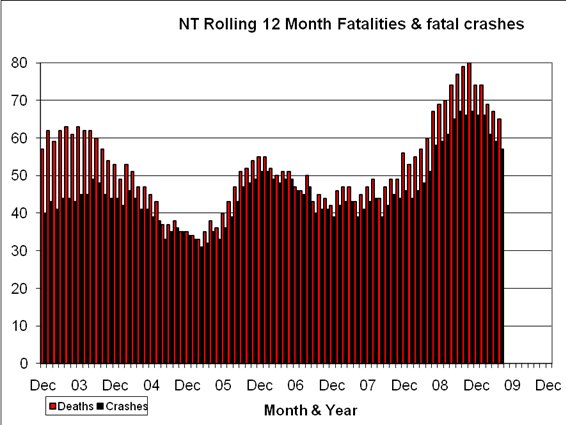
Up until 2007, rural freeways in the Northern Territory, Australia had no speed limit. Claiming that speed limits were essential to saving lives, the state government imposed a 130km/h (80 MPH) limit on the Stuart, Arnhem, Victoria and Barkly highways and a 110km/h (68 MPH) speed limit on all other roads, unless otherwise marked lower. Despite the best of intentions, however, the number of road deaths actually increased 70 percent after the change — despite worldwide drop in traffic levels (view chart).
(Read More…)
By
The Newspaper on July 16, 2009

A UK court threw out a pair speed camera citations yesterday after a retired veteran police officer admitted on the stand that he falsified official documents used as proof that the tickets were mailed within statutory deadlines. The Southampton Crown Court concluded that it was an abuse of process for a Hampshire and Isle of Wight speed camera partnership employee to backdate documents. The employee said he was acting on direct orders from his superiors.
(Read More…)
By
The Newspaper on July 15, 2009

Petitions to place the fate of red light cameras and speed cameras in the hands of voters are circulating across the country. This November, photo enforcement bans are likely to be considered in three Ohio and two Texas cities. Every Arizona jurisdiction may have a chance to vote on a statewide ballot initiative in November 2010. So far, the efforts in Ohio are the most advanced. In April, the group Citizens Against Photo Enforcement succeeded in having an automated ticketing ban certified for the ballot in Chillicothe. We Demand a Vote this week secured more than the required number of signatures to qualify for the ballot in Heath. The group will continue to collect additional signatures before making a formal submission to election officials. A third petition in Toledo has secured half of the required number of signatures.
(Read More…)
By
The Newspaper on July 13, 2009

Public pressure has forced Schaumburg, Illinois to drop its controversial red light camera program. Village trustees are expected tomorrow to finalize the cancellation of a contract with Redspeed, the private company which has been responsible for issuing traffic citations for the village since November 2008. On July 1, the village manager had sent a preliminary cancellation notice to the British firm. The move comes as public awareness grows that automated ticketing profit is based almost entirely on citing vehicle owners for the type of hair-splitting technical violations that are not responsible for causing accidents. “Staff recommends that the Public Safety Committee recommend to the Village Board that the contract with Redspeed be terminated,” Police Chief Brian Howerton wrote in a memo last month.
(Read More…)
By
The Newspaper on July 11, 2009

The city of Edmonton, Canada admitted this week that 158 motorists were ticketed for driving at or below the speed limit on June 21. Because a mobile speed camera unit on the Whitemud Freeway at Rainbow Valley Bridge was set up improperly that day, the city will cancel or refund about $11,000 worth of citations, the Red Deer Advocate reported. The average safe travel and design speed of the Whitemud Freeway is 100km/h (62 MPH), but city officials lowered the limit to 80km/h (50 MPH), making it a favorite location to deploy mobile photo radar traps. On Sunday, June 21, a camera operator set the device’s trigger speed to 70km/h (43 MPH). The tickets were processed, issued and mailed without any verification that the settings were correct. When motorist Matt O’Daly received a $71 ticket in the mail, he remembered that he had not been speeding on that day. After he complained to the Edmonton Police Service, officials were forced to admit the error.
By
The Newspaper on July 10, 2009

Tennessee Highway Patrol (THP) troopers are punished for failing to issue a specific number of speeding tickets in at least one part of the state. Attorney Fletcher Long provided WTVF-TV with a copy of a memo THP Sergeant Clifford M. Babits posted on the wall of the Troop C station in Robertson County. “I can no longer justify fives on evaluations for troopers not producing activity,” Babits wrote. “I require three things. 1. Answer the radio, 2. Work your crashes, and 3. WRITE TICKETS. I take some of the blame for not properly motivating ya’ll in the area of activity. Overall activity last year (2008) was well below the district average… Because activity plays such a high part of an everyday road trooper’s requirement, it is going to weigh heavy on yearly evaluation scores.”
(Read More…)
By
The Newspaper on July 7, 2009

The Maywood, California City Council on Wednesday dumped the Australian company in charge of the city’s red light camera program. Since 2004, Redflex Traffic Systems has had the right to issue tickets at the intersection of Slauson and Alamo. The council voted 3-2 not to renew the five-year agreement, against the wishes of city staff who proposed new “cost neutral” contract terms. “(The) city shall be obligated to pay the cumulative balance invoiced by Redflex, in accordance with terms set forth above, to the extent of gross cash received by the city from automated red light violations,” the proposed new contract language stated. Tying the vendor’s compensation to the amount of cash received violates a state law mandating flat-rate contracts for photo enforcement systems.
(Read More…)
By
The Newspaper on July 7, 2009

Last week, the city of Thornton, Colorado decided to drop the idea of installing red light cameras—after spending more than a year attempting to make the idea work. In the end, the city council was unable to arrive at an acceptable guarantee that, no matter what, the program would make money. A directive handed down by city leaders last year explained the primary objective. “Council’s explicit expectation was that the total costs to operate a Photo Red Light Enforcement system, including service, equipment and city staff costs, were to be equal to or less than the fines received from operating the system, thus resulting in no cost for the city to implement,” a November 2008 memo from the city manager explained.
(Read More…)
By
The Newspaper on July 6, 2009

A Texas motorist caught the city of Baytown using short yellows to trap motorists at a photo enforced intersection and of failing to protect sensitive private information. At a press conference yesterday, Byron Schirmbeck and his attorney, Randall Kallinen, announced that the city had agreed to drop a $75 ticket issued on April 12 for making a right-hand turn just 0.2 seconds after the light had turned red at the intersection of West Baker and Garth Roads. The yellow time at this intersection was set at just 3.1 seconds, even though state guidelines indicate that the yellow should have lasted no less than four seconds.
(Read More…)
Receive updates on the best of TheTruthAboutCars.com
Who We Are
- Adam Tonge
- Bozi Tatarevic
- Corey Lewis
- Jo Borras
- Mark Baruth
- Ronnie Schreiber





Recent Comments