



After the watching the OPOC engine run and shooting some exclusive video for TTAC, I was introduced to CEO Don Runkle.
Read More >
Find Editorials by Category:
Category: Green
Predicting the future is a risky business. Lincoln Steffens, muckraking journalist and admirer of the Soviet Union said, regarding the then young USSR, “I have been over into the future, and it works.” Steffens apparently wrote that before he actually visited the workers paradise in the early 1920s. A decade later he regretted that endorsement.
Music writer Jon Landau’s prediction was a bit more accurate. “Last Thursday, at the Harvard Square Theater, I saw my rock and roll past flash before my eyes. And I saw something else: I saw rock and roll future and its name was Bruce Springsteen.” Landau was soon to edge The Boss’ original manager, Mike Appel, out of the picture, took over management of Springsteen’s career and production of his music, and did everything in his power to make his prophecy a self-fulfilling one.
Earlier this week I believe that I saw the future of transportation and stationary power and its name is OPOC. That stands for “opposed piston opposed cylinder”, a new engine architecture being developed for production and licensing by EcoMotors, a Troy, Michigan startup.

Just in time for today’s tour of Michigan’s “battery belt,” the Obama Administration has released a study [full PDF here] of its electric vehicle stimulus efforts which concludes that the money was all well spent. Though the report covers a number of programs, from the ATVM “retooling loan” program which is backing companies like Nissan, Tesla and Fisker, to charging station subsidies, the major accomplishment of these billions of dollars is encapsulated in a single claim:
By 2012, thanks in part to the Recovery Act, 30 factories will be online and the U.S. will have the capacity to produce 20 percent of the world’s advanced vehicle batteries. By 2015, this share will be 40 percent.
As you can see from one of the report’s graphs (above) the US will achieve this 40 percent share of the world’s EV battery production just as two-thirds of the cost is beaten out of the things. And because batteries don’t follow Moore’s Law, it’s all diminishing returns from there. So what happens come 2015?

Actually, he’s been broke for since last October.
“About four months ago, I ran out of cash,” Musk wrote in a court filing with the Superior Court of Los Angeles on Feb. 23. “I had to obtain emergency loans from personal friends. These loans are the exclusive source of cash I have. If I did not take these loans, I would have no liquid assets left.” Tough when you make only 8 grand a month and have two high maintenance women. Read More >

A couple of weeks ago, TTAC reported how Dieter Zetsche was re-elected as CEO of Daimler for another 3 years. In that article we mentioned the many challenges that face him. Mainly, how to make Daimler sustainably profitable. Size matters in the auto business. An unattached Daimler has a hard time achieving the economies of scale someone like say Audi or Lexus can. So unless Daimler fancies being taken over (and we all know Daimler likes to be on top in any tie-up) it’ll have to form partnerships and joint ventures to get those cost savings Daimler needs. The big arranged wedding between BMW and Daimler isn’t going anywhere. Instead, Daimler announced that it had formed a partnership with Renault to produce the new generation Smart car. Then, Daimler announced it had formed a partnership with BYD to develop an electric car for the Chinese market. Now Daimler is trying to form a new partnership to achieve massive cost savings: A partnership with the tax payer. Read More >

TTAC GM Bashing Alert! The following article has been read and reviewed by the TTAC-GM Assault Protective Services Committee and has been found to contain material that may put GM in a negative light. Reader discretion is advised.
Unless the elves are asleep at Google, the odds are good that there will be an ad for the 2010 Chevrolet Equinox immediately to the right of this article. And it will proudly trumpet its 32 mpg EPA highway rating, like every other Equinox ad. From GM’s first gleeful announcement, it was hard to swallow from the that a tall, almost 4,000 lb CUV could actually get 32 mpg on the highway, or 26 mpg combined. It appears others are having the same blockage of the pharynx. Now that there’s a number of reviews out, they all show the same pattern: the Equinox EPA numbers are highly deceptive. But would the EPA ever come down on Government Motors? Read More >

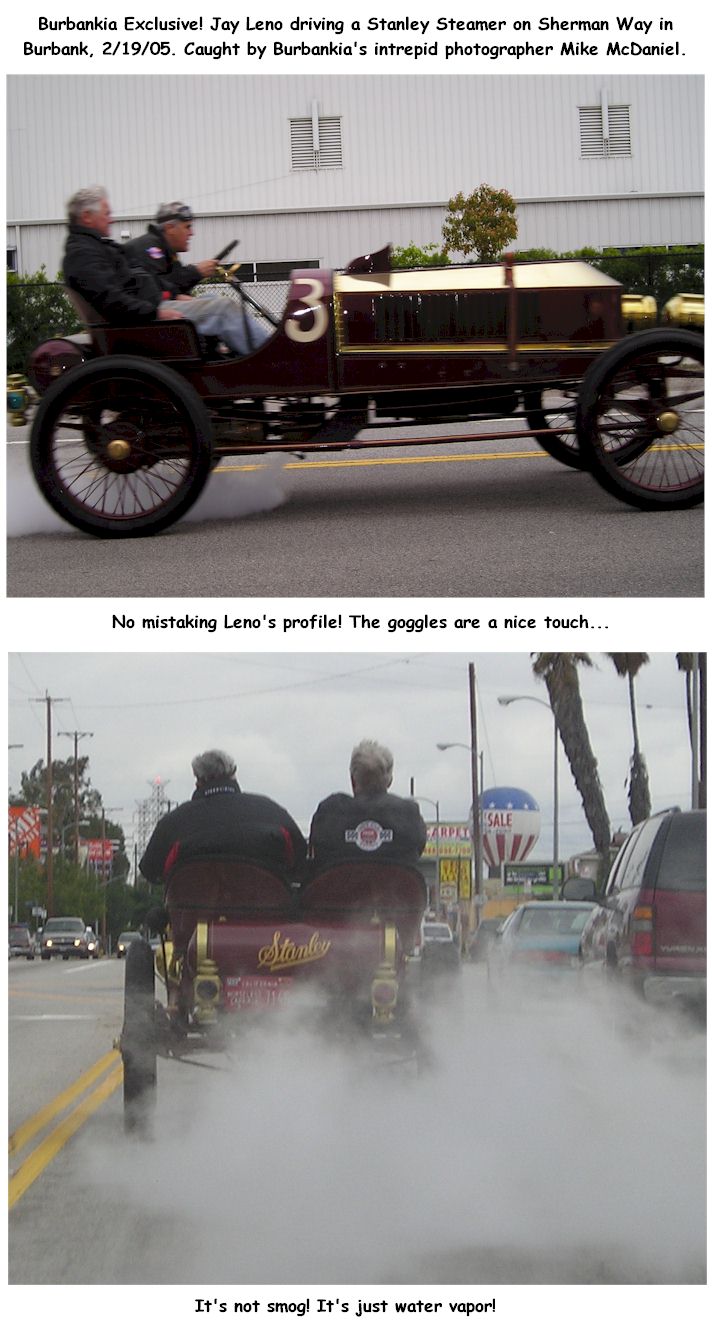
The steamer is the granddaddy of all engines, dating back some 2,000 years. All of the earliest “cars” were steamers, and the golden age of steam cars in the teens and twenties resulted in some fabulously refined vehicles. The Stanley was very successful and set the world speed record in 1906 that was only broken recently; and the ultimate development, the highly refined Doble, created a legend. The advantages of the steam engine are the ability to burn almost any kind of fuel, generate maximum torque at starting rpm, no need for a transmission, and the ability to power the loudest of horns. There have been numerous attempts at automotive steam engine revivals; but their many downsides have relegated them to the obscure pages of wikipedia: delay in getting up a head of steam, bulky condensers, oil contamination of the steam, inefficiencies, etc.. But Cyclone Power Technologies has been developing a radical update on a compact, efficient, eco-friendly steam engine. Before we dismiss it as more hot vapor in our usual dismissive TTAC manner, let’s take a closer look first: Read More >

I recently came across a brand new Lincoln MKS. I’m a pretty hard core Japanese car fan but I had to admit that this car looks pretty slick. I had heard that it was pretty fast too. I like fast. Upon inspecting the exterior of the car it came to my attention that the MKS is equipped with ‘EcoBoost.’ Not being up on the very latest in automotive tech, the unfamiliar name intrigued me. Was this some hybrid or electric technology? Curious, I started off on a quest to find out what this EcoBoost is and what makes it so… EcoBoost-y.

I drive a Mercedes GL450: a vehicle that struggles to get 18 mpg. On the highway. Downhill. Downwind. Unladen. At the posted speed. But here’s the thing: I don’t drive my Merc much. I work from home; I live in a “walkable” community; I walk; I ride a bike; and I got rid of our second car. In other words, like many Americans, I want my gas guzzler and a clean conscience too. God bless America; when the market perceives a need, someone fills it. In this case, it’s our friends at the Alliance of Automobile Manufacturers (AAM). The industry lobby group is providing the juice behind the trendily hyphen-aversive EcoDriving movement. Which, to my mind, is a bit like the pre-nascent DietFeasting movement. I may be guilty but I’m not stupid. Or am I?
Today’s AAM press release leads me to believe I may well be EcoIntellectuallyChallenged. To mark the slow-down-you-selfish-planet-killing-bastard program’s one-year anniversary, the AAM provides a list of all the governors who never, ever ask their drivers to put pedal to the metal: Arnold Schwarzenegger (R-CA), Bill Ritter (D-CO), Riley (R- AL), Haley Barbour (R-MS), Jay Nixon (D-MO), Martin O’Malley (D – MD), Bev Perdue (D-NC), Luis Fortuno (R – PR), Mark Sanford (R- SC), John De-Jongh (D – USVI), Tim Kaine (D-VA), Joe Manchin (D-WV), Sonny Perdue (R-GA), C.L. “Butch” Otter (R-ID), Steve Beshear (D- KY), Jennifer M. Granholm (D-MI), Brad Henry (D-OK) and Jon Huntsman (R-UT) .
Although only one governor gets a nickname, all of these state house dwellers have shown tremendous courage by asking motorists to drive like an octogenarian—rather than, say, recommending a return to Nixon’s double-nickel. Then again, why wouldn’t the govs support EcoDriving? Not only does the PC admonition not piss off any members of their constituency—from hard-core environmentalists to soft-core Suburban pilots—it’s the right thing to do:
“If just half of all drivers nationwide practiced moderate levels of EcoDriving,” the AAM contends. “Annual carbon dioxide (CO2) emissions could be reduced by about 100 million tons, or the equivalent of heating and powering 8.5 million households.”
Define moderate. Meanwhile, free miles!
“If all Americans practiced EcoDriving, it would be equal to 450 billion miles traveled on our roadways without generating any CO2 emissions. That’s 1,500 CO2-free miles for every man, woman and child in the United States each year.”
And we wouldn’t need CAFE, CARB or EPA tailpipe regulations! Uh, would we? So, anyway, how do Catholics, Jews and other guilt-ridden carbon positive people do this EcoDriving thing, then? The Alliance offers fourteen tips:
1. Believe You Can Reduce Fuel Use and Emissions – ‘Cause when you wish upon a greenhouse gas, makes no difference what you drive.
2. Avoid Rapid Starts and Stops – I drive around them as quickly as possible, me.
3. Keep on Rolling in Traffic – Rhode Islanders have been practicing the rolling stop since the octagonal sign was first introduced (without graffiti I’m told). Oh wait, they don’t mean EZ Wider style rolling do they? Sure, I drive much slower when I’m high, but the AAM can’t recommend that for people without a prescription, can they?
4. Ride the “Green Wave” – I’m still looking for the green flash. But it’s a good point: by going slower you can catch all the green lights and end-up going faster. Or, more precisely, get there at the same time as you would as if you were driving like a mad man. In theory.
5. Use Air Conditioning at Higher Speeds – Done. In fact, I also use AC at slower speeds. You know, when it’s hot.
6. Maintain an Optimum Highway Speed for Good Mileage – “According to the U.S. EPA, every 5 miles over the 60 mph level is equivalent to paying 20 extra cents per gallon for gas.” The faster you go the worse your mileage the more you pay at the pump? Who knew?
7. Use Cruise Control – Not me. I find myself slamming on the brakes when I use cruise control. That can’t be good for my mpg. Maybe I should try setting it a little lower. But then I end up swerving in and out of lanes to avoid hitting the car in front of me. Clearly, I need some more instruction.
8. Navigate to Reduce Carbon Dioxide – Can’t I just program my sat nav to do it for me? Let me see . . . Yes ,I can! Brilliant! Where’s the EcoDriving setting?
9. Avoid Idling – I’m never idle. Talk to the guy who sings “Adam in Chains.” He’s always Idol.
10. Buy an Automated Pass for Toll Roads – And don’t cheat on your wife.
11. Use the Highest Gear Possible – Sure but—where’s the fun in that?
12. Drive Your Vehicle to Warm It Up – That makes NO sense. Why would I drive around to warm-up my vehicle? Shouldn’t I just fire it up and head to my destination?
13. Keep Your Cool – Like I said, AC rules.
14. Obey your Check Engine Light – Obey? That’s a bit draconian isn’t it? What if environmentalists take control of my OBD and it flashed-up “CAP AND TRADE”? What then?

The short answer: 31,362 Btus per pound. That’s the average energy cost for constructing a modern motor vehicle —rubber, fluids, glass, metal and battery. Can that number tell you if it’s better, environmentally speaking, to keep your ’85 Renault Fuego or pick up a Honda Insight? That’s a longer answer full of scary science and scarier math. The U.S. Department of Energy’s Argonne National Lab has attempted to analyze the energy consumed manufacturing vehicles. Their creation is called Greenhouse gases, Regulated Emissions and Energy use in Transportation models. GREET. No really.
Argonne broke automobiles down to discrete parts, then measured the energy required to mine, make and move those parts. They assess in British thermal units, the amount of energy needed to raise the temperature of one pound of water one degree Fahrenheit.
Applying the GREET model, it takes 100.391 million Btus to make a 3,201-pound vehicle. Not all cars are created equal, but the model accounts for the differences. For instance, the batteries in a hybrid render a different formula. According to GREET, a Prius comes in at 38,650 Btus per pound. A 2009 BMW M3, with its light carbon fiber roof screws things up. Just ignore it. For the 90 percent of the vehicles on the road, it’s 31,362 Btus per pound.
So, a 1996 Mitsubishi Montero weighing in at 4,290 pounds used 135,542,980 Btus for construction. Which is much too cumbersome and abstract a number. Put a more digestible way, it took 1,850 gallons of gasoline to make the Montero. (113,500 Btus in a gallon of gas.)
A 1996 Montero is rated at about 14 mpg. If my intention is to be kind to the planet and send this beast off to the scrap yard, perhaps I’d consider a 2010 Outlander. (A legitimate, C.A.R.S. sanctioned transaction worth $4,500.) The engine is smaller, but mileage jumps to 22 combined. Cool. Because in my old Montero, I’m driving 12,000 miles a year, using 857 gallons of gas annually. In my new Outlander, I’ll only be using 545. Saving 313 gallons of fuel a year, three years from now the energy cost of building the new car will be erased and I really will be reducing my carbon footprint.
That was an easy one. Now lets say you still have the 1996 Honda Civic you bought when you graduated. It weighs in at 2,303 pounds and gets about 31 mpg. It took 636 gallons of gas to build this car, which uses 387 gallons per year (figuring 12,000 miles annually.)
A 2009 Honda Civic is 300 pounds heavier and gets a combined 29 mpg. This car took 715 gallons of gas to create and consumes 413 gallons of gas a year. It won’t ever be better for the environment than your ’96. The government’s cash for clunker’s program would not offer you any incentive to make this deal. Their web site is actually quite good at comparing vehicles and wringing the best it can out of a transaction. In terms of carbon dioxide, anyway. When it comes to environmental costs, miles per gallon is not the whole story.
GREET tracks other car-born noxious fumes in addition to CO2: Methane and nitrous oxide are two other green house offenders. Volatile organic compounds, carbon monoxide, nitrogen oxide, particulate matter with size smaller than 10 micron particulate matter with size smaller than 2.5 micron and sulfur oxides are pollutants that don’t necessarily make the planet hotter. They don’t make us live longer and feel better either.
A number of new vehicles on the road are considered partial, ultra or super low emissions vehicles because they spew out considerably less pollution, though not necessarily through stellar gas mileage. They absorb evaporating fuel, prevent leaks and don better catalytic converters to clear out a lot of the stuff mentioned above. They’re good for the air, just not the carbon content.
There are reasons to buy a new car other than environmental friendliness. New cars are, in general, much safer than those than came before them. Air bags, anti-lock brakes, crumple zones and child seat hooks add up to an improvement to your personal environment should you hit a patch of black ice, followed by a guardrail. New cars also spend less time in the shop than their 16-year-old counterparts. (Most, anyway.) And, just as it took energy to make original parts, replacement parts don’t pop out of thin air either.
Ultimately, deciding on a new car vs. holding on to old one needs to be case by case. A bromide like “the best car for the environment is the one you already have” is too broad to be true. Good natives of Earth will need to find a few numbers, multiply and divide, and then choose between the spanking new and the trusty old.

The issue is whether the proper development of an advanced biofuel industry in the United States is feasible when: (a) independent ethanol producers in the U.S. are at the mercy of volatile commodities markets for feedstock; and (b) the price of ethanol is controlled by the oil companies.
Commodity Market Volatility
The corn-to-ethanol business is highly dependent on corn prices. The price paid for corn is determined by taking the Chicago Board of Trade futures price minus the basis, which is the difference between the local cash price and the futures price. The more corn-to-ethanol contributes to our nation’s energy supplies, the more it drives up corn feedstock prices and consequently its own cost.
While increased ethanol production is partially responsible for the increase in corn prices, the main driving factors in the run-up in corn prices are: rising demand for processed foods and meat in emerging markets such as China and India, droughts and adverse weather around the world, a decrease in the responsiveness of consumers to price increases, export restrictions by many exporting countries to reduce domestic food price inflation, the declining value of the dollar, skyrocketing oil prices, and commodity market speculation.
It is important to note that excessive speculation is not necessarily driving corn prices above fundamental values. Speculation can only be considered “excessive” relative to the level of hedging activity in the market.
The government’s announcement that it would resurvey corn acreage in several U.S. states launched a rally in Chicago Board of Trade corn on July 23, 2009, giving life to a market that appeared to be sinking toward $3 a bushel. September corn ended up 19 cents to $3.27 a bushel and December corn ended up 19 1/2 cents to $3.38 3/4 a bushel. Traders see the market moving toward the $3.50-$3.75 a bushel range in the December contract. Ethanol futures were also higher. August ethanol ended up $0.065 to $1.597 a gallon and September ethanol ended up $0.064 to $1.555.
Dr. David J. Peters, Assistant Professor of Sociology – College of Agriculture and Life Sciences at Iowa State University, has developed a calculator to determine the long-term economic viability of proposed ethanol plants. Dr. Peters was surprised to learn how sensitive the bottom line is to small changes in corn and ethanol prices.
According to Dr. Peters, a typical 100 MGY corn ethanol plant built in 2005 (financing 60 percent of its capital costs at 8 percent interest per annum for 10 years, with debt and depreciation costs of $0.20 per gallon of ethanol produced, and labor and taxes at a cost of $0.06 per gallon) will lose money in the current market:
At $3.25 corn, the ethanol break even price is $1.76 per gallon.
At $3.50 corn, the ethanol break even price is $1.82 per gallon.
At $3.75 corn, the ethanol break even price is $1.88 per gallon.
At $4.00 corn, the ethanol break even price is $1.94 per gallon.
Oil Company Monopoly
U.S. oil companies are using ethanol merely as a blending component in gasoline (in the form of E10) rather than a true alternative transportation fuel (in the form of E85). The major obstacle to widespread ethanol usage continues to be the lack of fueling infrastructure.
Only 2,175 of the 161,768 retail gasoline stations in the United States (1.3%) offer E85. These E85 fueling stations are located primarily in the Midwest. According to the U.S. Department of Energy, each 2% increment of U.S. market share growth for E85 represents approximately 3 billion gallons per year of additional ethanol demand.
While alleging an oversupply of corn ethanol, U.S. oil companies, due to a loophole in the Caribbean Basin Initiative, are currently allowed to import thousands of barrels of advanced biofuel (“non-corn ethanol”) every month without having to pay the 54-cent-per-gallon tariff.
Oil companies, or affiliates of oil companies, currently have a monopoly on blending fuel ethanol with unblended gasoline. Many states, e.g., Florida, allow only oil companies and their affiliates to blend and receive the 45 cents-per-gallon blender’s tax credit.
This monopoly impairs fair and healthy competition in the marketing of ethanol blends. Independent U.S. ethanol producers have the legal right, and must be assured the availability of unblended gasoline, to blend fuel ethanol and unblended gasoline to receive the blender’s tax credit and be cost-competitive.
In short, independent U.S. ethanol producers do not have bargaining power on either end of the supply chain. Corn ethanol producers are price takers. A comprehensive advanced biofuel industry development initiative is required to disrupt the status quo and establish fair and healthy competition in the marketing of advanced biofuel blends in our nation.
The Louisiana Solution
Louisiana is the first state to enact alternative transportation fuel legislation that includes a variable blending pump pilot program and a hydrous advanced biofuel pilot program. On June 21, 2008, Louisiana Governor Bobby Jindal signed into law the Advanced Biofuel Industry Development Initiative (“Act 382”). Act 382, the most comprehensive and far-reaching state legislation in the U.S. enacted to develop a statewide advanced biofuel industry, is based upon the “Field-to-Pump” strategy.
It is the cost of the feedstock which ultimately determines the economic feasibility of an ethanol processing facility. “Field-to-Pump” does not allow an advanced biofuel producer to fall victim to rising feedstock costs. Non-corn feedstock is acquired under the terms of an agreement analogous to an oil & gas lease. It is not purchased as a commodity.
A link exists between the cost of feedstock and ethanol market conditions. Farmers/landowners receive a lease payment for their acreage and a royalty payment based on a percentage of the gross revenue generated from the sale of advanced biofuel. “Field-to-Pump” marks the first time that farmers/landowners share risk-free in the profits realized from the sale of value-added products made from their crops.
Smaller is better. “Field-to-Pump” establishes the first commercially viable large-scale decentralized network of small advanced biofuel manufacturing facilities (“SABMFs”) in the United States capable of operating 210 days out of the year. Each SABMF has a production capacity of 5 MGY.
As with most industrial processes, large ethanol plants typically enjoy better process efficiencies and economies of scale when compared to smaller plants. However, large ethanol plants face greater supply risk than smaller plants. Each SABMF utilizes feedstock from acreage adjacent to the facility. The distributed nature of a SABMF network reduces feedstock supply risk, does not burden local water supplies and provides broad-based economic development. The sweet sorghum bagasse is used for the production of steam. Vinasse, the left over liquid after alcohol is removed, contains nutrients such as nitrogen, potash, phosphate, sucrose, and yeast. The vinasse is applied to the sweet sorghum acreage as a fertilizer.
Act 382 focuses on growing ethanol demand beyond the 10% blend market. Each SABMF produces advanced biofuel, transports the advanced biofuel by tanker trucks to its storage tanks at its local gas stations and, via blending pumps, blends the advanced biofuel with unblended gasoline to offer its customers a choice of E10, E20, E30 and E85. Each SABMF captures the blender’s tax credit of 45-cents-per-gallon to guarantee sufficient royalty payments to its farmers/landowners and be cost-competitive.
In the U.S., the primary method for blending ethanol into gasoline is splash blending. The ethanol is “splashed” into the gasoline either in a tanker truck or sometimes into a storage tank of a retail station. The inaccuracy and manipulation of splash blending may be eliminated by precisely blending the advanced biofuel and unblended gasoline at the point of consumption, i.e., the point where the consumer puts E10, E20, E30 or E85 into his or her vehicle.
A variable blending pump ensures the consumer that E10 means the fuel entering the fuel tank of the consumer’s vehicle is 10 percent ethanol (rather than the current arbitrary range of 4 percent ethanol to at least 24% ethanol that the splash blending method provides) and 90% gasoline. Moreover, a recent study, co-sponsored by the U.S. Department of Energy and the American Coalition for Ethanol, found E20 and E30 ethanol blends outperform unleaded gasoline in fuel economy tests for certain motor vehicles.
Hydrous advanced biofuel, which eliminates the need for the costly hydrous-to-anhydrous dehydration processing step, results in an energy savings of 35% during processing, a 4% product volume increase, higher mileage per gallon, a cleaner engine interior, and a reduction in greenhouse gas emissions.
On February 24, 2009, the U.S. EPA granted a first-of-its-kind waiver for the purpose of testing hydrous E10, E20, E30 & E85 ethanol blends in non-flex-fuel vehicles and flex-fuel vehicles in Louisiana. Under the test program, variable blending pumps, not splash blending, will be used to precisely dispense hydrous ethanol blends of E10, E20, E30, and E85 to test vehicles for the purpose of testing for blend optimization with respect to fuel economy, engine emissions, and vehicle drivability.
The Louisiana Department of Agriculture & Forestry Division of Weights and Measures will conduct the vehicle drivability phase of the test program. Fuel economy and engine emissions testing will be conducted by Louisiana State University in Baton Rouge, Louisiana. Sixty vehicles will be involved in the test program which will last for a period of 15 months.
Louisiana Act 382 ensures: (a) ethanol producers in the U.S. are no longer at the mercy of volatile commodities markets for feedstock; (b) farmers/landowners share risk-free in the profits realized from the sale of value-added products made from their crops (c) the price of ethanol is no longer controlled by the oil companies; (d) feedstock supply risk, the burden on local water supplies, and the amount of energy necessary to process advanced biofuel are minimized; and (e) rural development and job creation are maximized.
Furthermore, due to the advantages of producing advanced biofuel from sweet sorghum juice, the use of sweet sorghum bagasse for the production of steam in the SABMF, and the energy savings of processing hydrous advanced biofuel, the Louisiana solution reduces field-to-wheel lifecycle GHG emissions by 100%.
Copyright © 2009, NewsBlaze, Republished on TTAC with the copyright owner’s permission.
Brian J. Donovan is the CEO of Renergie, Inc.
About Renergie [from the author]:
Renergie was formed on March 22, 2006 for the purpose of raising capital to develop, construct, own and operate a network of ten ethanol plants in the parishes of the State of Louisiana which were devastated by hurricanes Katrina and Rita. Renergie’s “field-to-pump” strategy is to produce non-corn ethanol locally and directly market non-corn ethanol locally. On February 26, 2008, Renergie was one of 8 recipients, selected from 139 grant applicants, to share $12.5 million from the Florida Department of Environmental Protection’s Renewable Energy Technologies Grants Program. Renergie received $1,500,483 (partial funding) in grant money to design and build Florida’s first ethanol plant capable of producing fuel-grade ethanol solely from sweet sorghum juice. On April 2, 2008, Enterprise Florida, Inc., the state’s economic development organization, selected Renergie as one of Florida’s most innovative technology companies in the alternative energy sector.

God forbid TTAC should criticize someone for making an outrageous suggestion to get people to think (rethink?) their opinion about an auto-related issue. But you gotta wonder if the book “$20 Per Gallon” is at least ten bucks too high in the hyperbole department. Still, credit where credit’s due. By setting sail on a ship fantasii, author, civil engineer (of all things) and Forbes reporter Chris Steiner has outed the environmental hairshirt wearers amongst us. Needless to say, the New York Times is chief amongst them. They’ve published a Q&A with Steiner that somehow manages not to lump-him-in with alien abduction deprogrammers—although the piece is filed under the Freakeconomics banner. Instead of demanding Steiner’s list of prescription drugs, the Gray Lady’s Annika Mengisen “asked him to give us his predictions for what our lives might look like with gas at $8 and $18 per gallon, respectively.” Fun!
Before we begin, an extract from the tome in question, courtesy of (who’d a thunk it) NPR.
In fact, many people’s lives, including many Americans’ lives, will be improved across a panoply of facets. We will get more exercise, breathe fewer toxins, eat better food, and make a smaller impact on our earth. Giant businesses will rise as entrepreneurs’ intrepid minds elegantly solve our society’s mounting challenges. The world’s next Google or Microsoft, the next great disrupter and megacompany, could well be conceived in this saga . . . This revolution will be so widespread and affect so many that it will evoke the Internet’s rise in the late 1990s.
But this revolution will be even bigger than that . . . This tale will bring with it all the global impact of a World War and its inherent technology evolutions — minus all the death. Some people even welcome oil’s coming paucity and expense as one of humankind’s grand experiments.
Utopia! We haven’t seen a good political polemic promising the best of all possible worlds since what, the sixties? To explore the possibilities, the New York Times turns on Q&A (the laziest, most editorially dubious journalistic format known to man). At $8 a gallon (2019), how will children get to school?
A: How you live largely depends on where you live. For people who live in walkable communities, life at $8-per-gallon gas will be far easier. Their kids will just hoof it.
Huh? Nebraska parents shudder at the thought. Anyway, you might have thought Steiner would be promoting mass transportation. Nope. Steiner reckons the school districts couldn’t afford to run busses. So . . . what?
Meanwhile, more family sacrifice at $8 a gallon. Steiner says Disney World’s toast; the cost of an economy class (presumably) round trip plane ticket will soar to a prohibitive $800. But hey, hybrids are go!
Consider this: driving will cost about three times as much as it does now at $8. That’s a giant difference. A family who now drives two cars 15,000 miles per year currently pays $325 a month for gasoline (assuming $2.60 and 20 m.p.g.). In a world of $8 gas, their monthly gas bill would be $1,000. That’s like a second mortgage. Costs like that will drive hybrids to be wildly popular — and so, too, will be the practice of cutting down on miles driven. The easiest way to do that, of course, is to get rid of your car, assuming you live in a place that will allow it (a lot of places don’t, obviously).
Obviously. But tough luck for them, eh? Next, the effect of $18 per gallon gas (2029 – 2039) on . . . sushi. Actually, that’s too far out there. So let’s go back to the “kids to school” issue:
By the time gas has reached $18, most people will live in places where density dictates that schools be grouped closer together, putting them within an easy walk or a brief bike ride.
Genetically speaking, that’s going to suck. But it does fit in with the whole smaller is better, global village, wear your hairshirt and like it mentality that’s informed the extremities of the environmental movement since ever there was one. As for personal transportation, fuhgeddaboutit.
At $18, you won’t have a driveway. There will be a whole generation of Americans growing up without cars at this point. They’ll live close to schools, close to new train lines, and close to places like restaurants and grocery stores. Electric cars will make an impact, but they won’t come in with the pricing power nor the volume to prevent massive changes in where we live and how we live.
So not even electric cars can save us? Holy shit that’s bad. So I guess we better enjoy our petrochemical lifestyle while we can, right? Right!
Eat sushi. Drive the trans-Canadian highway (in summer). Go to Australia. Go see Tokyo and take notes — life will be more like that and less like, say, Omaha, in the future.
So now you know: Tokyo’s going to be the new Omaha. So what of $20 a gallon gas? Too horrible to contemplate, I guess. Either that or the author, his argument and his interlocutor ran out of gas.

I have nothing against the Toyota Prius. It’s the car’s mystique that irks me. You know what I’m talking about: the whole “Toyota Pious” thing. As someone who’s read rational reports from Prius-owning TTAC commentators, as a pistonhead who understands that there’s more to driving a Ferrari than beauty and performance, I swear I’m OK with the hybrid’s PC mantle. But the Prius’s high MPG numbers and green street cred tend to stifle the debate on some important points.
Point One — Are Prius Owners Hypocrites?
Prius drivers swear, “It’s not about all about me.” I’m not buying it. If owners didn’t want people to know that they’re doing their bit for the environment, why has the Prius’ distinctive shape been such a boon to sales? Is the Prius that much more fuel-efficient than its competitors that it deserves to dominate the US hybrid market?
Aside from a small badge and different wheels, the Honda Civic hybrid looked just like every other Civic. Did it sell well? No. Honda Accord hybrid? Nope. Is it any wonder the new Honda Insight is a Prius clone?
There’s no question that the Prius gets great mpg (51/48 for 2010). But I suspect Prius drivers want more: they want us to know they’re saving the planet one car at a time.
Again, that’s OK. But there are limits. A Prius is not a free pass for the hybrid’s owner’s total “carbon footprint.” Or is it? This summer, how many Priora will park in front of chilled McMansions?
Point Two — Shouldn’t the Prius be More Energy Efficient?
Surely a driver concerned about the environment can open and close their windows manually. The electric windows extra motors and wires add unneeded weight and use precious energy. By the same token, why air conditioning? Isn’t the A/C compressor and all of its needed wiring, blowers, hardware etc. wasting energy? What effect does r134a have on the environment?
Why does the Toyota Prius offer an optional ten speaker JBL sound system? For years, we got by with just two or four speakers. Prius drivers could listen to their favorite tunes without the extra power, draw and weight of speakers and amplifiers.
And what of the leather seats? Shouldn’t Toyota fashion the Prius’ chairs, carpeting and other interior materials from some composite derived from recycled plastic bottles or part soybean oil (a la Ford)?
And what about the extra money spent on all of these options? Wouldn’t it be better if Prius buyers purchased de-contented vehicles and sent the money to an appropriate environmental organization?
Point Three — Is the Prius REALLY That Efficient?
No question: the Toyota Prius is a clever piece of kit. The car’s Synergy Drive system’s internal combustion engine (ICE) generates electricity for a battery which supplants or assists ICE power in various ways at various times, according to engine load. The Prius also recaptures and reuses braking energy. Equally important, the car sits on skinny tires. And it’s slow.
So what would happen if you equipped a Prius with the world’s most efficient internal combustion engine; a powerplant that would match but not exceed Toyota’s Synergy Drive’s Prius performance?
I’m not suggesting a HUMMER is less energy intensive to produce, operate and recycle than a Toyota Prius. And again I’m not against the Prius, Toyota or Prius owners per se. But it should be asked: is the Prius set-up the best use of our resources?
The same question applies to electric cars. There is a lot of talk in the media about the merits of the electric car and not much debate about the reality. Electric cars need batteries. Batteries need electricity [mostly] generated by fossil fuels. A gallon of gasoline far exceeds a battery in its energy density.
And what of the batteries charge level?
A gasoline car maintains its performance right down to the last milliliter of gasoline. Whether you have a full tank or a quarter tank, there is no discernible performance loss. A battery, on the other hand, shows a significant power loss in a non-linear fashion as it discharges. Ever see what happens when your electronic device gets down to 25 percent power? It performs erratically. Discuss. Meanwhile, I leave you with one final question:
Point Four — Is There A Better Way?
Take the existing Corolla and strip out any unnecessary weight. Next, maximize the engine for gas mileage. The target demographic certainly be able to tolerate decreased acceleration times in the interest of more efficient fuel consumption. (Toyota has extensive experience with diesels; a diesel powerplant should be assessed as well.) Fit the interior with lightweight materials or recycled composites.
How would this low-touch, high-mileage Corolla carbon footprint stack up against the Prius? And if the stripper Corolla offered substantially better efficiency than the Prius at the same price, would Prius owners make the switch?

There’s no doubt about it: the automotive landscape is changing. Carmakers around the globe are embracing electric propulsion, whether the volts are generated by a gasoline motor, a fuel cell, a distant power plant or a combination thereof. New companies seem to be springing up overnight to take advantage of the government’s desire (and money) to wean motorists from their petrochemical “addiction.” While everyone rushes to produce politically-correct powerplants, one fundamental question that remains largely unexamined: from where will manufacturers secure the raw materials needed to mass produce this new technology?
Back in the good old bad old days, cars were literally lumps of iron. The bodies were made from steel. The engines from cast iron. Even as new features were added, the primary raw materials remained ore-based. New-fangled electrical accessories like starters, power windows, power seats and stereos brought copper into that mix. As metallurgical science progressed, aluminum and its alloys entered the mass market mix. No problem there: aluminum is the most abundant metallic element on earth. It’s lightweight and eminently recyclable (today’s beer can is tomorrow’s bumper). Dropping market prices continue to move the metal from exotic cars to daily drivers.
Along with various materials derived from petrochemicals, modern cars are made from iron, steel, aluminum and copper. Manufacturers use other metals (e.g., magnesium) in structural and other applications, but The Big Four reign supreme.
In the 1960s, a research effort between the Air Force and General Motors made a discovery: if you combine the rare earth element neodymium with boron and iron you can make incredibly strong magnets. These magnets are mission critical for the compact-yet-powerful motors used in today’s gas-electric hybrid vehicles. “Doping” the magnets with a bit of dysprosium (another rare earth metal) makes them even more effective, helping them withstand the automotive application’s high operating temperatures.
Industry expert Jack Lifton estimates that manufacturing the battery pack of a second generation Prius required 60 pounds of assorted rare earth metals. And there’s more. Carmakers use rare earths for catalytic converters, computer chips, UV-filtering glass, LCD screens and solar panels. In fact, many of the new technologies that inform advanced vehicles owe their existence—one way or another— to rare earths.
Thankfully, rare earths aren’t that rare. China has huge deposits of rare earth ores and (until very recently) little regard for the environmental impact of mining and refining them. In 2007, China exported 49k tons of rare earth products, down 14.93 percent. BUT the export value surged 51 percent to $1.179 billion. In 1992, Deng Xiaoping stated “There is oil in the Middle East. There are rare earths in China. We must take full advantage of this resource.” And so they have.
The U.S. used to be the world’s biggest producer of rare earths. That ended in the ’90s when the Mountain Pass mining operation in California shut down due to “market pressure” (i.e., cheap Chinese product). Environmental regulations also helped seal the mine’s fate; rare earth mining can produce some pretty nasty byproducts like thorium.
And so the Chinese rare earth industry has grown unchallenged to the point where it essentially owns the market. Molycorp recently reopened the Mountain Pass operation. There are efforts underway to develop mines in Canada, Australia (where Chinese companies just bought big portions of two Aussie mining companies), Vietnam and India. As of now, none of these future mines offers significant competition to China’s efforts to dominate the rare earth market.
Adding to the problem: while there are mines producing rare earth ores and oxides elsewhere, China’s the only one country on earth where the ores are refined into the rare earth metals. For the time being, no matter where the rare earth materials are mined, the production pipeline flows through—and is controlled by—China.
So far, China hasn’t tried playing silly buggers with rare earth prices, as OPEC has been known to do with oil. However, any company that manufactures anything using rare earths is at the mercy of the Chinese government’s production and pricing.
China has raised the export tax on some rare earth metals as high as 25 percent. Foreign companies aren’t allowed to invest in exploration and mining. There are limits on foreign involvement in ore processing. Industries that use rare earth metals are “encouraged” to produce their end product there.
Because China hasn’t curtailed supplies (i.e., raised prices significantly), there’s no interest in recycling rare earths from discarded autos. When that wrecked hybrid is sent to the crusher, the copper, iron and aluminum in it will be recovered. The rare earth metals will not.
As the government pushes the automakers to improve mileage and cut emissions, they’re practically demanding carmakers produce electric or hybrid-electric vehicles. Even though the government and industry know how important these rare earths are critical to their environmental goals, they’ve failed to consider the potential impact of a “rare earth” gap, trusting that the free market will provide the required raw materials at a cost-effective price.
For now, yes. In the future, who knows?





Recent Comments