The Pacer is the poster child of how questionable ideas and good intentions go awry. In 1971, scrappy little AMC was faced with a dilemma: how to capture buyers looking to downsize, when they were incapable of actually building a truly downsized car. Yup; there was no way AMC could tool up to build a genuine compact car, like the Vega and Pinto. So the solution was to stop pretending, like the execrable Gremlin that preceded the Pacer. The answer was to build the world’s first wide-body compact, a segment nobody had ever identified before, much less pined for. To add to its zestiness, break all the styling molds with acres of glass and asymmetrical doors. And then just for good measure, stick a rotary engine in it. As we’ve seen repeatedly, desperation is the mother of (bizarre) inventions. Read More >
[Note: A significantly expanded and updated version of this article is here]
For most of the fifties, sixties and into the early seventies, automotive aerodynamicists were mostly non-existent, or hiding in their wind tunnels. The original promise and enthusiasm of aerodynamics was discarded as just another style fad, and gave way to less functional styling gimmicks tacked unto ever larger bricks. But the energy crisis of 1974 suddenly put the lost science in the spotlight again. And although historic low oil prices temporarily put them on the back burner, as boxy SUVs crashed through the air, it appears safe to say that the slippery science has finally found its place in the forefront of automotive design. Read More >
TTAC GM Bashing Alert! The following article has been read and reviewed by the TTAC-GM Assault Protective Services Committee and has been found to contain material that may put GM in a negative light. Reader discretion is advised.
Unless the elves are asleep at Google, the odds are good that there will be an ad for the 2010 Chevrolet Equinox immediately to the right of this article. And it will proudly trumpet its 32 mpg EPA highway rating, like every other Equinox ad. From GM’s first gleeful announcement, it was hard to swallow from the that a tall, almost 4,000 lb CUV could actually get 32 mpg on the highway, or 26 mpg combined. It appears others are having the same blockage of the pharynx. Now that there’s a number of reviews out, they all show the same pattern: the Equinox EPA numbers are highly deceptive. But would the EPA ever come down on Government Motors? Read More >
According to popular wisdom, the flood of recalls will change Toyota and will permanently damage Toyota’s market share in the United States (much like what happened to Mitsubishi and their cover up scandal). But there are some people who believe (like I do) that this is “man bites dog” journalism. That the Toyota recall (whilst serious) is being blown out of proportion. It seems that other people are starting to see it that way.
US Recall News‘ reason for being is recalls. They would be dead without recalls. US Recall News has written an article that says that the real recall bogeyman doesn’t live in Toyota City, but in Detroit. The identity of the true bogeyman’s name may surprise some. Read More >
Zing! That word encapsulates the RX-7. The only vocabulary the little coffee-can rotary had was zing! (snick) zing! (snick) and zing again! Sooner rather than later, it zinged you for a couple of Gs when its rotor seals gave up the zing! But that didn’t come as a surprise, and it never zinged you for anything else. That is, unless you got a little too frisky in certain corners, and the live rear axle might toss you a nasty little over-zing. As long as you could live on a torque-free diet, the RX-7 was one of the best friends an enthusiast driver could hope for in its day. And there are still loyal devotees of Zing-Buddhism today. Read More >
[A significantly expanded and updated version of this article is here]
In the “streamlined decade” of the thirties, automotive aerodynamics was promoted as the great breakthrough to the modern high speed automobile. It was almost a religion, and its influence was essentially universal. By the end of the thirties, highly streamlined concepts were in every manufacturer’s styling studios. Everyone assumed the post-war era would be dominated by further developments on the air-splitting Tatra theme. But the reality turned out quite different, especially in the US.
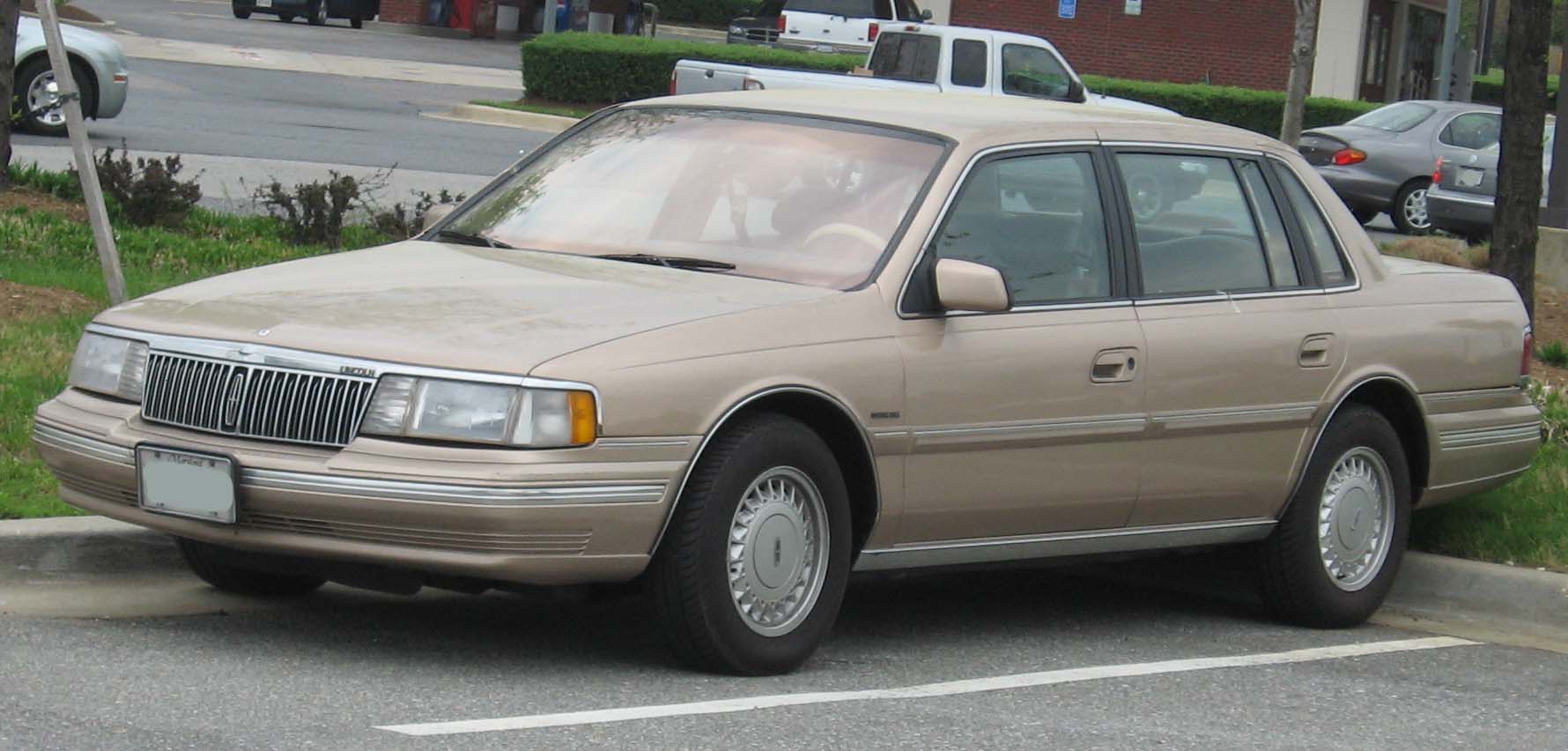
In case you missed it, Paul Niedermeyer’s excellent overview of Lincolns greatest hits and misses is worth a second look, considering the “firsts” attributed to the Lincoln brand: halogen lights and clear coat paint (Versailles), gas charged shocks and auto dimming rear view mirrors (Fox Continental), composite headlamps (Mark VII) and the industry’s first use of High Intensity Discharge (HID) lights in the Lincoln Mark VIII. And while some innovations quickly spread elsewhere, Lincoln’s HID system was outdated and orphaned in less than a decade. If you are crazy enough to drive an HID-equipped Mark today, finding a new bulb for less than $600 is impossible. And a used bulb fetches $100 or more on eBay. Such is life when you live on the bleeding edge far beyond anyone’s expectation.
[Note: A significantly expanded and updated version of this article can be found here]
That air presented the greatest obstacle to automotive speed and economy was understood intuitively, if not scientifically since the dawn of the automobile. Putting it into practice was quite another story. Engineers, racers and entrepreneurs were lured by the potential for the profound gains aerodynamics offered. The efforts to do so yielded some of the more remarkable cars ever made, even if they challenged the aesthetic assumptions of their times. We’ve finally arrived at the place where a highly aerodynamic car like the Prius is mainstream. But getting there was not without turbulence. Read More >
The Mark VII and the Mark VIII get a passing grade for effort, but that’s not good enough in the car business. There was no way these coupes could could begin to offset the damage that was simultaneously being done to the brand by that lame-assed 140 hp V6 powered Continental sedan. Dressing up this Taurus to compete with the Mercedes W124 and Lexus LS 400 was just a revival of the deadly sin they committed with the Versailles. There may have been enough suckers to buy this pig in a poke v.2, but they were all over seventy years old. Not the way to build a viable brand, especially in the face of the most withering competition for luxury car dollars ever. Read More >
Deception (and self deception) is a very significant factor in the automobile business. Unless we buy a stripper Corolla (so conveniently parked here) or the like, we’re happy enough to pay more to feel like we’re not just getting transportation, but something that enhances our sense of well-being and social status. One of the biggest questions for automobile executives forever is how much of a premium folks are willing to pay for that. What’s the upper limit you can charge strictly for the sizzle when there’s little or no steak? It somehow seems fitting that we consider the most extreme real-world test of that question on Honest Abe’s birthday: the Versailles, the ultimate pig in a poke. Read More >
Ironically, the Continental Mark IV is the most “American” car ever. It’s the ultimate counterpart to that most continental/ European car ever, the VW Rabbit/Golf Mk I that appeared about the same time. The Golf was a brilliant triumph of modern design: space efficiency, economy, light weight, visibility, sparkling performance and handling. And in Europe, the Golf became known as the “classless” car; one that didn’t make a statement about its owner. The Mark? Well, take all those qualities, turn them upside down, inside out, and then toss them out the window. Americans have long had ambivalence about “modern” anyway; it hinted at socialistic and intellectual influences that didn’t always sit so well. The most modern American car ever was the Corvair, and look how that turned out. Even the Kennedy Lincolns were a touch too modern. America was ripe for the first true post-modern car, and Ford was the obvious company to make it. Read More >
Sajeev, I have a 2002 Mercedes C320. I replaced the pre-cat O2 sensors at 94k miles as recommended by my service technician. This was in the summer of last year, so roughly a year and a half ago. Since then I have had the CEL twice for O2 heater circuit malfunction on the pre-cat sensor on the driver’s side. The first time I replaced the sensor and that was six weeks ago. Yesterday I start the car up and it’s back (verified at the Advance store with OBDII). Have I received two bad O2 sensors in a row, or could I have something going on with the car that is causing the O2 sensors to have problems?
Yesterday, a strange love-fest between U.S. Ambassador to Japan John Roos and Japan’s transport minister Seiji Maehara ensued. After their meeting in Tokyo, as reported by the Nikkei, the ambassador and the minister said that everything is hunky-dory, and that Toyota’s recent recalls won’t undermine relations between the U.S.A. and Japan. Which is odd in itself: Since when does a $15 gas pedal get a leading role on the world stage of international politics?
Ambassador Roos effusively told reporters that the recall issue ”in no way has any kind of direct or indirect impact on the strength of the bilateral relationship between the United States and Japan.” Who said it would? Read More >
Here’s a challenge: try to find a review of the Toyota Corolla that doesn’t bemoan its numb steering. Now try with a Chevy Cobalt. Or a Venza, or Vibe, Or Rav4, or Equinox. What do these vehicles have in common? Column-mounted electric power steering systems from JTEKT, a Toyota spin-off supplier which has done a brisk business in these fun-eliminating steering systems. And though the motor press has been bashing electric power assist steering (EPAS or EPS) for its deleterious effect on handling, the explosive growth in these systems may put more at risk than mere enthusiast-approved steering feel. Read More >





Recent Comments