Mr. Mehta, my 1999 Subaru Legacy 2.5 GT often loses power in the first hundred yards of driving. It has never failed to start, and it has never stalled during the period of power loss. It does not matter if the car is started cold, or if it’s been running for an hour on the highway and restarted after a 3 minute stop for gas. When it loses power, it doesn’t lose ALL power—it feels like it has about as much power as it would idling in gear. Flooring the accelerator does nothing…until it does, at which point it wants to break ya neck. This happens about 80% of the time. If I catch it starting to get fussy, I disengage the clutch and wait three seconds. The problem time passes while I coast, and I can be on my way without any more trouble. The other 20% of the time is trouble-free like a normal car. After the first hundred yards it runs great, sounds great, and gets great gas mileage.
Why exactly does this car create such a powerful response (in me, anyway)? It projects such solidity, dignity, and self-assurance. It flew in the face of GM’s 1965 coke-bottle styling, and showed that hard-edged angularity still had some serious life in it. Most of all though, this Chrysler New Yorker represents a pinnacle: never again would the New Yorker attain this degree of success, prestige and quality. Read More >
The Washington Examiner reports that, having previously moved its lobbying efforts to an exclusively in-house arrangement, GM is now hiring outside lobbyists again [UPDATE: GM’s chief in-house lobbyist just retired]. GM has rehired its old lobbying firms the Duberstein Group and Greenberg Traurig, and has added GrayLoeffler to its K-Street roster. GM is also keeping the “well connected” Washington Tax Group on its lobbying payroll, having picked up the firm’s representation in 2007. From these firms, some 18 lobbyists have registered as GM representatives, including a list of what the Wasington Examiner calls “well-connected revolving-door players from both parties.”
Former Reps. William Gray III, D-Pa., and Jim Bacchus, R-Fla., are both on GM retainer, as are fabled Republican and Democratic operatives Ken Duberstein (White House chief of staff under Ronald Reagan) and Michael Berman (counsel to Vice President Walter Mondale and campaign aide to every Democratic presidential nominee since LBJ).
Heading GM’s lobbying push for expanded R&D tax credits is the Washington Tax Group’s Gregory Nickerson, formerly the top lawyer at the tax-writing House Ways and Means Committee and the staff director of the Subcommittee on Select Revenue Measures. Nickerson’s partner is Mary Ellen McCarthy, formerly the top lawyer at the Senate’s tax-writing Finance Committee.
Welcome to TTAC’s latest feature “New or Used?” In this series, your car-buying questions will become a battleground between the forces of the used-car market (as represented by our in-house auction specialist Steve Lang) and the new-car market (as represented by Mr Sajeev Mehta of Piston Slap fame). Send your automotive scenario to mehta@ttac.com, and let these skilled pundits for the new and used car markets battle it out for your business before handing the debate off to TTAC’s Best And Brightest. This week we have a hypothetical scenario to get things started, in which a young family finds itself in need of a lot more space. Will they be swayed to buy new or used? Let’s read on… Read More >
I have a 2006 Mazda5 GT which has blown it’s second rear shock in less than 87,000 km. My question is whether I should just replace it with yet another Mazda part, or whether I should go aftermarket and replace both rear ones at the same time. My concern with this option is whether or not the ride quality will be maintained. I do not want to end up with a harsh ride with an aftermarket part. Does anyone have any suggestions? What is a good brand for shocks? Does anyone have any experience with the Mazda5 or have a suggestion for shocks? I am also tempted to just rid of the car altogether :( This would be the fifth repair related to the suspension in three years of ownership.
I hate Christmas shopping. So when we walked down to the Holiday Market at the Lane Events Center, I told Stephanie I’d meander around the parking lot while she went inside to grab something. Forty-five minutes later, she had two presents and I had bagged eighty cars. This event runs weekends and a few extra days from Thanksgiving to Christmas Eve, for exactly twelve days. So this is one short slice of one-twelfth of the potential Curbside Classics at the Holiday Market.
Each car’s identity pops up when the cursor touches the picture. Test yourself, and write down how many cars you got, or didn’t. There was one bike in the lot, and of course, it was a CC too! All eighty after the jump:
Update: I can’t get the identifying caption to not come up below each picture when it is clicked on to enlarge. If you really want to test yourself, put up a Post-It on the screen just below the picture. Sorry.
Desperate times call for desperate measures; and sometimes the result is nothing short of spectacular. The Studebaker Gran Turismo coupe is gorgeous, despite having been cobbled together on a shoestring in six months. It’s also compromised and imperfect, a car that The Big Three would never have built. It did little to change the inevitable outcome of the Studebaker Death Watch, but then it probably would never have been created under other circumstances. There’s nothing like staring death in the face to focus the last remaining creative forces and take exceptional risks. Along with the Avanti, the GT Hawk is Studebaker’s gran farewell gesture. Gone indeed, but hardly forgotten. Read More >
My wife has a 2000 Neon we bought used with 125k. It just passed 50k miles in the 4 years we drove it. We have had no issues with this car so far, although the first owner (we are the third) replaced the tranny at 70k.
At about 35mph the engine starts making a loud “ooooooooo” sound (kind of like a deep throated turbo or a vacuum cleaner). There is no “windup” to this sound — it’s either on or off. It does not matter if you are accelerating hard or not. Since we do mostly highway driving, this sounds tends to blend into road noise once we are up to highway speeds. The engine is not short of oil (although it does need 1/2 qt every 1500 or so). We have driven the car for ~ 3k miles with no issues….but I’m getting nervous. Read More >
As far as publicity stunts go, it was an outstanding one. No doubt inspired by the many stories of “10/10ths driving” out there in the motoring press, Skip Barber decided to hold a media-only round of its MAZDASPEED Challenge, dubbing said race the “Skip Barber Media Challenge”. The purpose of this event would be to determine the fastest journalist in North America. Unfortunately, it didn’t really happen that way.
Revivals are notoriously unsuccessful. But the lure of recapturing the magic of of the past perpetually goads men into futile pursuits, whether it be cars or women. The problem is that the changed circumstance of the times aren’t properly considered: the chemistry that worked so well twenty years earlier may not today. But it all makes for colorful stories, depleted bank accounts, dented egos, bent valves and prematurely rusty cars. Read More >
Maybe we should change the title to Two Dead Brands At A Time Week. Topping yesterday’s triple knock-out of Rover and Sterling is going to be a challeng(er). But we’re in contention here with this twin name, twin stick, twin cars, twin wipers, twin brands Colt/Champ. Plymouth has undeniably gone to the Dead Brand underworld. And the Colt name became a brand in its own right, covering a huge variety of Mitsubishi-built vehicles from tiny hatches like this to the mini-van Colt Vista Wagon. The fact that Colts were sold by both Dodge and Plymouth seals the deal. Of course, it wasn’t always that simple, as in the case of the Champ. It had its name changed midway through its run to Colt, hence the two versions here. And Mitsubishi is skating on dangerously thin ice itself these days. But beyond the mortality of its name, the real claim to fame of this car is its legendary twin-stick transmission.
How do you make the world a Better Place? If you ask Shai Agassi, president and founder of the eponymous American-Israeli Company, the answer lies in the development of an infrastructure that makes charging an electric car as simple as pulling over in a gas station. This deceptively simple idea has spawned an international project, which brings together automakers, governments, activists and scientists in a hugely ambitious attempt at creating the first localized electric vehicle charging infrastructures. With brand new technology, millions of tax dollars and the fate of at least one global automaker hanging in the balance, the evolution of Better Place is a crucial story in the rise of electric vehicles. But before we begin chronicling the build-up to this ambitious plan, we have to get back to the basics of EVs and their fundamental shortcomings. Read More >
N.B. In anticipation of Saab’s (inevitable) demise, we’re going to have Dead Brands Week at CC.
We’ll start off Dead Brands Week with a royal Rover triple bang, with this Sterling zombie corpse. When it comes to persistence (idiocy) in trying to flog dead corpses in the US, Rover absolutely takes the cake. It took three US deaths to finally convince Britain’s favorite maker of cars (and its government medium-wigs) to give up the ghost. The last attempt, Sterling, is the classic English car disaster story. Despite Rover’s intentions to avoid the usual pitfalls, by building an essentially reskinned Honda/Acura Legend, they still managed to create the ultimate rolling clap-trap English nightmare. Read More >
Thanks for taking on the synthetic vs. standard oil change question on my 2005 Dodge Durango a few months ago. Now for a new challenge: the same Durango, 78,000 miles, 5.7 Hemi with 5 speed automatic (trailer tow package and transmission cooler). It’s a highway cruiser, bought it to tow a boat with trailer. Except I have a boat slip now so there’s very little towing needed.
The dilemma: the manual says nothing about changing the transmission fluid if the vehicle is not used in severe service. Since I am skeptical of lifetime fluids, I think the fluid needs to be changed but don’t have any idea when to do so (FWIW: it is still a nice shade of red on the dipstick).
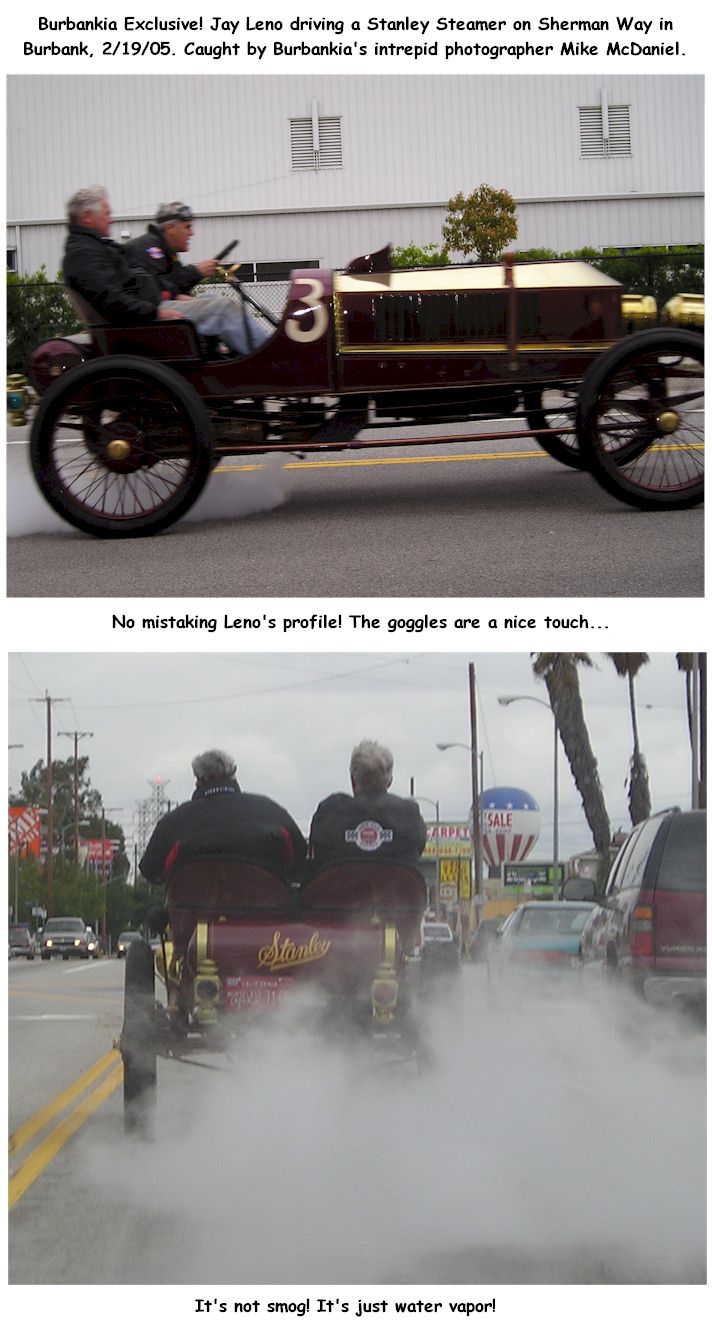
The steamer is the granddaddy of all engines, dating back some 2,000 years. All of the earliest “cars” were steamers, and the golden age of steam cars in the teens and twenties resulted in some fabulously refined vehicles. The Stanley was very successful and set the world speed record in 1906 that was only broken recently; and the ultimate development, the highly refined Doble, created a legend. The advantages of the steam engine are the ability to burn almost any kind of fuel, generate maximum torque at starting rpm, no need for a transmission, and the ability to power the loudest of horns. There have been numerous attempts at automotive steam engine revivals; but their many downsides have relegated them to the obscure pages of wikipedia: delay in getting up a head of steam, bulky condensers, oil contamination of the steam, inefficiencies, etc.. But Cyclone Power Technologies has been developing a radical update on a compact, efficient, eco-friendly steam engine. Before we dismiss it as more hot vapor in our usual dismissive TTAC manner, let’s take a closer look first: Read More >





Recent Comments