Financial Times calls “Volkswagen a long-time sceptic about hybrid and electric cars.” However, the pink sheet announces that Wolfsburg “has officially shifted gears.” That VW had been a sceptic is an understatement. Despite green initiatives for public and political consumption, internally, they laughed about hybrids and electrics. Their private position was that the consumption and emissions of a hybrid could be achieved with their low displacement supercharged engines and some weight savings. Pure plugins? Ach du mein Lieber. People have their next vacation in mind when they buy a car, and last VW looked, there were no charging stations on the Brenner Pass to Italy.
The official gear shifting occurred at last week’s Geneva motor show, where Volkswagen announced an “unprecedented” drive into electric vehicles. Read More >
With the Chinese planning an electrical assault on Europe, with Nissan preparing their Leaf and with Renault charging-up Zoe, Peugeot-Citroen (PSA) is probably feeling a little exposed right now. Bad enough PSA failed to work out an agreement with Mitsubishi. Now they’re deficient in the no carbs category. But don’t worry, a white knight is coming to the rescue and offering them a ready-made electric vehicle. That’s right, they couldn’t work out a capital tie-up, but PSA and Mitsubishi Motors worked out an agreement on electric cars. Read More >
Even since Landwind crash test, and the Brilliance crash test, the reputation of Chinese cars in Europe has been a little, shall we say, challenging. Watching the bonnet of a car crumble like Professor Gilbert’s theory on Toyota’s UA tofu does have its effect on prospective customers.
But none of this seems to worry BYD. Europe is their next target. Autocar reports that BYD, the maker of China’s biggest selling car, the F3, will be coming to Europe in 2011. Not with their bestselling F3, but with a pure electric E6. The car was introduced at the Geneva Motor Show. Read More >
Brazil and some in the U.S are firmly backing ethanol as the fuel of the future. The UK thinks that electricity is the way forward, and they’re putting our money where their mouth is. The Independent UK reports that 11,000 charging points for electric cars are to be built in London, Milton Keynes and the North East. This project is being part supported by the UK government to the tune of £30 million. Coincidentally, the North East is where Nissan’s UK plant is. Is the government trying to butter someone up to produce a certain type of vehicle there? If successful, (or the government wants to force it on the public) then a second wave of charging points will roll out.
This shouldn’t really come as a, well, shock as the government is solidly pro-electric cars. In the pre-budget reports, Chancellor Alistair Darling announced tax rebates for electric cars. But there is another little problem: Read More >
Europe, and especially Germany, reports declining diesel dependency. From a nearly 50 percent share a few years ago, the share of diesel driven cars in Germany dropped to 31 percent in 2009. Two reasons: The favorable taxation of the oil had been scrapped. And speaking of scrapped, the “Abwrackprämie, or cash for clunkers, had favored a trend towards low displacement gasoline burners. (In January, the diesel share climbed back to 40 percent in Deutschland.) Badly mauled were the manufacturers of bio (a.k.a. “veggie”) diesel. Read More >
A major study by Boston Consulting Group (BCG) has determined that even if EV battery costs drop by a projected 65% by 2020, the economics will still constrain their widespread adoption. It challenges the industry assumption that a $250 per kWh cost for automotive batteries can be achieved by that date. Nevertheless, the report projects that hybrids, plug-ins and pure EVs will make up 26% of new cars sold in major developed markets. Specifically, the study projects 1.5 million EVs, 1.5 million range-extending EVs, and 11 million hybrids produced in 2020. Regarding the manufacturer’s holy grail of $250/kWh batteries:
Given current technology options, we see substantial challenges to achieving this goal by 2020. For years, people have been saying that one of the keys to reducing our dependency on fossil fuels is the electrification of the vehicle fleet. The reality is, electric-car batteries are both too expensive and too technologically limited for this to happen in the foreseeable future.
—Xavier Mosquet, Detroit-based leader of BCG’s global automotive practice and a coauthor of the study
The study takes on the expectations that current EV technology with its range and cost limitations can effectively replace the IC powered car head on, Read More >
The United Nations UNECE World Forum for Harmonization of Vehicle Regulations is likely to adopt many Japanese safety rules for hybrid and electric vehicles as a global standard, says the Nikkei [sub].
Currently, there are no ECE safety standards for hybrid and electric vehicles. Japan has pushed its domestic safety rules to be adopted as international standards. Chances for adoption are good, Japanese companies and rulemakers are the pioneers in the field. Europe, which usually dominates ECE rule making, is lagging behind in the development of hybrid and electric vehicles, and doesn’t have much to lose if the Japanese standards are accepted. Read More >
After a two year neck-and-neck race between battery makers LG Chem and A123, GM awarded its Volt contract to Lucky Goldstar – make that LG Chem, or rather their subsidiary Compact Power: Now the Lucky Guys are waiting for the thing to hit the road in large quantities. A123 was widely regarded as the far better technology, the Koreans most likely were cheaper – we’ll most likely never know.
Now, A123 cut a possibly much bigger and more lucrative deal. A123 is forming a joint venture with China’s top carmaker SAIC to build and sell battery systems for electric vehicles in the world’s largest auto market, and possibly beyond. Read More >
On the same day TTAC ran Martin Schwoerer’s review of the C1 ev’ie, comes word that the diminutive EV has been named the official rental car of the UN Climate Conference in Copenhagen. Apparently the auto rental firm Sixt ordered a bunch of the ev’ies, becoming the first car rental company with electric options. And of course, it just happened to make them available in Copenhagen in time for the conference, so delegates would have an alternative to the Climate Express. Sadly, none of the delegates were environmentally aware enough to arrive on electric airplanes.
For manufacturers of engine timing chains, main bearings or any of the hundreds of unique components for engines and transmissions, EVs like the Nissan Leaf pose an enormous threat. Decades of investment in the manufacturing technologies and IP are potentially rendered irrelevant if the switch to battery-powered EVs progresses at the rate that its optimists proclaim. Bloomberg tells the tales of woe from anxious Japanese suppliers: “It’s a crisis-like situation,” said Toru Fujiwara, head of Tsubakimoto’s auto-parts division. “With electric cars, there’s no way we can apply our current technology.” Especially when their current technology lacks AC or DC. Read More >
Better Place founder Shai Agassi brags that his firm’s purchase of 100,000 Electric Renault Meganes is the first such mega-buy since the Ford Model T. Better Place’s cell phone-inspired battery leasing infrastructure hits Israel and Denmark next year, and Agassi insists that “real customers will be driving real cars” by the 2011 Frankfurt Auto Show.
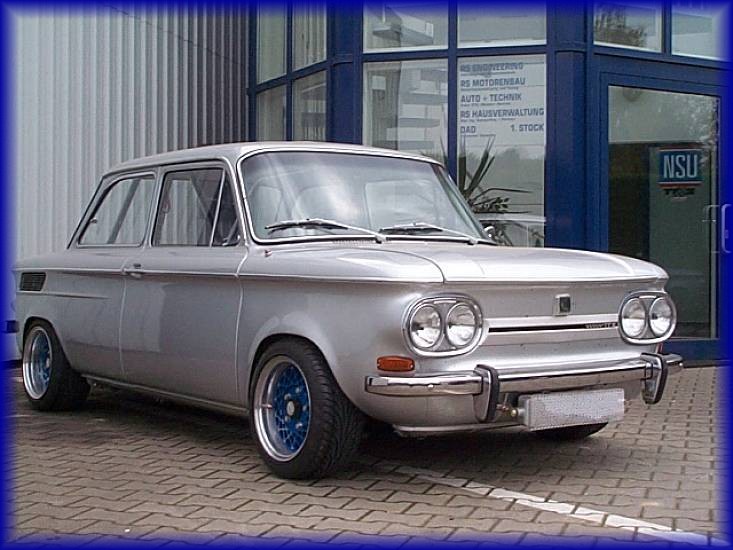
Even frugal cars need to be desirable. Most electric vehicles are anything but. Right now, EVs are slow, ugly, cheap, and not good to drive. In contrast, the Tazzari Zero from Imola, Italy, wants to be a “wanna have”: great to drive, good to sit in and easy on the eyes. Here’s the data: cast-aluminum, glued frame, central motor, RWD, low center of gravity, Li-Ion Fe batteries. A two-seater that is a bit longer, but lower than a Smart. Weighing just 545 kg (1202 lb), 150 N·m of torque and 15 kW engine power would seem to go a long way. The top speed is 56 mph and it has a range of 88 miles. Gorgeous looks (if you ask me), with a dose of NSU TT attain the right balance of aggressive and cute.
China has become the biggest producer, consumer and exporter of electric vehicles in the world. But China’s people are facing huge problems buying and driving them. Read More >
Hydrogen-fueled propulsion has been the Next Big Thing since the 1970s. Recently, it has also been assigned to the past, at least by US Energy Secretary Steven Chu, who said, “We’re going to be moving away from hydrogen-fuel cells for vehicles.” Thus, hydrogen propulsion seems to be one of those things that are everywhere in the time-space continuum except in the present. Some hydrofans are refusing to give up, though. VW’s evil genius boss of bosses, Ferdinand Piëch, has a nephew, Sebastian Piëch, who is a grandson of Ferdinand Porsche. Seb seems to be a smart, rich guy who speaks four languages, has an engineering and marketing background and lives in Shanghai and Tokyo. He’s a big name among big names at Riversimple, an alternative-car company which recently presented its first car in London. If Piëch had a monkey-man slogan, it’d be “ideas, ideas, ideas.”
The Detroit News covers the report by the University of Michigan’s Transportation Research Institute (because TRI texts are behind a password lock). Authors Walter McManus and Ron Kleinbaum write,
Story after story frames the issue of a struggling industry that will not survive tough fuel economy standards. However, there is substantial evidence that the domestic auto industry has ignored customers’ demands for fuel economy, and has consistently undervalued the impact of fuel economy on their profit potential.
Plus,
Our view is that GM is still not prepared to change enough, fast enough to achieve the transformation it needs to make.





Recent Comments