Buick has announced that it’s bringing a high(er)-performance GS version of its Opel Insignia-based Buick Regal to the Detroit Auto Show, and later, to the US market. And for once we’re left wishing we were getting a rebadge. After all, for the first several years of US sales, Insignias will be imported from Germany, meaning GM could easily have brought the thoroughly mad Insignia VXR/OPC as a quick-and-dirty (if not cheap) rebadge. After all, the point of the Regal (and especially the GS) is that “we’re trying to rebuild the performance credentials that Buick once held,” as GM reps put it. The European OPC/VXR version gets a 325 HP version of the turbocharged V6 found in the SRX and Saab TurboX, while the GS gets only a 255 hp version of the 2.0 Turbo found in the Solstice GXP. That engine can reportedly be tuned to an easy 310 hp and 300 lb-ft of torque, making the “base” Regal CXL with the 220 hp 2.0T engine a much smarter buy. Unless the idea of tuning a Buick is simply more cognitive dissonance than you can handle. Otherwise, the only thing the GS really brings to the table is AWD and a bodykit with more front-end venting than the United States Senate. Still, if you’re young enough to not get a discount at Denny’s and you have to own a Buick, the Regal is the way to go… especially once an enterprising tuner starts offering Opel badging and grilles in the US market.
British officials are making plans to impose a tax on speeding and parking citations this year in an effort to raise money to cover a growing budget deficit. Secretary of State for Justice Claire Ward announced the plan in a written answer to a question posed by Member of Parliament Greg Knight. The new revenue would be labeled as a “victims’ surcharge.” Read More >
It was mine. A 1992 Lexus SC400 with only 78,000 miles had gone through a small dealer auction back in early 2009. Paint a little blotchy. Driver’s seat front had a small rip. But I really didn’t care. I knew it would be the last of it’s breed I would see in a while. After being halved to death ($50 bid increments), I bought if for $3450 plus the $120 fee. Threw in $300 of paint, $100 of upholstery, and financed it to an enthusiast for $8500. $3200 later the economy caught up with my customer and he voluntarily brought it back. $270 for a windshield and alternator and 11,000 more miles left me with a quandry. Do I keep it or finance again?
In the past, Jeep’s done it up big for the NAIAS, unveiling wild concepts, driving new production models through plate glass, and the like. This year though, things are a bit tight. Instead of throwing a booze-soaked bash around some miles-from-production concept, Sergio Marchionne is going to lay out some saltines and Tang and let visitors paste some cheap decals he picked up in China on a Wrangler. All this in celebration of Jeep’s first new products in ages: the Unlimited Mountain and Islander edition Wranglers. Featuring the cheapest, most gimmicky-looking graphic decals and upholstery ever foisted upon the buying public (random latitude/longitude readings? really?), these “special” editions need to keep Jeep gasping along until ChryCo can get the suppliers lined up for the new Grand Cherokee. Meanwhile, stand by for more special editions from Chrysler, hinted at in the firm’s five year plan. This is going to get even uglier before the actual Fiat products show up later this year.
The good folks at Autocar report that an electric polar bear, made in China, will be unleashed on Europe this spring.
The Nanoq – meaning polar bear in Greenland – is a small and supposedly five seat plug-in. It will be manufactured as a joint venture between China’s Geely and Danish company Lynx. Geely provides the car, Lynx supplies the electrical components and a new lithium battery pack. Read More >
In today’s wode tian (OMG) moment, China’s People’s Daily reports that “a total 16.7 million vehicles were sold in China last year, bringing the country’s total vehicles to more than 186 million.” Shen me? (Excuse me?) Read More >
In my (probably failing) memory, yesterday was the first CC Clue that went un-identified. It was hard, being so dark and all, because you’re anything but clueless. So I’ll throw in a Friday bonus CCC, which we normally don’t do. But it’s a make-up session, so it’s still dark and finny. But not nearly so hard. Here’s your chance to pull up your grade!
According to Japan’s JADA dealer association data, quoted by the Nikkei [sub], Toyota’s Prius became the first hybrid to take the prime spot on Japan’s annual sales ranking of all cars, including minivehicles. 2009 Sales of the Prius jumped nearly 300 percent to 208,876 units. Read More >
In India, they take their smallest and cheapest car and somehow stuff 20″ wheels on it. In the US, we take (what was once) the proudest luxury car in the land and put 13″ wheels under it. It takes all kinds of wheels to make the world go ’round. Close up: Read More >
This is reportedly the new Aveo RS concept coming to the Detroit Auto Show, and apparently a near-production look at the next-generation Aveo. Well, you weren’t expecting it to look worse than the current model, were you?
We’ve got a two-for-one deal on today’s wild-ass rumors, as neither seems likely to amount to much. First off, GM’s Jon Lauckner caught a headline at the WSJ by conjecturing that the Volt’s price “could be notably lower” than the anticipated $40,000. “We have until this summer to figure that out,” Lauckner said. Meanwhile, The Atlantic‘s Daniel Inviglio ran a few numbers, and came up with some rough estimates about possible amortization compared to a Toyota Prius at different price points ($40k, $30k, $25k). Even at $30k, according to Inviglio’s analysis, you’d have to drive 3,350 miles per month to see an economic benefit over the Prius. Yikes!
This graph of Hyundai’s market since 1993 is a refreshing antidote to yesterday’s depressing Detroit market share picture. And it doesn’t take a whiz kid to deduce the single most important factor in Hyundai’s success. Notice a bit of an uptick starting in 1998? That was the year Hyundai introduced its 10 year, 100,000 mile warranty. It’s been suggested before on these pages that GM should address its “perception gap” with meaningful improvements in warranty coverage rather than more talk. After all, if it could fix Hyundais weak 1990s-era rep, it couldn’t hurt The General’s. This seems to be conclusive proof that warranties matter as much as the products they cover. After all, what good are a few extra horsepower or more interior room to a consumer compared to insulation from risk?
A few weeks ago, I wrote about Mazda’s new RX-7, scheduled for release in 2011. Well, that now looks unlikely. In fact, Mazda have put the release date as unknown, ushering the wankel warrior into the dreaded category known as development hell. Autocar reports that the development of Mazda’s new RX-7 is plagued with problems. The RX-8 had problems with fuel economy and high oil consumption and the Mazda engineers are no closer to solving them with the new RX-7. They could solve the problem by adding direct injection, but that’ll drive them into another problem. The DI components would make the RX-7’s engine weigh more than the current 13B motor, an outcome that would be in direct conflict with Mazda’s vision of cutting 100kg from all its cars in the next five years. Other problems, include lack of mid-range torque and trying to get the current engine to reach their target for maximum revs. Couple these problems with Mazda’s sales dropping 19% and the prognosis doesn’t look good.
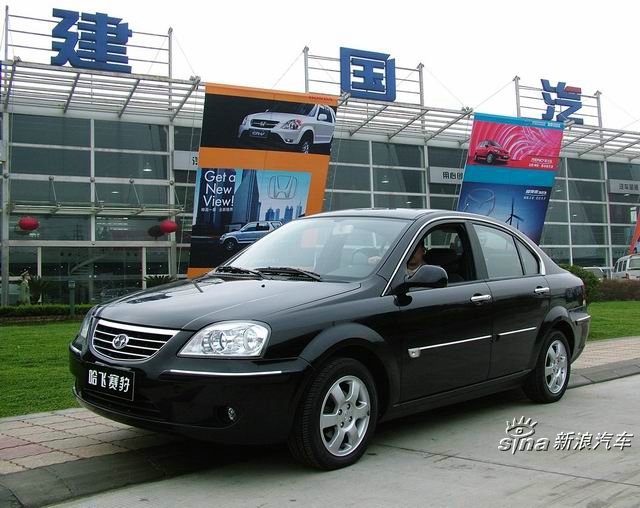
According to Detroit lore, Henry Kaiser once loudly threatened to throw one hundred million dollars in 1940s money towards the greater glory of Kaiser Motors, drawing a bemused chuckle from GM Chairman Alfred Sloan who quipped “give the man one chip.” Fast forward to 2009, and Coda Automotive, a firm hoping to sell Californians a $45k EV-ified Hafei Saibao Sedan, just scored $25m in funding reports Earth2Tech. That gives the firm a total of $74m raised so far, although the current round of funding won’t closed for another few months, say spokespeople. The latest money, from Aeris Capital, will be spent on “final safety certification testing,” as well as scaling up battery production. In short, Coda is almost-not-quite all the way to one chip in the car game… but that’s still only good for one roll of the dice. Even the weakest automakers have many multiples of that sum in their Treasury escrow accounts. And even the allegedly “bailout free” automakers get to raise debt with a little help from their government friend, TALF.
Consumer Reports may have discovered why owners of clean diesel cars might feel a bit suicidal from time to time. They recently took a long-term tester Mercedes GL320 BlueTec clean diesel into the shop to have its urea-based AdBlue exhaust-scrubbing fluid refilled, and the results were… eye opening.
The total bill just for adding AdBlue? A stunning $316.99. We were down to 18% full on the additive at 16,566 miles. It took 7.5 gallons to fill the tank, costing an eye-opening $241.50 for the fluid alone. The labor to add the fluid plus tax accounted for the rest. None of this was covered by the warranty… At the current rate and cost of consumption, just the AdBlue itself (without the labor, which would probably be included as part of the routine service) would cost $1,457.80 for 100,000 miles of driving. That’s a lot of money, knocking about a third off of your fuel savings vs. buying a GL450 V8.
And you thought gas was expensive! From what we’ve been able to dig up, the $32/gallon price is a fairly typical price at Mercedes dealers. Are there any Mercedes or Audi clean diesel drivers in the house who can confirm?



Recent Comments