Accidents increased significantly at intersections equipped with red light cameras in Grande Prairie, Canada according to a city report completed last month. The review found that after a full year of use, cameras generated $1.2 million in revenue along with a 126 percent increase in injury collisions. “Since the installation of red light cameras in Grande Prairie, the City has issued over 6000 violation tickets since the program was initiated,” red light camera Program Manager Garry Roth wrote in his report. “There have not been significant reductions in collisions, while only a few of these collisions during this time frame, have actually resulted from a red light violation.”
After months of teases and race-car previewing, Toyota is publicly unveiling its production-spec LF-A supercar at the Tokyo Auto Show [via Automotive News [sub]]. And it’s a legitimate front-engine supercar, with a 4.8 liter V10 motivating it to 60 MPH in 3.7 seconds. It even has a true supercar pricetag: $375,000. But how does this car square with Toyota’s appliance-and-environment-driven image? “It’s our mission as automakers to offer cars that possess the ‘fun’ spirit that should be at the base of any car,” explains Akio Toyoda, who sees the supercar as a way to gain attention in developing markets. But having axed its own front-engine V-10 supercar, Honda is reacting to the LF-A by retreating into greener-than-thou sniping. “Sure, there are folks who like that ‘vroom’ of the engine out of nostalgia,” snickers Honda prez Takanobu Ito. “The era of V10 engines is gone.” And you’ll never guess what vehicle Ito offers up as Honda’s counterpoint to the LF-A.
Reuters reports that GM’s deadline to participate in its Daewoo division’s $424m rights offering has passed without GM putting any money down. But the Korean Development Bank, which GM-Daewoo owes $2b (soon to be closer to $3b), isn’t freaking out yet. “Given that GM is not allowed to take money out of the United States, it seems to have a plan from the beginning to drop the rights and use its units to buy them,” say KDB spokesfolks. KDB will not participate in the offering until GM stumps up some cash, so the betting marker has been passed to GM’s units. But which unit will answer the call? Opel is days away from being sold, so you can rule that out. Holden is a possible white knight, but the Australian division is hardly a piggy bank with which to keep other operations afloat. Which leaves only GM’s South American, Chinese and Indian operations to pick up the slack.
Ford Expedition EL or Chevy Suburban? Ford’s late-starting expedition into the oversized SUV genre got lost on the way to the jungle. But when they finally arrived, Ford had their bearings straight. The Mack Daddy Expedition EL is way more ride for your money than the Suburban, no doubt. But the Suburban is the STAPLE of all STAPLES. And it’s the cooler whip. Thank President George. Bush’s patronage forever put the Suburban in the automotive walk of fame. W did for the Suburban what Obama did for the 300C, what Snoop did for the Deville, what little Puff Daddy did for the Range Rover, what Gilligan did for the Island, what Pam Anderson did for loose women worldwide . . . you get the point. Game over?
Former head of the Presidential Task Force on the Auto Industry, Steve Rattner has penned a retrospective for Fortune on his time guiding the auto industry bailout. He covers everything from how he assembled his team and developed a strategy to the decision to fire Rick Wagoner and the showdown with Chrysler’s creditors. There are no real surprises if you’ve followed TTAC for the last year or so, but it’s fascinating stuff to read coming from the horses mouth. Take Rattner’s initial impressions of the GM “culture thing”:
Everyone knew Detroit’s reputation for insular, slow-moving cultures. Even by that low standard, I was shocked by the stunningly poor management that we found, particularly at GM, where we encountered, among other things, perhaps the weakest finance operation any of us had ever seen in a major company.
For example, under the previous administration’s loan agreements, Treasury was to approve every GM transaction of more than $100 million that was outside of the normal course. From my first day at Treasury, PowerPoint decks would arrive from GM (we quickly concluded that no decision seemed to be made at GM without one) requesting approvals. We were appalled by the absence of sound analysis provided to justify these expenditures.
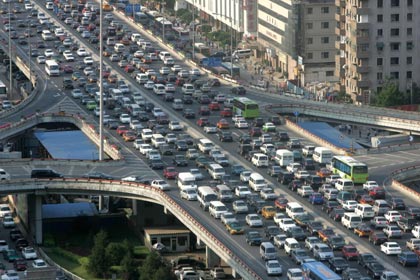
China’s capital Beijing officially has 17m people. Unofficially, it’s guesstimated to be closer to 20m. By the beginning of next year, Beijing will be host to more than 4m automobiles, China Daily reports. Back in 1997, Beijing barely had 1m cars. Now, one in 4 Beijingers has a car.
Every day, more than 1000 cars are being registered in Beijing. After the October holidays, 10,000 needed to be registered and caused a giant traffic jam around the Beijing version of the DMV. Read More >
Another day, another Opel that is still not sold yet. As reported before, EU competition commissioner Neelie Kroes made good on her previous threats (which were ignored in wholesale fashion) and said that the €4.5b ($6.72b) in – mostly German – state aid for Opel may be against EU rules. So what now? One option seems to take Opel into insolvency. But there’s another way to fix it: GM needs to certify that the Opel/Magna/Sperbank deal came together “without political pressure.” So says the German car dealer’s favorite read, Das Autohaus. If Brussels gets such a letter, then the qualms they have about possible anti-competitive behavior will just go away. It’s that easy? Read More >
Having a hard time guessing the value of the Volt showcase? Join the club. Everyone knows what the Volt is by now, namely a four-seat, 230 mpg, extended-range electric sport sedan that’s currently under-budget. But what does that sell for? The closest thing to a consistent answer we’ve heard from GM on this point is zero profit at $40,000 a pop. Which is always quickly followed up with reminders that consumer tax credits will make the crucial difference in transaction prices. But what about those tax credits? EV World‘s Bill Moore relays the following message from an anonymous “former GM executive”
“Assume you will trade in your Prius when the Volt becomes available. The feds will probably put a $20,000 kickback on the price to move them. If they do not, Volt will not make it.”
If you think about it, AM General really is a pioneer in the 21st Century automotive industry. How so, you ask? By cutting out the consumer and building its business around government vehicle buyers. From GM to Better Place, almost everyone in the business either owes a government money or is pitching a future based on government assistance or involvement. By this logic, the GM-Hummer experiment was a predictable disaster, eschewing AM General’s core strength and attempting to build a consumer brand. But with Hummer as good as sold off, AM General is going back to its bread and butter, showing off this MV-1 developed in conjunction with the Vehicle Production Group.”The vehicle is the first purpose-built vehicle for people in wheelchairs,” VPG’s chief marketing officer tells The Freep. “Every municipality has to offer on-demand service for the disabled as a result of the Americans With Disabilities Act.” See how that works? That’s how you build a vehicle with built-in demand.
Curious about how in the hell Chrysler is going to turn it all around, and go from an industry punchline to, well, less of an industry punchline? We sure are. Especially now that we know the presentation of Chrysler’s five-year product and business plan is going to be a “six hour extravaganza.” We knew ChryCo had some ‘splaining to do, but six hours worth? Or is this just ChryCo’s way of not letting anyone get an awkward question in edgewise? Either way, mark November 4 on your calendar. And while you’re at it, drop a comment to let us know what you’re most curious to learn about the New New Chrysler. You never know where TTAC is going to show up to ask these awkward questions…
Nissan’s got a new platform (codename “V”) that will underpin a number of low-cost body styles for third-world markets… like the US. According to Automotive News [sub], a four-door sedan, a five-door hatchback and a multipurpose vehicle will be based on the sub-Versa platform, collectively replacing the non-US-market Micra. Nissan hopes to sell a million of the three-cylinder subcompacts annually worldwide, necessitating a US campaign that will launch sometime after 2010. The vehicles will offer 50 percent fuel economy improvements over the Micra, use 18 percent fewer parts, and will not be built in Japan as Nissan has sought to keep costs for the range as low as possible. Auto Motor und Sport adds the crucial consideration that the new model will not fall into the gender-specific categorization that caused 80 percent of German Micra sales to come from women. Thank goodness for that then.







Recent Comments