Collisionrepairmag.com reports that AzkoNobel, a chemicals company from the Netherlands, has teamed up with Toyota to create Sikkens Autoclear LV, a scratch resistant, self healing clearcoat. The product has been approved by Toyota for use on the Lexus LS range as an aftermarket clearcoat to be used at Toyota dealerships and Toyota affiliated collision repair facilities around the world. According to the article, “Sikkens Autoclear LV Exclusive is highly resistant to scratches, and holds up extremely well after repeated washings, but it truly differentiates itself from other clearcoats with its outstanding self-healing characteristics when a vehicle is nonetheless damaged. With extraordinary “re-flow” properties designed into the coating, small scratches virtually disappear in minutes when exposed to a heat source at temperatures ranging from 40-80 degrees celsius–and even exposure to the sun will initiate the healing process.”
Automotive News [sub] reports that supplier giant Denso, which is 23 percent owned by Toyota, will launch a competitor to Ford’s Sync system. The system, named Blue Harmony, will provide music, directions, e-mail, Internet radio, news headlines and other driver distractions through a touchscreen on the center of the instrument panel, according to Denso sources. The system will use Denso apps to bring Pandora internet radio, Facebook, Flickr and other web-based services to the Blue Harmony platform.
A few weeks ago, I wrote about Mazda’s new RX-7, scheduled for release in 2011. Well, that now looks unlikely. In fact, Mazda have put the release date as unknown, ushering the wankel warrior into the dreaded category known as development hell. Autocar reports that the development of Mazda’s new RX-7 is plagued with problems. The RX-8 had problems with fuel economy and high oil consumption and the Mazda engineers are no closer to solving them with the new RX-7. They could solve the problem by adding direct injection, but that’ll drive them into another problem. The DI components would make the RX-7’s engine weigh more than the current 13B motor, an outcome that would be in direct conflict with Mazda’s vision of cutting 100kg from all its cars in the next five years. Other problems, include lack of mid-range torque and trying to get the current engine to reach their target for maximum revs. Couple these problems with Mazda’s sales dropping 19% and the prognosis doesn’t look good.
After registering a 33% increase in sales for December 2009 (albeit with a rumored 35 percent fleet mix), Ford aren’t letting the grass grow under their feet. industry.bnet.com reports that GM and Ford are to announce the updated versions of their in-car communications systems. Ford announced first that their “Sync” system is turning more towards Apple for new applications, despite the system being developed with Microsoft. Naturally, Microsoft is free to develop Sync-like features for others car makers. Doug Vandagens, director of Ford’s Connected Services Solutions Organisation justified this move at a press conference by saying that many Apple iPhone customers are customising their phones with Apple, therefore, Ford had to follow that trend. A clear indication of Ford marketing to towards younger customers, with the Fiesta being pushed at young, trendy types. GM will have an announcement tonight about their updated GM OnStar.
Amid the cries of shock around the blogosphere at the sudden death of the Kia Borrego, another tidbit of more consequential Kia news remains undercovered. And it’s actually bigger Ford news than anything else. Ford had deal with Microsoft for exclusive access to the technology underlying its Sync system. But with Ford’s 18 month term of exclusivity expired, Kia is set to formally announce its Sync-alike at next Tuesday’s International Consumer Electronics Show. Shooting for the middle ground between Ford’s apt “Sync” brand name and Fiat’s asinine “Blue&Me” moniker, Kia has called the system “Uvo” (Short for “Your Voice,” believe it or not).
Idle-stop technology, which turns off a car’s engine instead of idling, is available from a number of automakers in the European and Japanese markets. Mazda claims nearly half of its Mazda3 compacts and Biante minivans sold in Japan are ordered with the $500 option, as consumers seek out fuel economy improvement without the cost of a full hybrid system. So, why doesn’t Mazda sell idle-stop equipped cars in the US? According to the company, though Japanese fuel economy tests show stop-start improving efficiency by seven to nine percent “the EPA city-mode test cycle includes only one complete vehicle stop, so stop-start technology registers only a 0.1- or 0.2-mpg improvement.” And who would pay $500 for that?
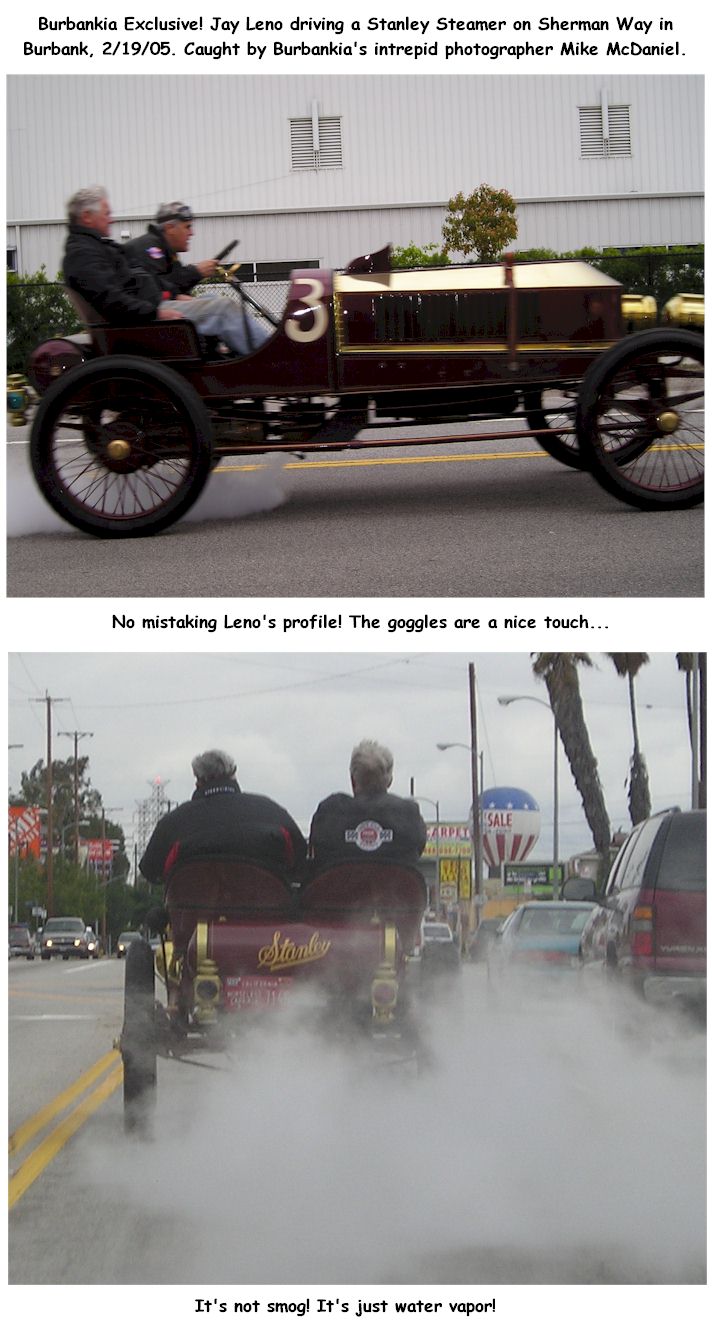
The steamer is the granddaddy of all engines, dating back some 2,000 years. All of the earliest “cars” were steamers, and the golden age of steam cars in the teens and twenties resulted in some fabulously refined vehicles. The Stanley was very successful and set the world speed record in 1906 that was only broken recently; and the ultimate development, the highly refined Doble, created a legend. The advantages of the steam engine are the ability to burn almost any kind of fuel, generate maximum torque at starting rpm, no need for a transmission, and the ability to power the loudest of horns. There have been numerous attempts at automotive steam engine revivals; but their many downsides have relegated them to the obscure pages of wikipedia: delay in getting up a head of steam, bulky condensers, oil contamination of the steam, inefficiencies, etc.. But Cyclone Power Technologies has been developing a radical update on a compact, efficient, eco-friendly steam engine. Before we dismiss it as more hot vapor in our usual dismissive TTAC manner, let’s take a closer look first: Read More >
On October the 26th, 2009, Mr E. Niedermeyer asked the best and brightest whether Mazda can catch up on hybrid technologies. If you were a betting person, you’d have probably said no. Partly because Ford had divested a huge chunk of Mazda, which meant they took their hybrid system with them, but mainly because Mazda had no aspirations towards hybrids. It was more interested in lighter materials and stop/start systems. So, can Mazda catch up on hybrid powertrains? Well, the answer, to paraphrase a certain President, is yes they can and Mazda are going straight to the people who know this technology best. Asiaone.com reports that Toyota and Mazda have reached an agreement in which Toyota will sell Mazda key components in which they can build a hybrid car.
With the intellectual property and tooling for 9-5 and 9-3 models headed for Beijing, there’s less to Saab than ever. Sort of. The BAIC deal actually proved to be less dramatic than previously thought, netting the Swedish GM subsidiary a mere $197m according to Automotive News [sub]. BAIC had just obtained a $2.93b line of credit with Bank of China, so there was nothing stopping them from buying more… except GM’s unwillingness to hand over modern platforms. What BAIC did get out of the deal still isn’t entirely clear, but what is clear is that GM has received nothing from the Saab sale so far. That $197m was deposited into Saab’s Swedish account, according to sources speaking to di.se.
It’s good to see an occasional glimpse of the good old Mercedes, solving the great unsolved automotive engineering challenges through sheer triumph of the will. Yes, today’s convertibles are already dramatically calmer than the ’65 Fury that tried to give me a head start on dread locks. But good enough is not good enough at Mercedes. For over a decade, their engineers have been toiling on the challenge of the truly turbulent-free convertible. Their efforts have paid off in the form of the new 2011 E-Class convertible, due this May in the US. All the (un) hair-raising details and more pics of Aircap in action follow: Read More >
Honda has always been proud of the word “Motor” in its name. It’s the world’s largest producer of internal combustion engines (all those lawnmowers), and has a long history of engine technology leadership. From the CVCC to VTEC and the recent i-VTEC, Honda was a consistent leader, especially in high-efficiency and high-output four cylinder engines. No more. The Gasoline Direct Injection (GDI) revolution is on in full force, and most major manufacturers have released or announced state-of-the-art DI engine programs. And none more convincingly than Hyundai, with its new 200 hp 2.4 liter Theta II GDI. Where’s Honda’s? While we’re waiting, let’s take a closer look at Hyundai’s: Read More >
All the hot air about the MDI air car may experience a sudden cold downdraft. Not that cool breezes questioning its efficiency weren’t already wafting in the air. But now there’s a genuine academic study questioning the questionable. The NYTWheels has mined a study by the University of California at Berkeley titled “The Economic and Environmental Evaluation of Compressed-Air Cars,” which concludes that the air car “fared worse than the battery-electric vehicle in primary energy required, greenhouse gas emissions and life-cycle costs, even under very optimistic assumptions about performance. Compressed-air-energy storage is a relatively inefficient technology at the scale of individual cars and would add additional greenhouse gas emissions with the current electricity mix.” Read More >
One of Chrysler’s major problems in the powertrain department is a mass of V6 engines of varying ages and displacements. The lack of interchangeability between engines contributes to Chrysler’s unprofitability, and the advanced age of some hurts overall fuel efficiency considerably. The debut of a brand-new Pentastar V6, arriving with next year’s Grand Cherokee, will change all that. The 280 hp, 260 lb-ft engine will replace all of Chrysler’s V6s, and handily gives Fiat their only modern V6. Single and twin-turbo versions are being considered. Meanwhile V8s aren’t going away, with 5.7 and 6.4 liter versions planned.
Home game machines are no good. Playing something that realistic makes the need for cars disappear
So goes the Gawker hive-mind translation of a quote, attributed to an unnamed Toyota executive by Masahiro Kawaguchi, in an editorial published by the Mainichi Newspaper of Osaka (got that?). Best of all, Kawaguchi’s piece apparently goes on to attempt a further causal link to Japan’s falling population. “Guys used to work hard at their job so they could get a stylish, cool car for girl’s to ride in,” he argues. But isn’t the connection between falling car sales and a falling population easy enough to establish without blaming videogames? And what about the geographical arguments for an inevitable leveling-off of car sales in Japan? Or perhaps Mr Kawaguchi was subtly blaming some other, non-car-related “realistic video game” for a declining birth rate. Either way, the comment reflects a gnawing paranoia that is no longer unique to the auto executives of Japan: how do we sell cars to young people in mature markets? I always thought they used video games.
Bloomberg reports that the US International Trade Commission has launched a probe of alleged patent violations which could result in the banning of all Toyota hybrids from the US market. Paice LLC won a 2005 civil suit against Toyota, in which Paice’s founder Alex Severinsky sought a court order banning the sale of Toyota’s Prius, Highlander and Lexus RX400h hybrids. Instead, an appeals judge awarded Paice $4.3m in damages, and ordered Toyota pay Paice a $100 royalty per hybrid sold in the US. In the current case before the ITC, Paice claims that Toyota’s Camry, third-generation Prius, Lexus HS250h sedan and Lexus RX450h are “are materially the same” and violate the same patents as those in its first case. If Paice can convince the ITC that Toyota indeed violated its patents, he will still need to prove that the little-known company has a market to protect. But Paice doesn’t actually want Toyota to be banned from selling cars. In the words of one patent attorney, an “injunction would have given Paice strong leverage to negotiate a lucrative licensing deal with Toyota…Paice always felt that their technology was worth a lot more than [$100 per car] to Toyota.” Read More >






Recent Comments