


The Mazda6 Wagon, long the only “real” station wagon in an American market that’s crossing over from SUVs to CUVs, has been updated… but not for the US.


The Mazda6 Wagon, long the only “real” station wagon in an American market that’s crossing over from SUVs to CUVs, has been updated… but not for the US.

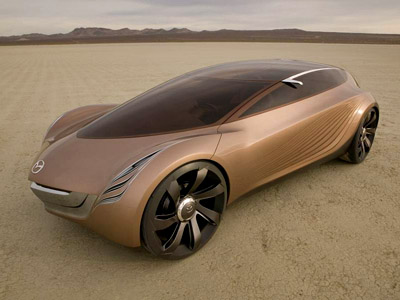
We should have seen this coming when Mazda first called its Furai and Nagare concepts “design studies” instead of “the unfortunate results of a savage brown-acid-and-Lovecraft bender at Mazda’s design studios.” New direct-injection, stop-start engines are approved for the European version of the new Mazda5, but as usual there are no guarantees they’ll make it to the US market version. More details when Mazda5 comes alive at the Geneva auto show.

A lot of what we have written in the last few days, even what we have not yet written, is utterly wrong, say the objects of our writings. Here are the denials of the day. (Read More…)

Divorce Sunday: Mazda and Ford will dissolve their joint venture partnership in China by 2012, The Nikkei [sub] writes.
The Chang’an Ford Mazda Automobile Co. has been producing cars since 2006. The JV is 50 percent owned by Chang’an, 35 percent by Ford and 15 percent by Mazda. (Read More…)

Anonymous writes:
I love this column, great advice every time. That’s why I decided to ask for your opinion on something that’s been bothering me for a while. I have a ’07 Mazda3 hatchback with a 5-speed manual. Currently I’ve crested 23,000 miles and the car is still under warranty.
Ever since I bought the car (brand new), the shifter has been a bit notchy going from 1st to 2nd. It could also be smoother from 3rd to 2nd. Another thing that bugs me is that during our cold Chicago winters, until the car/transmission warms up, the shifter is very mushy and stiff. Otherwise, the car is a blast to drive.

Mazda have been working on the RX-8’s successor for sometime, and naturally most thought that it would be called the RX-9. As in one step up from the RX-8. Apparently, that’s not the case. Nitrobahn.com reports that RX-7 name is to be resurrected. Nitrobahn hypothesised that the reason for this is to “evoke memories of the rear-wheel drive Mazda produced in between 1978 & 2002”. The new RX-7 will be a 2 seater and due in 2011. Like the current RX-8, the RX-7 will be a rotary engine, which means it can be adapted to run on Hydrogen in the future. InsideLine report that the new engine will be 1.6 litres in a 2 x 880cc configuration. The extra displacement means that the engine should be capable of up to 350 BHP. However, sources close to Mazda say they are adopting a simpler approach to the engineering of the car, by keeping the power of the engine between 200 to 250 BHP to try and keep the price below $25K. With the RWD Toyobaru, Hyundai Genesis Coupe, Kia “Kee,” and Nissan “Silvia” on the horizon, the future market for sporty coupes just keeps getting more and more interesting.

Idle-stop technology, which turns off a car’s engine instead of idling, is available from a number of automakers in the European and Japanese markets. Mazda claims nearly half of its Mazda3 compacts and Biante minivans sold in Japan are ordered with the $500 option, as consumers seek out fuel economy improvement without the cost of a full hybrid system. So, why doesn’t Mazda sell idle-stop equipped cars in the US? According to the company, though Japanese fuel economy tests show stop-start improving efficiency by seven to nine percent “the EPA city-mode test cycle includes only one complete vehicle stop, so stop-start technology registers only a 0.1- or 0.2-mpg improvement.” And who would pay $500 for that?

For some weeks, we have been following the steamy nampa between Japanese and European auto makers with more than prurient interest. First Mitsubishi and PSA (TBD), then Suzuki and VW (marriage consummated.) Now what? Now who? Suddenly, all eyes are on Mazda, the former wallflower of Nipponese car makers.
(Read More…)

On October the 26th, 2009, Mr E. Niedermeyer asked the best and brightest whether Mazda can catch up on hybrid technologies. If you were a betting person, you’d have probably said no. Partly because Ford had divested a huge chunk of Mazda, which meant they took their hybrid system with them, but mainly because Mazda had no aspirations towards hybrids. It was more interested in lighter materials and stop/start systems. So, can Mazda catch up on hybrid powertrains? Well, the answer, to paraphrase a certain President, is yes they can and Mazda are going straight to the people who know this technology best. Asiaone.com reports that Toyota and Mazda have reached an agreement in which Toyota will sell Mazda key components in which they can build a hybrid car.

“We’re still dependent on each other,” Ford’s head of global product development Derrick Kuzak tells the Detroit News, dispelling rumors that Ford and Mazda are going their separate ways. “You cannot change that overnight.” According to Kuzak, many of Ford’s most important vehicles continue to be based off of Mazda platforms. Ford Chief Financial Officer Lewis Booth adds,
The strategic relationship continues. The business relationships continue. And they continue on the basis that they’ve always continued. Where it works to the benefit of both companies, we do things together, and where it doesn’t, we don’t.
The Scion xD is known in Europe as the “Urban Cruiser,” and with an AWD option it’s sold as a quasi-SUV. According to a Euro NCAP crash test of comact cars though, the Urban Cruiser offers a lot less safety than you might expect in an SUV. NCAP’s latest round of compact testing saw vehicles from the new Opel Astra and Chevy Cruze to the Peugeot 308 and Mazda3 recording perfect five-star scores, indicating just how safe compact cars have become. And even the video of the Urban Cruiser’s three-star performance lacks the drama of earlier compact crash tests: a failure of side airbags and a weak performance in the new side pole crash caused the poor score. Most embarrassing of all, the Chevrolet Spark (neé Daewoo Matiz Creative) came in second to last, scoring four stars to the Urban Cruiser’s three.

For most of the last 20 years, Ford and Mazda have enjoyed a symbiotic relationship which worked quite well. Ford needed Mazda’s engineering and Mazda needed Ford’s volume to keep their profit margins. In short, everyone was happy. Then came the recession. Ford needed money and it needed it fast, so they mortgaged their logo, cut staff and closed factories. But curiously, Ford divested a huge chunk of Mazda which netted them, in the auto world, very little money. Ford reduced their 33.4% stake in Mazda to 13.4%, netting $540 million, but effectively losing Mazda. Not that Ford’s Mark Fields is worried.

Want a slightly different flavor of Fiesta? The Mazda2 should fit the bill.


Brace yourself ladies and gentlemen, because an automaker is taking on one of the American market’s greatest bugbears: size and weight bloat. Mazda’s vehicles have gained 80 pounds on average with each recent redesign, according to Robert Davis, senior vice president of product development and quality for Mazda North American Operations. Davis tells Automotive News [sub] that increases are coming “mostly in larger tires and wheels, and safety equipment,” resulting in a 2010 Mazda3 that weighs 2,868 pounds compared to a 2003 Protege’s 2,634 pounds. And, says Davis, that’s all about to change. He promises “typical” weight reductions of 220 pounds per vehicle on future Mazda models, through a combination of measures. For one thing, dimensional creep is a thing of the past, with some Mazda models scheduled to lose as much as three inches in length.




Recent Comments