Category: Toyota

Toyota Reviews

Toyota Motor Co., the world’s largest automaker, has been producing cars for more than 70 years. It wasn’t until after World War II, however, that production started to pick up. Toyota went from making 8,500 cars a year in 1955 to 600,000 in 1965. Models like the Toyopet and Land Cruiser hit the United States in 1957. Today Toyota is among the leaders when it comes to hybrid technology.
By on January 9, 2009

In 2005, Toyota bought around half of GM’s stake in Subaru. As ToMoCo never bought Saab, they never bothered with a Saabaru. Instead, Toyota decided to go for a return on their investment. How? By broadening the WRX’s appeal. That’s right, the WRX, Subaru’s de facto all-wheel drive, turbocharged, deformed-looking halo vehicle was going to bring home the bacon by appealing to moms. Ha ha ha. As such, the 2008 WRX was an abject failure. There’s no better proof/pudding than the fact that I spent a week with an all new 2009 WRX. Not since the 1950s has a redesign happened so fast. But big questions remain. Like just how much better is this new-for-‘09 Rex?

Review: 2009 Subaru WRX Car Review Rating

By on January 9, 2009

The Truth About Cars: they’re hideously complicated devices that must be able to serve duty in every sort of meteorological condition. The controls required to help keep their owners comfortable in this huge and ever-changing range of temperatures and climatic conditions are subject to neglect, abuse and constant use. Not to mention simple human nature, which is simple, but not so easy to satisfy in any meaningful bio-mechanical way. So hats off to the designers, engineers and assembly workers who delivered unto us, the driving public, a sane, sensible way to control our own personal micro-climate. I present to you, gentle readers and humble auto industry-types, TTAC’s Top Ten HVAC controls 2009, with comments by our very own Best and Brightest. [Gallery below. Printed list and comments after the jump.]

Read More >

By on January 9, 2009

China’s Passenger Car Association released their numbers for the year. For China, which was used to double digit growth, they are disappointing. Other markets, such as the U.S. would die for them. China’s full year passenger car sales rose 7.4 percent in 2008, the Association says.

Before we delve into them, be warned about Chinese numbers. China doesn’t have a “light vehicle” category. Vans or minivans, such as the GM-Wuling offerings, are counted as “commercial vehicles,” and are not in China’s passenger vehicle count. Also, to understand the market, one must be aware of China’s wild and woolly joint venture situation where cars of the same brand are made by different and often competing companies, and sold through different dealer networks.

Here are the top 10 Chinese passenger vehicle sales as Gasgoo reports them. These are real sales, not cars dumped on dealer’s lots. These are government numbers, based on cars that have been registered by owners and issued license plates. However, they count factories. They don’t count brands.

1. FAW VW: 498,867 units
2. Shanghai VW: 490,087 units
3. Shanghai GM: 468,642 units
4. FAW Toyota: 365,699 units
5. Chery: 356,092 units
6. Dongfeng Nissan: 350,621 units
7. GAC Honda: 305,997 units
8. Beijing Hyundai: 294,517 units
9. Geely: 230,420 units
10. Changan Ford: 202,797 units

Now for a closer view:
Read More >

By on January 9, 2009

An overview of what happened in other parts of the world while you were in bed. TTAC provides round-the-clock coverage of everything that has wheels. Or has its wheels coming off. WAS is being filed from Beijing this week, from Berlin next week.

Volkswagen makes its million in China: When Winfried Vahland, VW’s honcho in China, stuck to his guns and a 1m sales target months ago, people rolled their eyes. Well, he made it, Automobilwoche (sub) reports. VW sold 844,491 units in China, Audi contributed119,598, newcomer Skoda sold 59,284 – a total of 1,023,373 units. Growth for 2008 was 12.5 percent, above market trend. With this result, and the slight plus in the home market, VW could be the overall winner for 2008.

Audi sells a million worldwide: Audi defied gravity, motor malaise, and assorted other ailments, and closed out the year 2008 with a plus of 4.1 percent worldwide, for a total of 1,003,400 four-ringed units sold throughout the world. In Asia/Pacific, Audi sold 15.6 percent more for the year. Outlook for 2009 is even better, because in the disastrous December 2008, Audi sold 17.4 percent more than in the same month a year before.

SAIC lets Ssangyong fail: Ssangyong Motor Co. has filed for court receivership after if had failed to secure necessary funds to continue operations, the Nikkei (sub) reports. Ssangyong Motor is 51.3 percent owned by China’s SAIC. They only wanted to help if the unions would make significant concessions. Now they may have to. Ssangyong Motor’s board Friday called on management and the company’s union to closely cooperate on voluntary retirement, paid leave, wage cuts and a halt to certain benefits. Commenting on the filing, Ssangyong union spokesman Choi Hyung-gil said: “The decision is very disappointing. We will discuss how to react.”

Read More >

By on January 8, 2009

Yesterday we posed the question, “Which uber sedan would you buy?” And while the responses were (predictably) great, they were all over the map. And that’s OK, as I couldn’t even decide on a car in the question. Though in fairness, I think I’d have to go with the Pontiac G8 GXP. It’s got all the power and the right color collar for my druthers. But you know… a Phaeton may also be the car for me. But today we’re talking convertibles. Well, not just regular convertibles (sorry Sebring), but SUPER CONVERTIBLES! Though I’m sure one of you is going to say that his Toyota Solara is the best damn convertible ever and that’s fine. We’re just not going to listen. Are there rules? Like, would a Corvette Convertible qualify as super? Can it go 0-60 mph in 4.3 seconds? Yes? Than yes, it’s super. What about a Lexus SC430? No, that’s not super. Why? Because I say so. Not sure if the droptop you have in mind qualifies? I’ll let you know. Moving on — uber-vert would I choose? Hmmm. Well, the first car that pops to mind is a DB9 Volante (that’s rich person talk for “no roof”). But… no. I said uber! Right, so that has to mean that I mean the Mercedes-McLaren SLR 722 Speedster. No top, no windscreen, 650 hp and 200+ mph top speed. That’s mega double uber, right? But then I’d be that guy. The guy that bought a McMerc SLR with no windshield for half a million dollars. So, no. Oh, I got it — and really the only correct answer. And that answer is a Lamborghini Gallardo LP560-4 Spider. Yup that’s the one… as long as you don’t mention the Murcielago Convertible. Crap, this is hard. But definitely a Lambo. I think. You?

By on January 8, 2009

The entire autoblogosphere is abuzz over the new Buick LaCrosse. And not just in the pre-show preview, “check this out” kind of way. Or even in the sniggering “guess what the name means in Quebec” way. No, full-service pimping of GM’s latest mid-sized sedan is clearly the order of the day. And a single thread runs through all the breathless commentary, namely the alleged youthful, modern appeal of the new LaCrosse. The message is loud and clear: this is not your father’s Buick. Or, as The DetNews‘s Scott Burgess puts it (in hopes of avoiding the painful Olds legacy), “this is not your grandfather’s Buick.” The Freep opens its paean to the LaCrosse by pointing out that it was designed by “twenty- and thirty-somethings.” “No More Blue Hair!” screams the headline at Jalopnik, who also parrot the “not your grandfather’s Buick” line. But, like the infamous “not your father’s Oldsmobile” ads everyone keeps referencing, all this sound and fury merely cements long-standing brand perceptions in the minds of consumers. And hastens the long-overdue death of Buick

GM’s Susan Docherty reveals to Automotive News [sub] that Buick’s youthful reinvention is not being kicked off by LaCrosse. “With the introduction of the Enclave, we have broken through the perception that Buick was just a brand for old people,” says the Pontiac Buick GMC VP. “The Enclave started a transformation of the brand that has only just begun.”

Oh really? So the DetN’s Burgess wasn’t kidding. This really is about repositioning Buick as “your father’s” brand instead of “your grandfather’s.” And with an average buyer age of 63, that may not be a bad goal. But if Enclave buyers were still well into their 50s, how far are these claims of youthful reinvention really going to carry the Buick brand?

Not far. Not only will this LaCrosse fail to appreciably bring down the average Buick customer age (for reasons explored later), the entire marketing effort sends the clear message that its core buyers are an embarrassment to the brand.

As does the car itself, which is loaded with techno-gizmos and has optional all-wheel drive. Why? To tempt the youthful hordes from their “near-luxury” Toyota Avalons, Acuras TLs and the like. And further convince their core market that Buick’s are no longer senior-friendly havens of low-tech in a world gone mad.

Compared to the last few decades of Buicks, the design is understated and elegant. But that’s like bragging about attracting 50-year-old customers instead of 60-year-olds. From some angles the new car looks suitably Lexus-like, echoing the current LS at the rear and first-generation GS from the side. From the front its splashy waterfall grille is subtle in comparison only to Mercury’s chrome-bauble bling.

From the vantage point of online press pictures, the interior does look undeniably decent. Unfortunately, it also does away with the sense of spaciousness and simplicity that defined Buick’s appeal even when its styling and performance was at its worst.

Even if the new LaCrosse is the best Buick made in years (and it probably is), it does nothing to rescue the brand. The relentless emphasis on customer age in marketing and media coverage shows deep insecurity on GM’s part about Buick’s appeal.

Buick is one of the most traditional symbols of middle class achievement, an image that over the last few decades has appealed to fewer, older customers. That image has been successful in China, where a young emerging middle class hold many of the values that once made Buick a success here.

As a well-qualified youngster in the car-buying demographic I feel confident in arguing that America’s aspiring 20 and 30-somethings are generally striving for individuality and expression, not suburban comfort, conformity and subtlety.

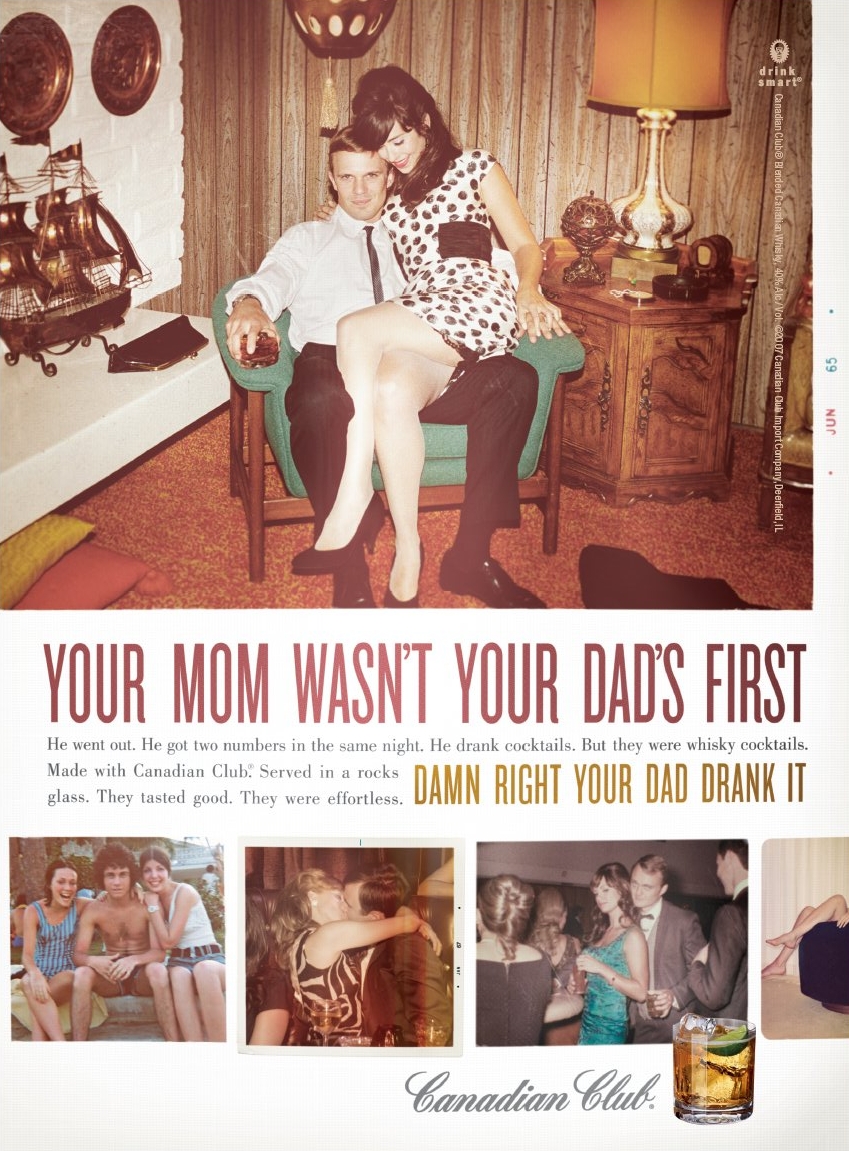
As a brand as steeped in tradition, Buick needs to reinvent itself in a way that builds on its past and broadens its appeal without alienating long-term fans. Something along the lines of Canadian Club’s “damn right your dad drank it,” campaign.  When brands outlive their historical moment, only some sense of irony or humor can keep their core values relevant. If trying to keep Buick relevant even makes any sense at this point. Which it probably doesn’t.

GM has had a hard enough time updating Cadillac’s staid image in a way that doesn’t completely alienate traditionalists. Attempting this balance with Buick does little besides create the brand engineering and cannibalism that destroyed both brands in the first place.

Me? I actually want one of my father’s favorite Buicks, the 1963 Riviera. Which was actually marketed to people like his father. In terms of recapturing the immediate yet timeless appeal of Buick’s heyday models, the new LaCrosse comes up well short.


By on January 8, 2009

When new acquaintances find out that I cover the automotive industry, the response is often a flood of pent-up questions on the topic. Though much of the interest converges on the future of the American automakers, the future of cars, fuel and mobility in general attract a lot of curiosity. Facile blogger that I am, I usually cop out by saying that telecommuting is the true future of mobility. In reality, the interplay of energy, economics, politics, technology and the environment that defines the cars and fuels of the future is a topic of near infinite complexity. Luckily, two correspondents for the Economist have tackled the issues in a new book entitled Zoom: The Global Race To Fuel The Car Of The Future.

Read More >

Book Review: Zoom: The Race to Fuel the Car of the Future Product Review Rating

By on January 8, 2009

Reuters reports that Toyota is set to introduce its own version of GM’s OnStar telematics-based service: Safety Connect. The news agency’s story emphasizes… safety. “The service… is designed to provide drivers with emergency support in the event of an airbag deployment or an accident, through embedded cellular technology and a satellite-based navigation system. The system-equipped vehicles also come with an SOS button, through which customers can communicate with emergency call centers for 24 hours a day. In the event a vehicle is stolen, the service also assists in tracking the location of the stolen vehicle.” The AP widens that remit. “The luxury Lexus version also includes driver convenience features such as driving directions and an advanced voice command program.” You hurt your what? (Enhanced voice recognition.) The official press release adds the finishing touch: the Lexus system will be called “Enform,” which sounds a bit like a feminine hygiene product to me. Anyway, there are ramifications here…

Read More >

By on January 8, 2009

I caught a Google news alert this AM leading to the Detroit Free Press. The headline took me by surprise: “Toyota Sales in the Toilet.” That’s pretty strong language for the MSM. Was this the same paper that headlined GM’s -32.1 percent post-bailout December sales debacle with “An Improvement over November“? Did the Freep’s trash talking header indicate a new, darker chapter in the annals of Detroit cheerleading? I clicked over to a Freep page with a clear not-to-say-ginomrous anti-Toyota, pro-union slant. It’s a blog by editorial cartoonist Mike Thompson. “Japan does have its own version of the United Auto Workers, the Confederation of Japanese Automobile Workers’ Unions, so why aren’t these same columnists and bloggers blaming the Japanese auto union for Toyota’s woes? With a membership of 741,000 workers, it eclipses the 513,000 membership claimed by its American counterpart, the UAW.” It’s a good point, if entirely beside the point. But it’s easy enough to see that Motown’s hometown heroes are happy to put the hate on Toyota– the same hate for which they condemn critics outside Fortress Detroit.

By on January 8, 2009

An overview of what happened in other parts of the world while you were in bed. TTAC provides round-the-clock coverage of everything that has wheels. Or has its wheels coming off. WAS is being filed from Beijing this week, from Berlin next week,

Mitsubishi electrifies PSA: Mitsubishi will supply France’s PSA Peugeot Citroen with electric cars beginning as early as next year, the Nikkei (sub) reports. The French government is providing subsidies of up to 5K Euros, and tax breaks for consumers who purchase electric cars. “With the U.K. and Germany offering incentives as well, Europe is expected to soon become a leading electric-car market,” says the Nikkei. Mitsubishi Motors will provide its iMiEV passenger car on an OEM basis. This plug-in electric vehicle, which is powered by a high-performance lithium ion battery, is slated to debut in Japan this summer. It runs 160km on a single charge. The iMiEV is expected to be priced competitive with conventional gasoline-powered cars in France once the subsidies are taken into account.Mitsubishi Motors Corp shares jumped 5 percent” on the news, Reuters reports.

Mazda saves cash in cats: Japan’s Mazda said on Thursday it would introduce technology that would slash the amount of precious metals used in catalytic converters by 70 percent in the new Mazda3 model, due for sales globally this year, Reuters says. Mazda said it would be the world’s first application of the single-nanocatalyst technology. The technology will be rolled out globally on certain models. Nissan last year introduced nanotechnology that would halve the amount of precious metals used in the new Cube.
Read More >

By on January 7, 2009

Reported sales of hybrid cars were down by ten percent in 2008, according to Green Car Congress, who keep track of these things. Keep in mind that 2008 was the year that saw $4+ gas, $7k Geo Metros and a general wave of related hysteria. On the other hand, gas has also become quite cheap in the last few months, and hybrid sales are undeniably falling off a cliff. December hybrid sales are down 42.7 percent year-on-year, as Priora pile up on lots and Americans re-learn how to save money. But is the hybrid downturn a sign of a dying fad, or a temporary blip? There’s a strong argument to be made that the hybrid price premium will be a tough sell in weak economic times, but if another oil shock comes that premium could look like chump change. But this is not just a question of predicting the oil market. If any of us could really do that, we’d be doing the backstroke in a Scrooge McDuck-sized vault of ducats, not discussing the auto industry. Toyota thinks that they can whittle the hybrid powertrain premium down to a mere $1,500 over normal ICEs, but then they built the hybrid bandwagon nearly single-handedly. Meanwhile, Honda is attacking the Prius on price point with the Insight, and Ford is going after the Camry on patriotism with its Fusion hybrid. But will this competition saturate a still-niche market and destroy profitability? After all, hybrids still only make up 2.4 percent of the US market, causing some to call hybrids a dying fad. Or will hybrid technology eventually become ubiquitous, rewarding those who made early investments in it?

By on January 7, 2009

Wow, Manny. You need to get with the program bro’. Dissing hybrids is not gonna make you any friends. Not in DC. And not with your hometown homies, who know that global warming is a crock of “I can’t believe it’s not Toyota” with which to butter their bailout bread. What are they gonna say when they read this? “They cost more than most people can — or will — pay; they provide fuel efficiency benefits only for specific and limited driving conditions; and the technology isn’t going to solve America’s oil issues. Sure, they’re still somewhat trendy, and select members of Congress as well as Hollywood hypocrites regularly remind people that they drive the so-called green machines. Good for them and for the few others in America who are all hopped up on hybrids, but they are the few and the proud. And the declining.” Yeah, we know that Manny. But what if gas prices go back up? You know; if there’s a sudden disruption of oil supplies due to tensions in the Middle East or another speculative bubble? It could happen. Not in Manny’s world. And the News’ Auto Editor wants to point out– again– that consumers are friggin’ hypocrites…

Read More >

By on January 7, 2009

A short overview of what happened in other parts of the world while you were in bed. TTAC provides round-the-clock coverage of everything that has wheels. Or has its wheels coming off. WAS is being filed from Beijing.

Toyota asking workers to forego pay: In an unusual move, Toyota has begun negotiating with labor to treat some of the 11 additional days during which the company plans to suspend domestic operations as vacation days without pay, the Nikkei (sub) writes. Toyota aims to close all 12 of its domestic factories for six more days than planned in February and for five additional days in March. Extra factory closure days used to be treated as paid days off. Toyota seeks to stop this practice from next month to cut costs. Toyota hopes to reach an agreement with labor this month. The unions already balk.

Germany looks like bottoming out: Germany’s car buyers bought 6.6 percent less in last December than in the prior year. This is nowhere near the disaster called America. Germany’s November sales had been down 18 percent. Germany closes out the year 2008 with a minus of just 1.8 percent, Automobilwoche (sub) reports. Still, “Germany notched up yet another post-reunification low for the year, with just 3.09 million vehicles registered throughout 2008,”  Reuters writes. The big loser is Toyota with a loss of 27 percent for the year. Volkswagen sold 5.7 percent more than in 2007 and raised its market share to 19.9 percent. Opel lost 9.5 percent of sales, Porsche 8.2. The Smart gained 5.7 percent. Amazingly, SUVs gained 3 percent for the year, the high price of gas be damned. The share of diesel powered cars dropped 3.6 percent to now 44.1 percent.

Read More >

By on January 6, 2009

If a fish had brains and saw someone holding a shotgun, would it choose to swim in a barrel? Why then would Mike Accavitti, director-Dodge marketing, say this to Ward’s Dealer Business, which has all the sales data on everything. “Accavitti notes the ’09 Ram, which he describes as Chrysler’s ‘bread and butter,’ is grabbing more market share than its ’08 predecessor. Since the October sales launch to mark the ’09 model year, the Ram owned 4.1% of the light-duty truck market, an increase of 0.2 share points over the ’08 model year, according to Ward’s data.” Yes, well, the article was written before December’s sales results; where Ram sales tanked by 48 percent vs. last year, down 31 percent for the year. I wonder how much that market they own now. In any case, it appears Dodge blew the launch.

Read More >

By on January 6, 2009

Finishing 2008 with positive sales growth was basically unheard of this year in the US car market. Titans like Toyota, hot brands like Audi, nobody is safe from the sales downturn that is crunching the biz. Except Subaru. The all-AWD boys managed a narrow 0.3 percent sales bump for 2008, as strong Forester sales (up 62.8 percent in December, 36.4 percent on the year) helped limit December bloodletting to a 7.7 percent downturn. So even though Subaru literally sold only 491 more cars in 2008 than it did in 2007, you can’t help but call it a win. Unsurprisingly, Tribeca and Outback are the big losers, dropping 52.1 and 30.3 percent in December and 34.6 and 22.8 percent on the year. And Subaru’s short-term positioning continues to look good. Though the summer gas shock had consumers scurrying for Fits and Priora, leveling prices and a harsh winter make Subaru’s products look like a smart step for the downsizing SUV-as-luxury crowd. Subaru’s out of the WRC championship, and the Toyobaru coupe has been canceled (it should have been the Tribeca!), but in the US market Subaru looks as good as can be expected.

Recent Comments

  • Lou_BC: @Carlson Fan – My ’68 has 2.75:1 rear end. It buries the speedo needle. It came stock with the...
  • theflyersfan: Inside the Chicago Loop and up Lakeshore Drive rivals any great city in the world. The beauty of the...
  • A Scientist: When I was a teenager in the mid 90’s you could have one of these rolling s-boxes for a case of...
  • Mike Beranek: You should expand your knowledge base, clearly it’s insufficient. The race isn’t in...
  • Mike Beranek: ^^THIS^^ Chicago is FOX’s whipping boy because it makes Illinois a progressive bastion in the...

New Car Research

Get a Free Dealer Quote

Who We Are

  • Adam Tonge
  • Bozi Tatarevic
  • Corey Lewis
  • Jo Borras
  • Mark Baruth
  • Ronnie Schreiber